
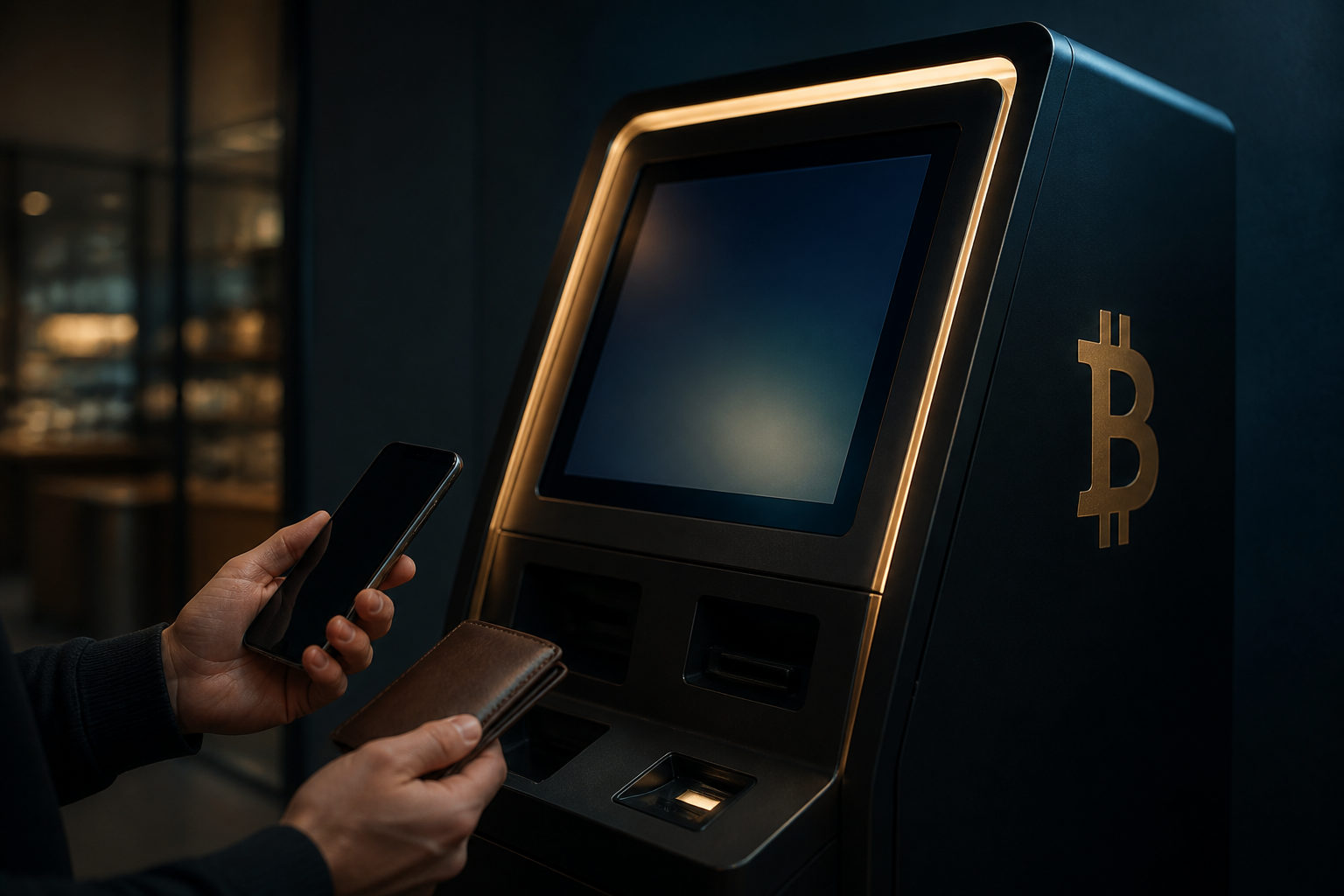
How do you use an Athena Bitcoin ATM? The process has four stages: find a machine, verify who you are, choose whether you're buying or selling, then confirm the result and keep your receipt. Each step matters, and so do the risks that come with it.
Find a legitimate Athena machine
Athena's official website has a machine locator that filters results by city or ZIP code. Don't just trust a third-party map pin labeled "Bitcoin ATM" — that listing may be outdated, and the machine might have been removed or gone offline. When you arrive, check for the Athena logo on the unit and the official brand screen after boot-up, so you know you're not dealing with a fake device.
Location matters too. Legitimate machines are usually placed in public areas with surveillance, such as convenience stores, shopping malls, or gas stations. If a machine sits in a quiet alley or deep inside a private shop, pick a different one. Foot traffic works in your favor here; it makes it harder for someone to shoulder-surf your screen.
Verify your identity
After choosing Buy or Sell, the machine asks for identity verification. Most Athena units require a mobile number to receive an SMS code, and some also ask you to scan an ID or passport. This isn't the company being difficult — anti-money-laundering rules require it, and without verification the transaction won't proceed.
Two things worth noting. First, use a mobile number you can actually receive texts on; if you borrow someone else's number, you'll have a hard time recovering the account or resolving disputes later. Second, if scanning your ID makes you uncomfortable, do a small transaction first to see exactly what the machine collects. If you still can't accept it, use an online exchange instead.
Choose buy or sell and enter the amount
Once verified, the screen shows current buy and sell prices. Keep in mind that the price shown on an ATM usually includes a service fee, so it may not match the live rate on a price-tracking app. As you enter the amount, the machine displays the total you'll pay or receive, fees included — check that number before continuing.
When buying, you need to provide a bitcoin address. The safest way is to open your own wallet app and let the machine scan the receive QR code — don't use a temporary deposit address from an exchange. When selling, the machine shows or prints an address for you to send coins to; cash comes out only after the network confirms the transaction. For any transfer of meaningful size, send a tiny test amount first to confirm the address is correct. A typo in an address can burn your coins permanently.
Confirm the outcome and keep the receipt
If you're selling, the ATM dispenses cash. Count it at the machine before walking away; if a bill is missing, call the support number printed on the unit on the spot. If you're buying, bitcoin doesn't arrive instantly — network confirmation takes minutes to tens of minutes. Check progress in your wallet app and be patient.
Either way, the machine gives you a printed or digital receipt with a transaction ID. That ID is your only record for contacting support, so save a photo of it and don't toss it in the trash. Receipts contain personal details, so shred them or black out the key numbers before throwing them away.
FAQ
Are Athena Bitcoin ATM fees high?
Bitcoin ATMs generally charge significantly more than online exchanges, and Athena is no exception. The machine shows the fee clearly before you commit, so you can decide with full information. For large amounts, compare exchange rates first.
How much bitcoin can I buy per day?
Your daily limit depends on your verification tier. A phone-number-only account has a lower ceiling; completing ID verification raises it. The exact limit appears on the machine's screen and may vary between models.
Can I get scammed at an Athena Bitcoin ATM?
The machine itself is not the problem — scams happen around it. A common one is someone posing as a government agency, bank, or courier service, telling you to convert money into bitcoin and then "cooperate with an investigation" by sending it from an ATM. No legitimate institution will ever ask you to do that. Also, never show your receipt or QR code to strangers near the machine.
One hard rule: if any "support agent" tells you to move coins to a "safe account," it's fraud. No legitimate service asks you to send funds to an address for an unexplained purpose.
Disclaimer: This article is for informational and educational purposes only and is not investment, financial, or legal advice. Crypto assets are highly volatile and you could lose your entire investment. Do your own research and decide carefully.