
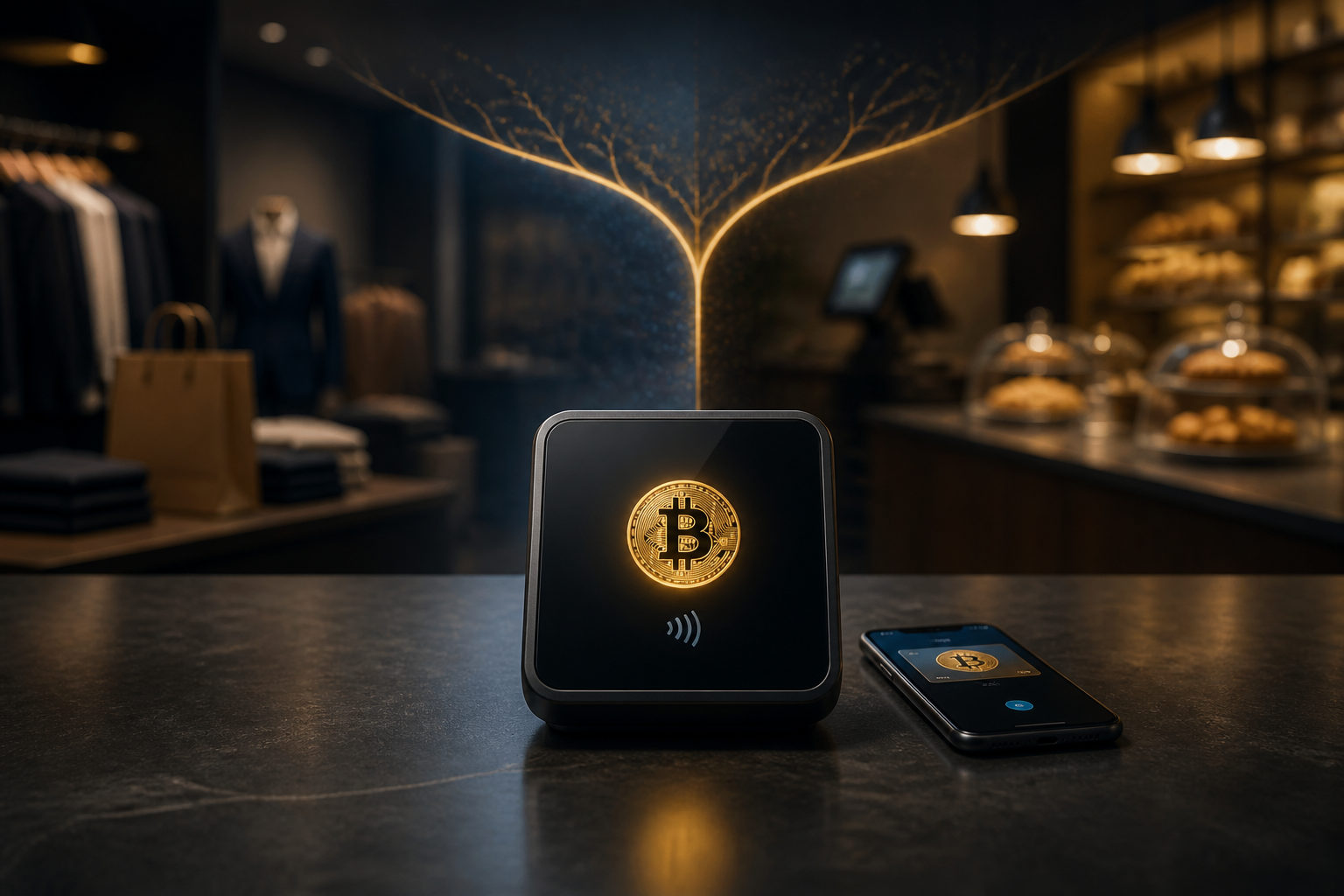
Does Square accept bitcoin? The short answer is: it depends on what you mean. A company can offer bitcoin-related features without every merchant using its checkout tools accepting BTC as a direct payment method.
Start by separating three different questions
People often use one search phrase for several different issues. They may be asking whether the company has any bitcoin service, whether a merchant using Square can take bitcoin at checkout, or whether a customer can interact with BTC somewhere inside a related app. Those are not the same thing.
The first question is about product support at the company level. That can include buying, selling, holding, or transferring bitcoin. The second is about merchant acceptance at the payment level. That asks whether a store can complete a sale with BTC as the payment asset. The third is about user perception. Once people hear that a brand “supports bitcoin,” they often assume every checkout flow under that brand accepts bitcoin directly.
That assumption causes most of the confusion. Bitcoin access on the consumer side does not automatically mean merchant-side bitcoin acceptance. Checkout support requires a working payment flow, order tracking, failure handling, and refund rules. A bitcoin feature in one part of an ecosystem does not prove that all those pieces exist in another part.
A five-step way to verify the answer
Step 1: Identify what you are asking about
Start with the exact subject. Are you asking about Square as a company, a merchant that uses Square at the counter, or a specific app connected to that broader brand? This matters because different products can support very different actions, and people often mix them together.
The reason for this step is simple: brand-level support and merchant-level acceptance are different categories. A company may have a bitcoin service somewhere in its product set, while a local store using its point-of-sale tools may only accept standard card payments. If you skip this distinction, you can read accurate information and still reach the wrong conclusion.
The main caution is not to assume that a familiar terminal or checkout device tells you anything about BTC acceptance. The hardware or payment brand at the counter does not prove that bitcoin has been turned on as a payment option for that merchant.
Step 2: Check the checkout screen, not the marketing copy
If you want a practical answer, look at the final payment screen. When bitcoin is truly available as a payment method, the checkout flow usually states it clearly through a BTC or bitcoin option, a payment instruction page, or an order confirmation path built for that method.
The reason this works is that payment is an operational feature, not just a branding message. Marketing pages can use broad language such as digital assets, crypto, or blockchain tools. None of that confirms that you can complete a purchase in BTC right now.
The caution here is to ignore vague wording. “Crypto-friendly” language, screenshots on social media, and secondhand claims are weak signals. If the live checkout page does not show bitcoin in a clear way, you should not treat the merchant as one that accepts BTC directly.
Step 3: Ask whether it is direct bitcoin acceptance or indirect bitcoin exposure
This is where many people get tripped up. You need to find out whether the merchant actually receives bitcoin, whether the system converts the payment before settlement, or whether the bitcoin connection exists only on the customer side of the experience.
The reason this matters is that the customer experience may look similar while the back-end outcome is very different. In one setup, a merchant may truly accept BTC. In another, the customer may interact with a bitcoin-related feature while the merchant still receives dollars through a standard settlement flow.
The caution is not to treat all QR-based payments or crypto-branded screens as proof of direct bitcoin acceptance. The interface can look modern and still hide a very different settlement process. If your question is “does this merchant accept bitcoin,” you need to know what asset reaches the merchant account at the end.
Step 4: Ask about refunds, cancellations, and failed payments before paying
Before sending anything, ask how a canceled order is handled, what happens if the wrong amount is entered, and what the process is if a transfer is delayed or not recognized right away. These are basic questions, yet they reveal whether the payment method is real and whether the merchant has thought through the workflow.
The reason to ask in advance is that bitcoin-related payments can have very different refund and support rules compared with card payments. Even when a business supports some form of BTC transaction, the path for reversals, disputes, or correction may not match what customers expect from traditional checkout systems.
The caution is direct: do not pay first and ask later. If someone says, “Just send it and we will check manually,” stop there. A legitimate checkout process should make the order amount, order record, and payment confirmation method clear before you part with your funds.
Step 5: Trust only official interfaces and official support
The last step is the anti-scam filter. Use the merchant’s own checkout page, the official app, the official help center, or direct support from verified channels. Do not rely on forwarded screenshots, copied chat messages, or claims from strangers in groups and comment threads.
The reason is that bitcoin payment scams often mimic normal support. Someone may pretend that the checkout system is down and tell you to send BTC to a personal wallet “for manual confirmation.” Others may share a fake receipt, a fake payment screen, or a cropped support chat.
The caution could not be clearer: if anyone asks you to leave the normal order flow and transfer bitcoin to a personal wallet, the risk jumps fast. That is true even if the person claims to be staff, a reseller, or support.
What customers should check before making a payment
If you are a buyer rather than a merchant, the fastest way to answer the question is not to debate brand history. Check the order flow in front of you. You do not need a theory about whether Square “accepts bitcoin” in the abstract. You need to know whether this order can be paid safely and correctly.
- Check the payment options: Is bitcoin or BTC shown clearly at checkout?
- Check the payment path: Are you paying inside an official flow, or are you being told to copy a wallet address by hand?
- Check the order record: Is there an order number and a visible payment status page?
- Check the refund policy: What happens if the order is canceled or the payment fails?
- Check the support source: Is support coming from official channels only?
- Check the error process: What happens if the amount is wrong or the payment is duplicated?
If several of these points are unclear, pause the payment. That is especially true in peer-to-peer deals, social-media sales, resale situations, and cross-border arrangements where support can vanish after funds are sent.
What merchants should verify before saying they accept bitcoin
Some readers asking this question are business owners. What they really want to know is whether using Square-style checkout tools means they can add bitcoin as a payment option. The answer should come from official merchant documentation and your own account settings, not from headlines or forum comments.
First, confirm that the product offers merchant-side bitcoin acceptance, not only consumer-side bitcoin access. Those are separate features. Second, confirm that your account type, business model, and region are eligible for the function in question. Third, make sure your accounting, refund handling, customer support, and internal training can support the process from start to finish.
A useful workflow looks like this:
- Read the official merchant documentation: Look for merchant payment support, not just user-facing bitcoin features.
- Check your merchant dashboard: Find payment settings, feature toggles, and any product-specific notes.
- Run a small internal test order: Only do this if the feature is clearly available inside the system.
- Train staff on what to say: Staff should know what is supported, what is not, and how to handle exceptions.
- Prepare a fraud response process: Include mistaken payments, duplicate payments, impersonation, and refund verification.
The biggest caution for merchants is overclaiming. A general association with bitcoin does not mean your store is configured to accept BTC. If staff tell customers “yes, we take bitcoin” without a real checkout path and a support process behind it, disputes become much more likely.
Why this question is so often misunderstood
There are a few recurring reasons. One is brand spillover: people hear that a company has bitcoin activity somewhere and assume all merchant products now support bitcoin payments. Another is headline compression. News summaries often say “supports bitcoin” without explaining whether that means buying, selling, transferring, holding, or paying.
A third reason is interface confusion. Users often assume that a QR code, a crypto label, or a digital-asset message means direct BTC payment. It may not. The label can describe part of the customer experience while the actual merchant settlement stays in dollars.
That difference matters because direct bitcoin acceptance is not just a front-end choice. It affects refunds, customer service, reconciliation, failed payment handling, and recordkeeping. A company can have meaningful bitcoin activity without every merchant checkout becoming a native BTC payment flow.
FAQ
Can I assume a merchant accepts bitcoin just because it uses Square?
No. A merchant can use Square hardware or checkout software without enabling bitcoin as a payment method. The only reliable check is the actual checkout screen and the merchant’s official payment instructions.
Does bitcoin-related support mean direct BTC payments are available?
Not necessarily. Bitcoin-related support can refer to buying, selling, holding, or transferring bitcoin in a separate part of a product set. That does not always mean a merchant can take BTC at the register.
If support tells me to send bitcoin to a personal wallet, should I do it?
You should be very careful and usually stop. A normal payment flow should stay inside the official checkout path. If someone asks you to bypass that path and send BTC manually, the scam risk rises fast.
How can I tell whether the merchant receives bitcoin or dollars?
Ask directly how the payment settles and what asset reaches the merchant account. If the answer is vague, do not guess. A clear payment method should come with a clear settlement explanation.
Where should I check the latest status for bitcoin payment support?
Start with the official app, the help center, the merchant dashboard, and the live checkout page. If you also need the current BTC price, use mainstream market data services rather than old screenshots or reposted claims.
If you are about to pay, do one thing first: confirm that the official checkout page shows the payment option clearly, the order record exists, and the refund process is written out. If any of those pieces are missing, do not send bitcoin.