
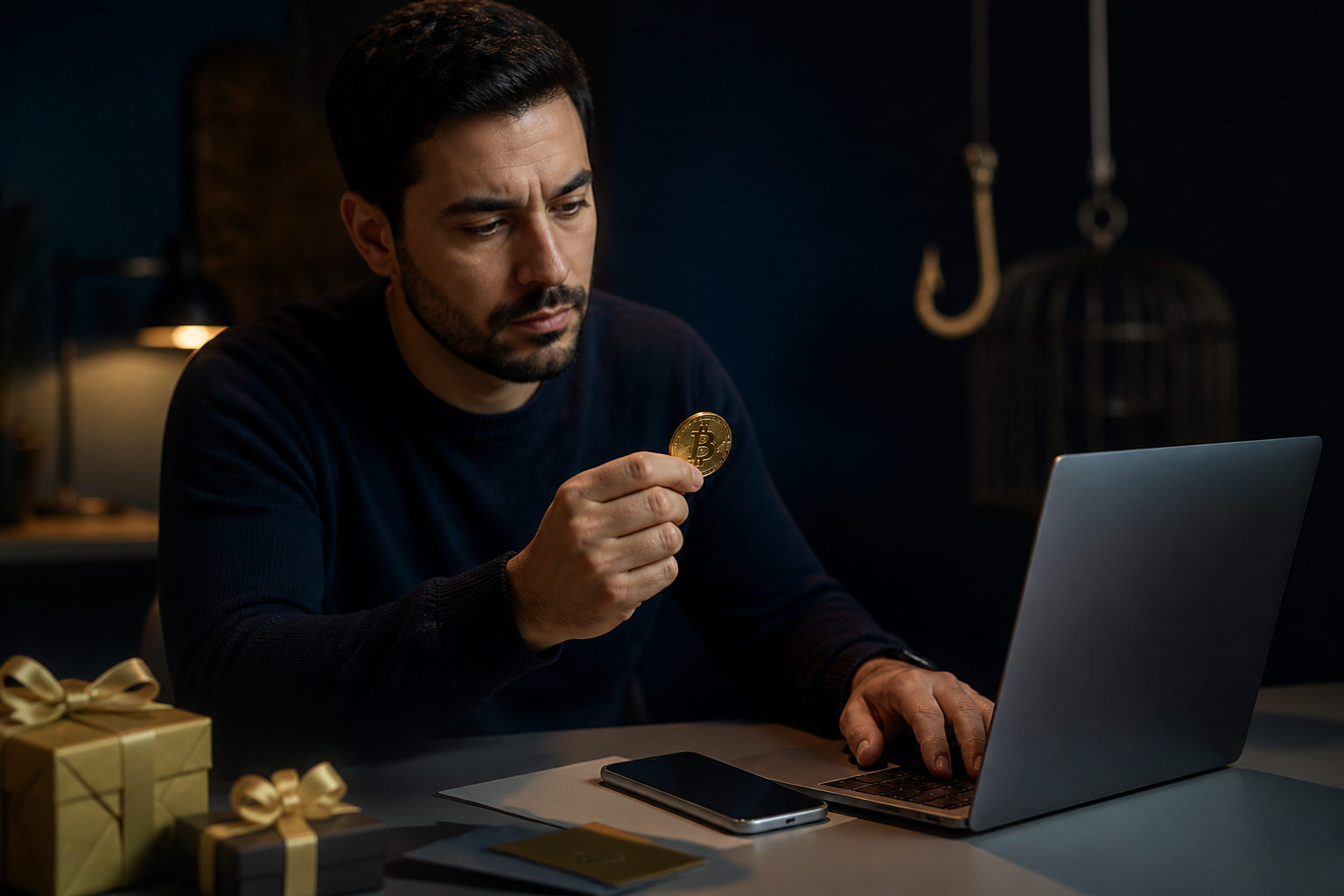
Is there a way to get free bitcoins? Yes, but in most cases you only get small amounts, and you give something up in return, such as time, skills, attention, or existing activity.
Start by defining what “free” actually means
Many people search for free bitcoins expecting a no-cost giveaway. In practice, the realistic paths usually mean you are not paying dollars directly, while still contributing labor, content, referrals, feedback, or time. That distinction matters because it changes how you judge the offer in front of you.
Once you separate real reward models from bait, the topic becomes much easier to navigate. Use the table below as a first filter before you spend any effort.
| Method | What you give up | Why someone pays in bitcoin | Main caution |
|---|---|---|---|
| Reward claims | Time and repeated actions | A service wants activity or ad exposure | Payouts are often tiny and may come with risky tasks |
| Work or content for bitcoin | Skills, labor, deliverables | You provided value and got paid in bitcoin | Set payment terms before starting |
| Cashback or referral rewards | Existing spending or audience reach | A business shares part of its revenue | Do not spend extra just to chase the reward |
| Learning or testing incentives | Attention, feedback, participation | An organizer wants engagement or user input | Check background and avoid unsafe permissions |
| Fake giveaways | Wallet access or personal data | Scammers use “free” to pull you in | Receiving bitcoin does not require your seed phrase |
Path one: earn bitcoin through work, skills, or digital output
If you want the most grounded option, exchange something useful for bitcoin. The step-by-step process is simple: decide what you can offer, confirm that the other party is willing to pay in bitcoin, agree on scope and delivery, then collect payment to a wallet you control. This can apply to writing, design, translation, coding, moderation, editing, or one-off digital tasks.
The reason this path works is clear. Bitcoin does not appear in your hands for no reason; someone transfers it because you delivered something they value. That means it is not “free” in the purest sense, but it is one of the least misleading ways to get bitcoin without buying it directly on the market.
The key caution is to lock down terms before the work begins. Clarify what counts as completion, when payment is due, and what happens if revisions are requested. If someone asks for a deposit, an activation fee, or a “security payment” before they will send your bitcoin, stop there. That flips the logic of a normal work arrangement.
How to make this step safer
- Start with a small task to test whether the payer follows through.
- Choose work with clear deliverables so disputes are easier to avoid.
- Generate the receiving address yourself and double-check it before sharing.
Path two: turn existing activity into bitcoin rewards
Some people already spend money on services, join communities, or share recommendation codes with friends or followers. In those cases, a bitcoin-denominated reward can be a side benefit rather than the main reason to act. The practical order is important: first ask whether you would do the activity anyway, then review the reward rules, and only after that decide whether it is worth joining.
The reason these programs exist is straightforward. A business may want new users, repeat usage, or wider reach, so it gives part of its economics back to participants in the form of bitcoin. For you, that can feel like free bitcoin because you did not buy it separately, but the value still came from a commercial arrangement.
The main caution is not to let the reward distort your behavior. People often end up overspending, signing up for things they will never use, or pressuring others to join only because the words “free bitcoin” are attached. If the reward requires prepaid tiers, locked deposits, or repeated purchases to “level up,” the risk profile gets much worse.
| Question to ask | Healthy sign | Warning sign |
|---|---|---|
| Are the rules clear? | Conditions and payout terms are stated plainly | The offer relies on hype and avoids specifics |
| Would you do this anyway? | The reward sits on top of normal behavior | You are pushed into new spending only for the reward |
| Do you need to prepay? | No entry fee is required | You must deposit money before any reward unlocks |
| Can you stop at any time? | You can walk away without loss | Your balance gets trapped behind extra conditions |
Path three: participate in education, testing, or community contribution
Another realistic route is to join learning programs, user testing, or community contribution activities that pay small bitcoin rewards. The steps are to read the conditions carefully, use a separate receiving wallet, complete the requested participation, and keep records of what you did. That last part matters if the reward distribution is delayed or disputed.
Why would anyone pay for this? Organizers may want readers for educational material, feedback on a product experience, bug reports, moderation help, or community support. A small bitcoin reward can be easier to understand than points or closed-loop credits.
The caution here is all about permissions and device safety. Receiving bitcoin usually requires only a wallet address. It does not require your seed phrase, private key, remote access to your computer, or software from an unknown source. A common trap is to let people complete several rounds of harmless tasks and then introduce a “release fee” or “verification payment” right before withdrawal. That pattern is a major red flag.
Three questions to ask before joining
- Does the reward model make sense, or is it all marketing language with no logic behind it?
- Are you sharing only a receiving address, or are you being asked for wallet control?
- If no reward arrives, would the time you spent still feel acceptable to you?
Use one anti-scam checklist for every “free bitcoin” offer
The most useful habit is not hunting for more offers. It is screening each one before you interact with it. A practical sequence works well: check the pitch, check what data is requested, check whether any payment is required from you, review the withdrawal terms, and inspect any software involved.
That process works because scam packaging changes all the time, while the core mechanics stay familiar. The offer starts with urgency or easy rewards, then moves into one of a few dangerous actions: prepayment, wallet authorization, unknown downloads, or social pressure to recruit others. If you focus on those points, many bad offers become obvious early.
| Check | Action | Reason | Caution |
|---|---|---|---|
| Read the pitch | Ignore claims of easy large payouts | Real rewards are usually limited | The bigger the promise, the more distance you should keep |
| Review requested data | Confirm that only basic signup details or a receiving address are needed | Receiving bitcoin does not require wallet secrets | Never hand over seed phrases or private keys |
| Look for payment demands | Check for deposit, tax, unlock, or verification fees | These are common extraction tactics | If you must pay first, assume elevated risk |
| Read withdrawal rules | Inspect conditions before doing any task | Restrictions often hide here | Changing rules are a signal to stop |
| Inspect software source | Use only tools from a source you trust | Unknown software can steal data or control your device | Do not trade major permissions for a tiny reward |
If you are unsure, take one defensive step before anything else: create a separate wallet for experiments and keep your main holdings elsewhere. That way, even a bad judgment call has a smaller blast radius.
FAQ
Are free bitcoin offers always scams
No. Some are simply reward programs, paid tasks, or small incentives tied to participation. The problem starts when the offer has no clear business logic and leans entirely on excitement, urgency, or secrecy.
Can I get a large amount of bitcoin without spending money
Usually not. Most legitimate paths lead to small amounts, especially if you are relying on rewards instead of direct work. Larger accumulation normally comes from sustained income, valuable skills, or existing business activity.
If someone says I need to pay a fee before I can claim bitcoin, should I trust it
You should be very careful. Receiving bitcoin normally requires only your address, so demands for activation fees, release fees, or verification payments are a serious warning sign.
Where should I keep bitcoin received from these activities
A wallet you control is the safer default. If the bitcoin only appears as an internal balance on a site with unclear withdrawal rules, you may not truly have access to it when you need it.
Should I use a fresh wallet for reward programs and tests
That is a good idea. Separating experimental activity from your main wallet reduces the damage from bad permissions, poor security, or misleading payout systems, and it also makes tracking rewards easier.
If you want to try this now, take the conservative route: set up a separate receiving wallet, choose one opportunity with a clear reward logic, no upfront payment, and no request for wallet control, then test it on a small scale before spending more time.
Disclaimer: This article is for informational and educational purposes only and is not investment, financial, or legal advice. Crypto assets are highly volatile and you could lose your entire investment. Do your own research and decide carefully.