
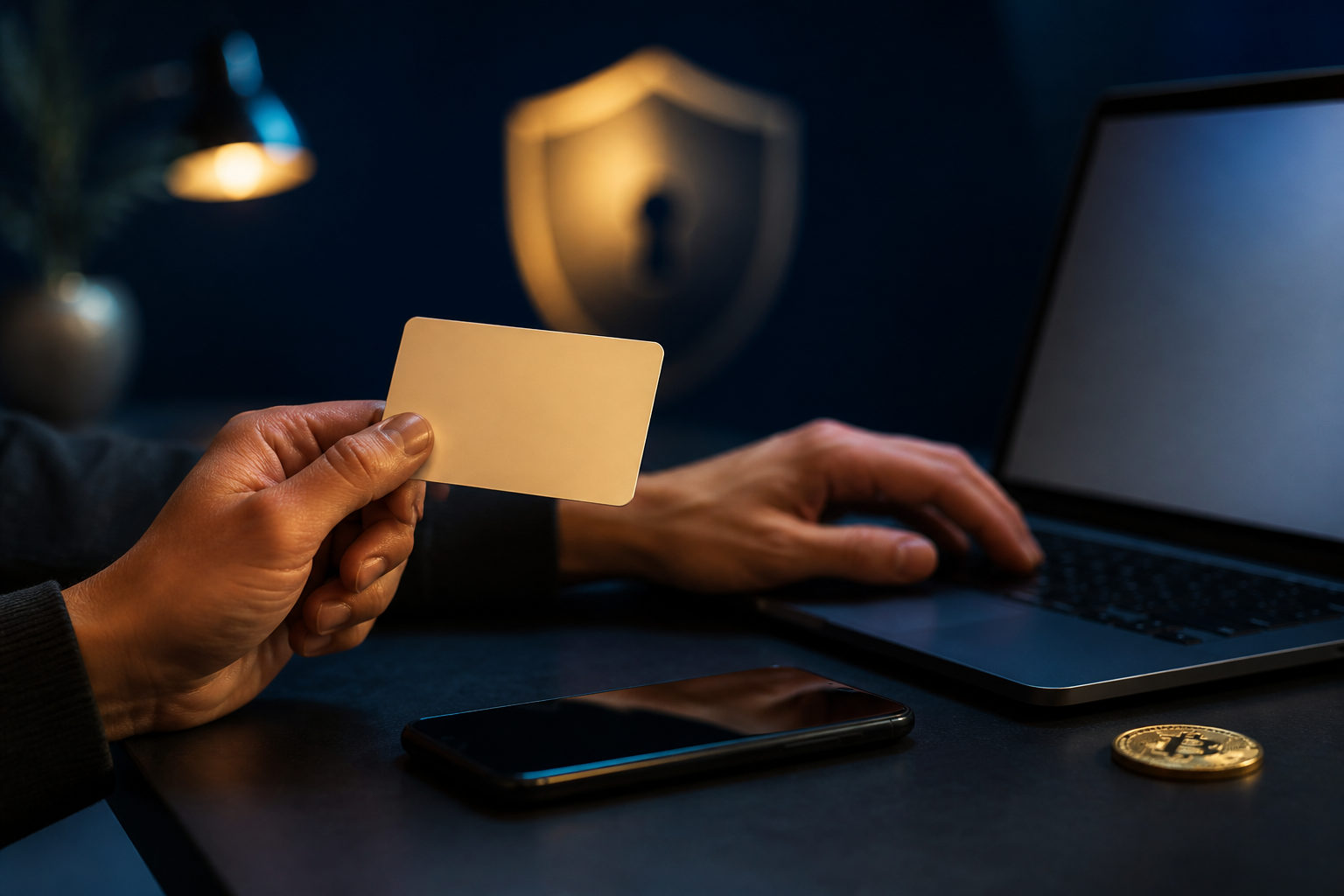
You can buy bitcoin with a Vanilla gift card, but the hard part is not payment alone. The real challenge is verifying the card, controlling where the bitcoin is sent, and avoiding scams that target gift card users.
Decide first whether this method makes sense for you
A Vanilla gift card is a prepaid card, so some sellers are willing to accept it as a form of value. That same feature makes it attractive to scammers. Once enough card details are exposed, the balance can be drained quickly, and your room to dispute the outcome may be limited.
Before you try to buy bitcoin this way, check the card's condition. You should know whether the card is unused, whether you can still verify the balance, and whether you still have the purchase receipt or some proof of origin. If the card came from someone else, or if its history is unclear even to you, many sellers will treat it as high risk.
You also need a plan for custody. If you do not already have a wallet you control, set that up before you start the trade. Buying bitcoin is only half the job; receiving it into your own wallet is what gives you direct control.
What to prepare before you enter a trade
A Vanilla gift card with a clear paper trail
The best starting point is a card you bought yourself through a normal retail channel and can still verify. That does not guarantee a smooth trade, though it gives you a stronger position if the seller asks for proof that the card is legitimate.
Do not rush to send the full card number, expiration details, security code, or every image of the receipt to a stranger. Gift card trades often fail because buyers hand over too much too early. Once the other side has enough information to test or spend the card, the damage may already be done.
A self-custody bitcoin wallet
Create a wallet before the transaction, back up the recovery phrase offline, and learn where your receiving address is shown. You should be able to copy the address correctly and compare the first and last characters before sharing it with anyone.
This preparation does more than save time. It keeps you from setting up a wallet while someone is pushing you to move faster, and it reduces the chance that you will accept a vague promise of later delivery to some internal balance you do not control.
Your own verification checklist
Gift card transactions can become chaotic when the seller keeps adding steps in chat. Write down your order of operations before you begin. For example: read the terms, confirm what asset you will receive, prepare your wallet address, verify the delivery rule, and only then decide what card information is necessary.
Keep records of terms and messages, but do not store your recovery phrase, full card data, or full security code in screenshots. Save the parts that matter for review later: what the seller asked for, what the seller promised to deliver, and what conditions applied when you sent anything.
How to buy bitcoin with a Vanilla gift card step by step
Step one: read the seller's rules before you share anything
Not every seller who accepts gift cards will accept Vanilla, and not every seller uses the same card verification process. Some may ask for a card image, some for a receipt, and some for a balance check. You need to know the rule set before you decide whether to continue.
If the terms are thin, confusing, or mostly replaced by private messages, treat that as a warning sign. A vague process gives the other side room to change standards after they have seen your card details.
Step two: confirm that the final product is actual bitcoin you can withdraw
Some trades end with an internal credit, a pending balance, or a placeholder that still depends on review. Before you move forward, ask what happens after the card is accepted. Will bitcoin be sent directly to your external wallet, or will it sit in an account interface under someone else's rules?
This distinction matters a lot with gift cards because the payment side can become irreversible quickly. If you discover withdrawal limits only after the card is accepted, your leverage is much weaker.
Step three: prepare your receiving address before the payment stage
Open your wallet, copy your bitcoin receiving address, and verify the characters at both ends. Doing this early lowers the chance of mistakes during the trade and stops you from building critical setup steps in the middle of a pressured conversation.
Never type a bitcoin address by hand if you can avoid it. Paste it carefully and check it again before you send it. If you are using a phone, be extra careful when switching between apps, since copied content can be replaced or confused by overlays.
Step four: provide only the card information needed to complete the trade
Sellers may ask for different forms of proof: a photo of the card, a receipt, a balance screenshot, or selected card details. Treat each request separately. Ask yourself whether the request is tied to a clear verification purpose or whether the other side is simply collecting more information than the trade requires.
If someone wants full sensitive details up front while staying vague about delivery, timing, or dispute handling, stop there. In gift card deals, the order of disclosure matters. You do not want to make the card spendable before the trade terms are fully defined.
Step five: understand the release condition before the final submission
The last stage is where many buyers get trapped. You should know when bitcoin will be sent, what standard will be used to decide whether the card is valid, and how any disagreement over balance or receipt quality will be handled.
Watch for soft language such as “after review” or “once approved” when no one explains who reviews the card, what they are checking, or what happens if they reject it. Ambiguous release terms shift nearly all risk onto the buyer.
Step six: treat wallet confirmation as the only real proof of delivery
A message that says “sent” is not enough by itself. A screenshot from the seller is not enough either. You need to confirm in your own wallet that the bitcoin was sent to your address and is now under your control.
After that, pause and review what happened before doing anything else. Check the asset type, the destination address, and the wallet status. Fast back-to-back actions create more room for avoidable mistakes.
Common scam patterns in Vanilla gift card bitcoin trades
High-pressure offers with unusually attractive terms
One common tactic is to dangle an appealing exchange rate or claim that the opportunity will disappear unless you act immediately. The goal is to make speed feel more important than verification.
If you feel rushed, step away. A trade worth doing should still make sense when you slow it down, read every condition again, and ask direct questions about delivery and card validation.
Fake support staff who ask you to move the process elsewhere
Another pattern involves someone posing as a helper, moderator, or support agent who says they can speed up card review. They may ask you to send card images, receipt photos, or sensitive details in a separate chat or email.
That creates a serious control problem. Once key information leaves the main transaction flow, you may no longer know who has access to it or who is accountable for misuse. Keep critical communication inside one clear process and avoid side channels for sensitive data.
Partial “testing” that slowly extracts usable card information
Some scammers break the verification into small pieces. They first ask for one detail to “test” the card, then another, then another. Each request looks minor on its own, but together they may reveal enough to spend or resell the card.
If the required information keeps expanding and the rules keep changing, exit the trade. A fragmented process makes it harder for you to judge how much exposure you have already created.
Delivery of the wrong thing
Sometimes the other side does send something, but it is not the thing you expected. It could be an internal balance, a different asset, or a promise that your bitcoin will be available later. That does not solve your problem if your goal was to receive bitcoin directly in your own wallet.
Before you send card data, state clearly what you expect to receive and where it must be delivered. If the answer stays blurry, there is no reason to proceed.
Practical risk controls that help in real use
Keep your pace slow enough that you can verify each step without guessing. Read every instruction once, then read the sensitive parts again before you act. Gift card fraud often works because the victim is pushed into handling several moving parts at once.
Use a clean device session when possible. Close unrelated tabs and apps, reduce distractions, and make sure you are looking at the correct wallet screen before copying any address. Simple operational discipline can prevent mistakes that have nothing to do with the seller.
Separate proof from trust. A friendly tone, a polished profile, or smooth messages do not count as proof that the trade is safe. What matters is whether the transaction rules are clear, whether the asset delivery path is clear, and whether you keep control over what you reveal and when.
FAQ
Can you really buy bitcoin with a Vanilla gift card?
Yes, it is possible when you find a seller or trading setup that accepts that type of prepaid card. The key question is less about whether it can be done and more about whether the process lets you receive bitcoin directly into your own wallet.
Why is this method riskier than ordinary payment methods?
Gift card data can become spendable very quickly once exposed. On top of that, these trades often depend on manual review and private communication, which creates more room for disputes and manipulation.
Should I set up my wallet before I start the trade?
Yes. Preparing your wallet first gives you a verified receiving address and removes one source of confusion during the live transaction. It also helps you avoid leaving your bitcoin in a place you do not control.
Is it normal for a seller to ask for card images and a receipt?
It can happen, but the request only makes sense when the seller has already made the trade rules, delivery method, and verification standard clear. If sensitive data is requested before the process is explained, that is a strong reason to stop.
Does a seller's screenshot prove I received bitcoin?
No. The only proof that matters is confirmation in your own wallet that bitcoin was sent to your address and is under your control. Third-party screenshots are only supporting records.
If you plan to try this today
Set up your wallet first, verify your Vanilla gift card status, and decide in advance what information you will refuse to share without clear terms. During the trade, read the rules before you send anything, and treat your own wallet confirmation as the final checkpoint.
Disclaimer: This article is for informational and educational purposes only and is not investment, financial, or legal advice. Crypto assets are highly volatile and you could lose your entire investment. Do your own research and decide carefully.