
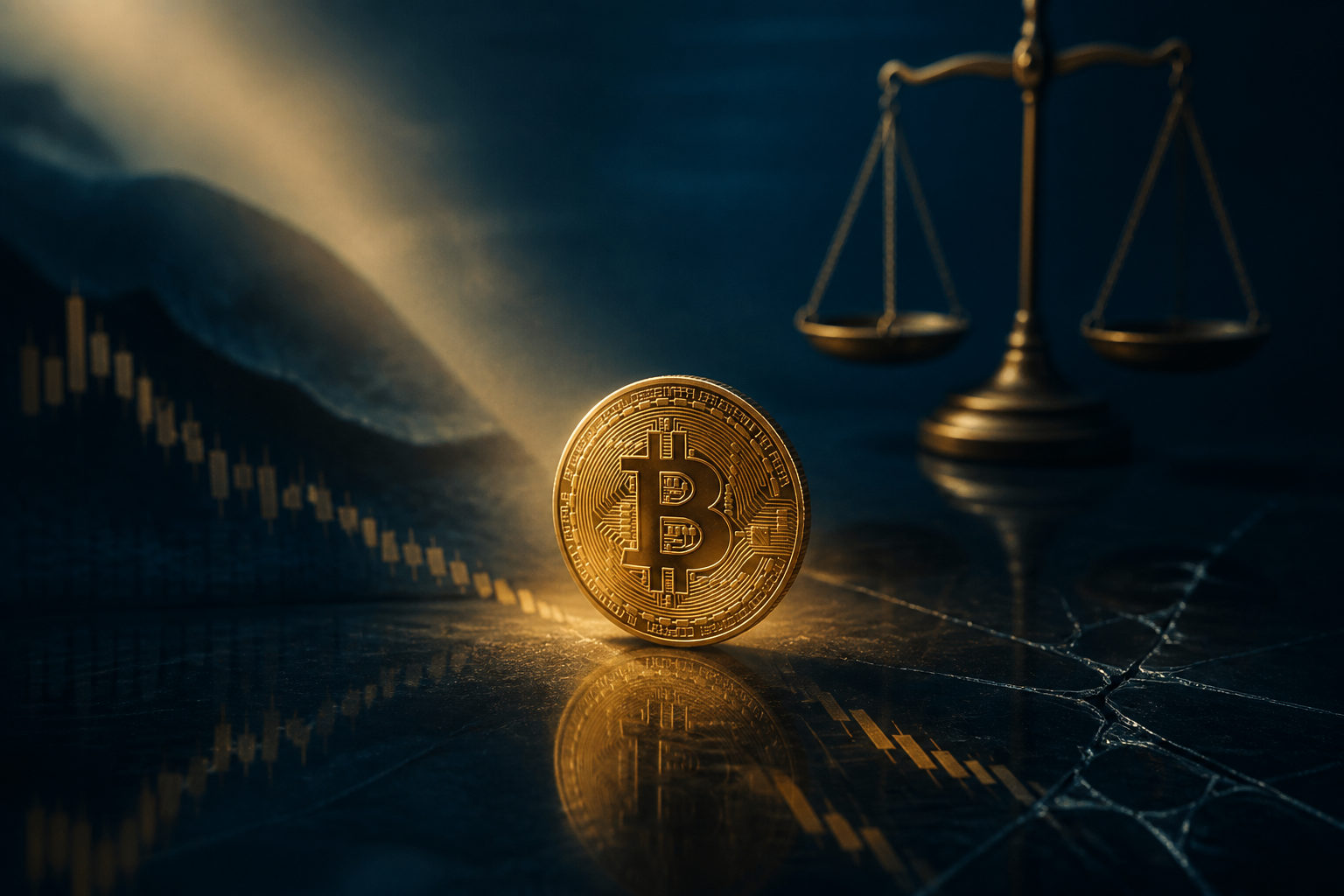
Why is bitcoin a bad investment for some people? The short answer is that Bitcoin can be a poor fit when an investor needs stability, clear valuation anchors, easy custody, or money that must be available on a fixed timeline.
Start with the real question: bad for whom?
Calling Bitcoin a bad investment sounds absolute, but the useful version of the question is personal. An asset can be acceptable for someone with a long time horizon, spare risk capital, and strong conviction, while being a bad choice for someone who needs predictable value and low stress.
That distinction matters because many investment mistakes come from mismatch, not from a single asset being universally good or bad. If your goals depend on capital preservation, reliable access to funds, or steady income, Bitcoin may conflict with those goals before price even enters the discussion.
That is why a restrained decision framework works better than a yes-or-no verdict. The issue is not whether Bitcoin can rise. The issue is whether its risk profile matches your money, your behavior, and your obligations.
Why Bitcoin often feels like a bad investment in practice
Large price swings can break a normal financial plan
Bitcoin is widely known for sharp moves in both directions. For a patient investor using money that is not needed for years, that may be tolerable. For anyone using savings that might be needed sooner, those swings can force bad choices at the worst time.
This is where timing risk becomes personal. If you buy with money intended for tuition, rent, a home purchase, medical bills, or a business expense, the problem is not abstract market volatility. The problem is that your life may require liquidity before the asset recovers from a drawdown.
In that setting, Bitcoin can become a bad investment even if your long-term thesis stays intact. You may be right eventually and still lose in practice because your timeline was wrong.
It does not produce cash flow in the usual sense
Many investors are used to assets that offer familiar valuation references. Stocks can be assessed through revenue, margins, earnings, and balance sheet quality. Bonds have coupon payments and maturity structures. Real estate can be analyzed through rental income and occupancy trends.
Bitcoin does not fit neatly into that framework. It is not a claim on corporate profits, and it does not pay income simply for being held. That makes it harder to build a valuation model that most investors would accept in the same way.
The result is wide disagreement about what Bitcoin is worth. When agreement is weak, sentiment, liquidity conditions, and market narrative can move price faster than many traditional investors are comfortable with. For people who want a clearly measurable fair value, that alone can make Bitcoin feel like a weak investment candidate.
Custody is part of the investment risk
Buying Bitcoin is not only a market decision. It is also a security and operational decision. Investors have to think about exchange risk, account protection, withdrawal procedures, wallet setup, private key management, and phishing attempts.
That changes the nature of the risk. In many traditional accounts, mistakes can sometimes be reversed or disputed through familiar customer support channels. With Bitcoin, an incorrect transfer, compromised recovery phrase, or fake support interaction can lead to losses that are hard to recover.
For experienced users, this may be manageable. For people who do not want that level of responsibility, Bitcoin can be a bad investment simply because the ownership process itself creates risk they do not want to carry.
Rules and taxes can add friction
Investors sometimes focus only on the market side and ignore the administrative side. Yet access, reporting, recordkeeping, platform restrictions, and local tax treatment all affect the real experience of owning Bitcoin.
If an asset requires more effort to buy, store, document, and eventually sell, then the investment case should be judged after those frictions are included. A high-conviction asset can still be a bad fit if the investor is unwilling or unable to handle the extra complexity.
A practical framework for deciding whether Bitcoin is a bad fit
Match the asset to the purpose of the money
The first question is simple: what is this money for? If it is emergency savings or funds needed in the near future, Bitcoin is usually a poor match. High-volatility assets and short-dated obligations rarely pair well.
If the money is truly long-term risk capital, the conversation changes. Even then, the asset still needs to fit your broader allocation, but at least the timeline is not working against you from the start.
Test your real risk tolerance, not your imagined one
Many people believe they can handle volatility until they experience it directly. A better test is behavioral, not theoretical. Ask yourself what you would do if the position fell sharply after purchase. Would you panic, sell out, double down without a plan, or lose focus at work and at home?
If the honest answer is yes, Bitcoin may be a bad investment for you even if you admire the asset. Investments do not fail only because of market structure. They also fail because investors misjudge their own emotional limits.
Understand the asset before you judge the opportunity
At a minimum, an investor should know what Bitcoin is and what it is not. It was introduced in the 2008 white paper titled Bitcoin: A Peer-to-Peer Electronic Cash System, and the network began with the genesis block in January 2009. The supply cap is 21 million coins, and the smallest unit is the satoshi, with 1 satoshi equal to one hundred millionth of a BTC.
Those facts do not tell you whether to buy. They do help you avoid a common mistake: treating Bitcoin like a stock, a savings account, or a guaranteed inflation hedge without understanding the differences.
Check whether you can execute safely
Execution matters more than many first-time buyers expect. Good account hygiene, two-factor authentication, device security, password management, and the ability to identify fake apps or phishing pages are all part of the investment process.
An investor can be directionally right and still suffer a bad outcome through poor security habits. If safe ownership feels like a burden, Bitcoin may be an unsuitable asset regardless of your market view.
Common mistakes that make Bitcoin look worse than it is
Assuming scarcity guarantees investment success
Bitcoin is scarce by design, with a maximum supply of 21 million coins. That feature is central to many bullish arguments. Still, scarcity alone does not make an asset suitable for every investor or every entry point.
An asset can be scarce and still be volatile, difficult to value, and hard to hold through stress. Scarcity is a structural feature, not a promise of smooth returns.
Treating halving as a complete investment thesis
Bitcoin produces a new block roughly every 10 minutes, and the issuance schedule halves about every four years, or every 210,000 blocks. Halving years have included 2012, 2016, 2020, and 2024.
That mechanism is important because it changes new supply issuance. It does not remove drawdowns, eliminate bad entry points, or protect investors from overexposure. If someone buys only because of a simple halving story, they may be skipping the harder but more important questions about position size, timing, and personal suitability.
Confusing long-term belief with any-price discipline
Some investors say they believe in Bitcoin over the long run. That is not the same as saying every purchase is sensible. Entry conditions, position size, and source of funds still matter.
A person who buys too much, too fast, with money that has a near-term use may later describe Bitcoin as a bad investment. In reality, the bad decision may have been the sizing and timing rather than the asset itself.
FAQ
Why do some people say Bitcoin is a bad investment?
The usual reasons are volatility, limited valuation anchors, custody risk, and regulatory or tax complexity. For investors who want predictability and low maintenance, those features can outweigh any upside case.
It can also be a poor fit when the money has a short timeline. In that case, the main risk is not theory but forced selling.
Does holding Bitcoin for the long term make it safe?
No. A longer horizon may reduce the pressure of short-term moves, but it does not erase market risk, custody mistakes, or poor position sizing. Time can help, but it is not a guarantee.
If long term simply means ignoring risk controls, then it is not a strategy. It is delay.
How can I judge Bitcoin without focusing on the current price?
Start with purpose, risk tolerance, and operational ability. Ask what the money is for, how much volatility you can truly tolerate, and whether you can manage account and wallet security responsibly.
Those answers usually matter more than a short-term quote when deciding whether Bitcoin belongs in your portfolio at all.
Is Bitcoin harder to own than stocks?
For many people, yes. The challenge is not only valuation but also custody. Owning Bitcoin often requires more direct responsibility for security and transfers than owning a stock in a standard brokerage account.
That extra responsibility is a real cost. It should be part of the investment decision, not an afterthought.
What should I learn first if I am still unsure?
Learn the basics of the asset and the basics of safe handling. Understand that Bitcoin is not equity, does not produce ordinary cash flow, and may require you to manage security details personally.
Before making any allocation decision, write down the purpose of the money, your maximum acceptable loss, your custody plan, and the conditions under which you would reduce or exit the position.
If you want a disciplined answer to whether Bitcoin is a bad investment, do not start with conviction slogans. Start with your timeline, your need for stability, your tolerance for deep drawdowns, and your ability to hold the asset safely without disrupting the rest of your finances.
Disclaimer: This article is for informational and educational purposes only and is not investment, financial, or legal advice. Crypto assets are highly volatile and you could lose your entire investment. Do your own research and decide carefully.