
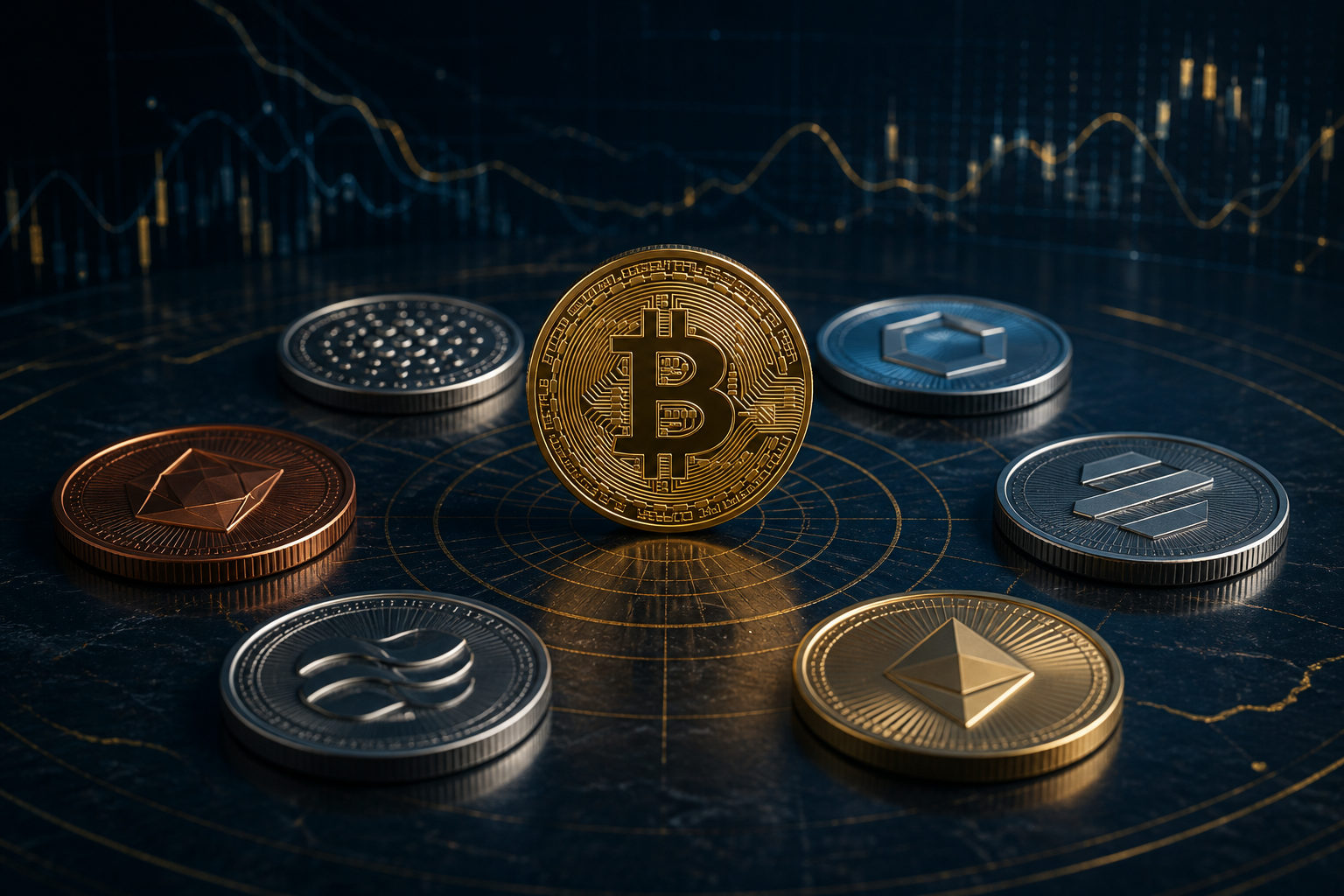
If you are asking what bitcoins should I buy now, the practical starting point is Bitcoin itself. As of August 1, 2026, BTC trades at $63062, and that makes it the clearest benchmark before comparing any major alternative coin.
Bitcoin snapshot first
| Metric | Value |
|---|---|
| Price | $63062 |
| 24-hour change | 0.77% |
| Market cap | about $1.27 trillion |
| Fear & Greed Index | 27 (Fear) |
| Data time | August 1, 2026 |
According to CoinGecko and alternative.me data, Bitcoin posted a 24-hour move of 0.77%, with a market cap of about $1.27 trillion and a Fear & Greed reading of 27. Those figures do not tell you what to buy on their own. What they do offer is a frame: before looking for a coin that might move faster, check the asset that most traders still use as the reference point.
Many people search for a list when they ask what bitcoins to buy now. In practice, the better question is how to compare Bitcoin with major coins in a way that matches risk tolerance, holding period, and portfolio purpose. That is why BTC comes first in this discussion.
Why Bitcoin belongs at the center of the comparison
Bitcoin is not the whole crypto market, but it often acts as the baseline. When investors compare major coins, they are often making an unstated decision about structure: do they want a core position, or do they want a higher-volatility satellite position built around a core?
That distinction matters more than a simple ranking of coins. If your goal is to build first exposure to crypto, Bitcoin is usually the cleanest place to begin the comparison. If your goal is to add style, sector, or higher volatility after that, then major alternative coins become a separate decision rather than a substitute for clear portfolio design.
- Benchmark role: BTC is often the first point of reference when people judge other coins.
- Sentiment signal: A Fear & Greed Index at 27 suggests a cautious market mood.
- Portfolio anchor: Many investors decide on a Bitcoin position first, then consider whether other major coins deserve space.
So when someone asks “what are the best bitcoins to buy right now,” the useful answer is rarely a random list of tickers. It usually starts with one step back: are you trying to create a base crypto allocation, or are you searching for extra upside with extra risk attached?
How to compare Bitcoin with major coins without making predictions
A strong comparison does not need a price target. It needs a checklist. For most readers, four filters are enough to make the question more realistic: portfolio role, volatility tolerance, holding window, and decision complexity.
1. Portfolio role: core position or aggressive add-on
Bitcoin is often discussed as a core candidate because its market role is easier to define. It is widely watched, highly liquid by crypto standards, and regularly used as the measuring stick for the rest of the market. Major alternative coins may still fit a portfolio, but they usually make more sense after the investor knows what the core is supposed to do.
That changes the decision from “which coin could move more” to “which asset fits the job I need done.” A coin can be popular and still be the wrong fit if the portfolio lacks a stable logic from the start.
2. Volatility tolerance: understanding is not the same as holding
Many investors believe they can handle risk when prices are rising. The harder test comes when prices swing and the plan starts to feel uncomfortable. Bitcoin often works as the first filter because if BTC volatility already feels difficult, a move into more reactive major coins may only add stress and increase the chance of impulsive decisions.
This is one reason the phrase “what bitcoins should I buy now” can be misleading. The decision is not only about which asset looks attractive. It is also about whether you can stay with the position once the market becomes less friendly.
3. Holding period: short-term trades and longer-term exposure are different problems
The Fear & Greed reading of 27 points to caution, not certainty. For a short-term trader, that may signal a market where sentiment shifts can carry extra weight. For a longer-term holder, the key issue is different: can you keep following the position without treating every move as a call to rewrite the plan?
Bitcoin helps here because it makes the comparison cleaner. It lets you ask whether you are building exposure over time or reacting to short-term price moves. Those are separate activities, and mixing them usually creates poor decisions.
4. Decision complexity: more coins do not always mean better diversification
Newer investors often assume that owning several major coins is automatically safer than holding one. That is not always true. Sometimes it just means the research burden is spread across more assets while conviction becomes weaker in all of them.
Starting with Bitcoin reduces that problem. It sets a baseline and forces a simpler question first: do I actually need more coins, or am I adding them because a longer watchlist feels more sophisticated?
What a Fear reading means when Bitcoin is your benchmark
As of August 1, 2026, the Fear & Greed Index stands at 27, labeled Fear. That does not produce a buy or sell signal by itself, and it should not be treated as one. It does, though, suggest that risk appetite is restrained and that emotionally driven reactions may matter more than usual.
In the context of choosing between Bitcoin and major coins, that has a simple implication. The more volatile the asset, the more important it is to define your reason for holding it before entering. Investors often think they made the wrong coin choice, when the real problem was entering without a clear role, time frame, or limit on how much uncertainty they were willing to absorb.
Bitcoin is useful in this setup because it provides a cleaner baseline. If you want broad crypto exposure in a form that is easier to compare and track, BTC is often the first candidate to evaluate. If you already have a clear process and are comfortable with higher volatility, then major alternatives can be judged as additions rather than replacements for the benchmark.
FAQ
Should I look at Bitcoin before looking at other major coins?
For most people, yes. Bitcoin usually gives the clearest baseline for risk, position sizing, and market context before the choice expands to other coins.
Why start with BTC if another coin might rise faster?
Because speed is not the only factor that matters. Bitcoin is often reviewed first because it helps define the structure of the position, not because it must outperform every other asset.
Does a Fear & Greed reading of 27 mean I should avoid Bitcoin?
No. A reading of 27 shows cautious sentiment, but it does not create a direct instruction to buy or sell. It is better used as a reminder to control expectations and avoid emotional position changes.
If I only want one crypto asset, is Bitcoin the first one to assess?
In many cases, yes. Bitcoin is often the first asset to assess because it is commonly used as the benchmark when investors compare crypto risk and portfolio roles.
Why do searches about what to buy now so often end up back at BTC?
Because most comparisons in crypto are still measured against Bitcoin in one way or another. Even when you study a major alternative coin, you are usually comparing its risk, volatility, and role against BTC.
If you plan to keep narrowing your list, write down your purpose first: are you trying to build basic crypto exposure, or are you willing to take on higher volatility for a more aggressive position? Then compare Bitcoin and other major coins with the same checklist instead of expanding your choices without a clear structure.
Disclaimer: This article is for informational and educational purposes only and is not investment, financial, or legal advice. Crypto assets are highly volatile and you could lose your entire investment. Do your own research and decide carefully.