
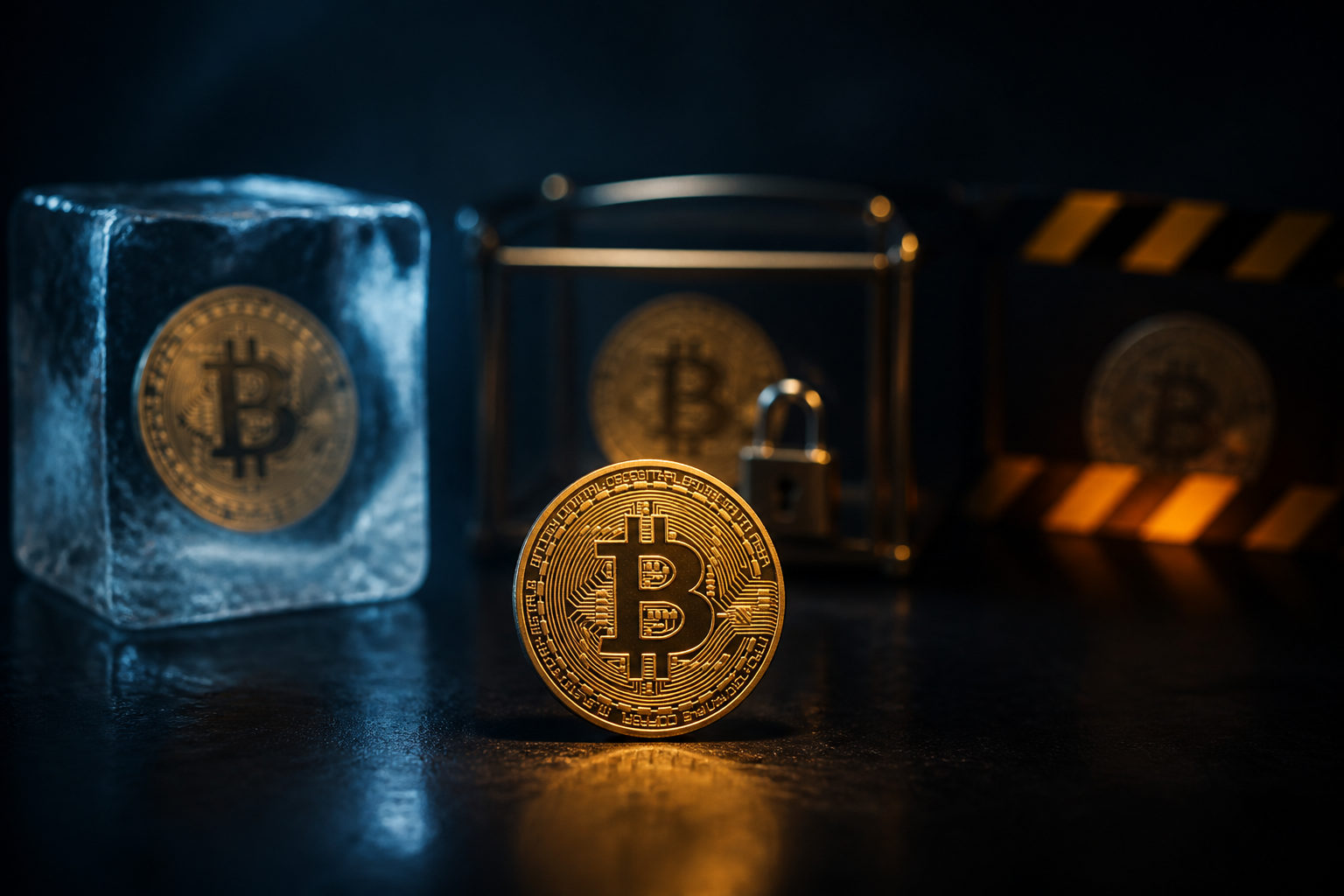
What bitcoins are worth money comes down to a practical test: can you control them, move them, and sell them without unusual friction? At the protocol level, one BTC is interchangeable with another. In real markets, the value you can realize depends on access, custody, liquidity, and transaction risk.
Why people ask this question in the first place
When someone asks what bitcoins are worth money, they are often not asking whether certain coins are officially “better” than others. They usually want to know why one BTC balance feels real and spendable while another feels stuck, restricted, or hard to cash out.
Bitcoin itself does not assign a premium based on age, wallet brand, or who held it before. The network treats bitcoin units as fungible. The smallest unit is fixed as well: 1 satoshi equals 0.00000001 BTC.
What changes outside the protocol is your ability to use the asset. A bitcoin you can send from a wallet you control is much more valuable in practice than a bitcoin shown on a frozen account screen. A bitcoin offered in a thin private market may need a discount to sell. A bitcoin tied up in access problems may be worth full market price in theory and far less to you in the moment.
| Factor | What makes BTC more valuable in practice | What reduces usable value |
|---|---|---|
| Control | You hold the private key or can fully authorize transfers | Lost key, lost seed phrase, blocked account access |
| Transferability | You can withdraw and send normally | Withdrawal restrictions or wallet access problems |
| Liquidity | Active market with enough buyers | Hard-to-sell venue that forces a discount |
| Risk profile | Clear provenance and low settlement friction | Extra review, delays, or buyer hesitation |
| Custody setup | Reliable self-custody or a trusted service | Dependence on informal promises or weak security |
Which bitcoins are genuinely worth money
The most valuable bitcoin is usually the bitcoin you can actually command. If you hold the private key, or if you use a service that allows normal withdrawals and trading, your BTC is much closer to full market value because you can act on it. That sounds obvious, but it answers a large share of the confusion around the topic.
Bitcoin also holds value better when it sits in a market where buyers and sellers can meet efficiently. Many people think in terms of “price,” but the usable value of BTC also depends on whether you can exit near the quoted market level. Deep liquidity does not change what bitcoin is. It changes how much friction stands between you and a completed sale.
Clear ownership matters too. If you can document control, pass standard checks where required, and settle through a functioning channel, your bitcoin is easier to use as money. If the sale depends on explaining missing records, regaining account access, or finding a buyer willing to take extra risk, the same BTC becomes harder to realize at a fair price.
Bitcoin’s supply structure is part of why the asset is valued at all, though that is separate from your personal access to it. The hard cap is 21,000,000 BTC, with issuance expected to continue until about 2140. Block rewards are cut in half every 210,000 blocks, roughly every four years, and blocks target about 10 minutes. The most recent halving was on 2024-04-19, bringing the current block subsidy to 3.125 BTC until the next halving, expected around 2028. That means the network currently adds about 450 BTC per day. These rules support scarcity, but scarcity only helps you if your coins are actually under your control.
Which bitcoins can look valuable but fail the real-world test
The clearest example is inaccessible bitcoin. A blockchain address may still hold BTC, yet if you do not have the private key or recovery phrase, that balance is not meaningfully spendable by you. On-chain existence and personal usefulness are separate issues.
Another example is custodial bitcoin that depends entirely on one platform staying available and cooperative. If an exchange account shows a BTC balance, that can be economically meaningful, but only while you can log in, pass verification, withdraw, and trade. If any of those fail, the gap between displayed value and usable value becomes obvious.
There is also bitcoin sold in weak markets. A seller might still find a buyer, but only at a noticeable discount because the venue has little liquidity or trust. In that case, the protocol has not changed. The market path has.
Some situations add review friction. Different venues apply different standards, and some buyers will hesitate if a transaction looks hard to process or settle. That does not make the BTC a different asset class. It does make the path to cash slower and less certain.
| Situation | What you see | Why value can be impaired |
|---|---|---|
| Lost private key | The address still shows BTC | You cannot sign a transaction to move it |
| Restricted exchange account | The platform still displays a balance | You cannot freely withdraw or sell |
| Illiquid private sale | A buyer exists | The buyer may demand a discount |
| High-friction transfer | The BTC still exists | Settlement becomes slower or harder |
| Poor custody habits | Short-term convenience | Long-term risk of losing control |
How to judge whether your bitcoin is truly worth money to you
Start with control. Can you authorize a transfer today? If the answer is uncertain, your first problem is not the market price of bitcoin. Your first problem is whether you possess a usable asset.
Then check transferability. Can your wallet broadcast a transaction? Can you generate a receiving address? Can you withdraw from the service you use? Many people confuse a displayed balance with immediate ownership in practice. The distinction becomes clear only when they try to move the funds.
Next, look at the sale environment. Where would you sell, and who would buy? A BTC position in an active market is easier to convert into money than a BTC position that depends on a narrow, slow, or trust-poor channel.
Finally, review your custody discipline. Bitcoin began with the genesis block on 2009-01-03, after Satoshi Nakamoto published the white paper Bitcoin: A Peer-to-Peer Electronic Cash System on 2008-10-31. Since the start, control has been tied to keys. If key management fails, the market may still value bitcoin highly, yet your own coins can become little more than an unreachable balance.
FAQ
Are older bitcoins worth more than newer ones?
Not by default. For ordinary BTC, market value depends far more on control, liquidity, and ease of transfer than on when the coins were mined or acquired.
Does bitcoin in cold storage become more valuable?
Cold storage does not add value by itself. It can improve security and control, which makes it easier to preserve full value over time if backups and recovery details are handled properly.
Is exchange-held bitcoin still real value?
Yes, as long as you can use the account normally and withdraw or trade without unusual barriers. If access or withdrawals are blocked, the practical value to you drops fast.
Can a special story make some bitcoin worth more?
In niche cases, buyers may care about narrative or collectible appeal. For most users, that is not the main issue; the bigger question is whether the BTC can be moved and sold efficiently.
How can I tell if my BTC can be sold near market value?
First confirm you can transfer it under your own authority. Then look at the venue: active order flow, clear rules, and straightforward settlement usually give you a better shot at selling close to the prevailing market price.
If you want to know what bitcoins are worth money, ignore the myth that some ordinary BTC units are inherently “better” than others. Check access, withdrawal ability, custody, and the market you would use to sell. That is where real value becomes usable value.
Disclaimer: This article is for informational and educational purposes only and is not investment, financial, or legal advice. Crypto assets are highly volatile and you could lose your entire investment. Do your own research and decide carefully.