
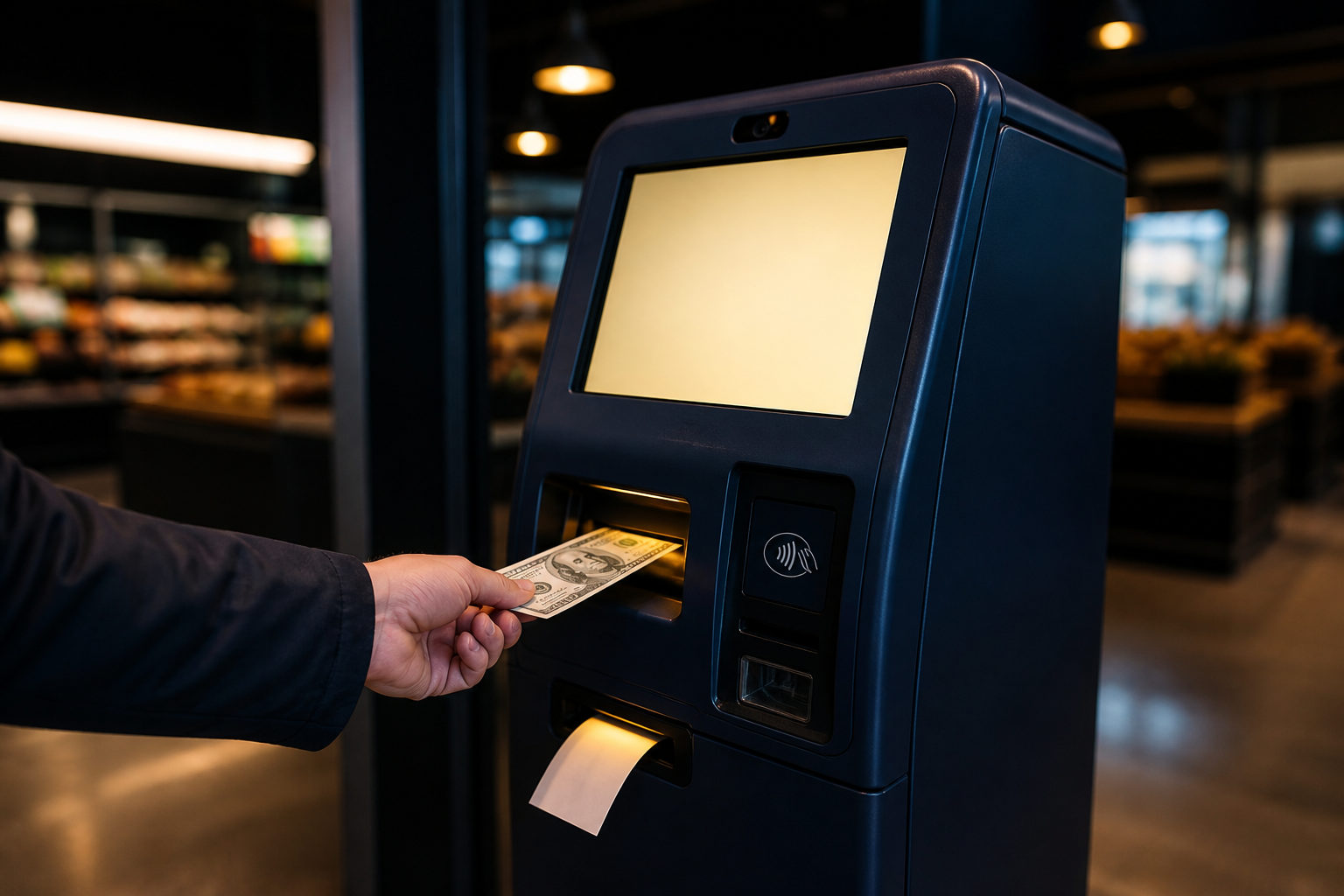
A Coinstar Bitcoin ATM is a self-service kiosk that lets people use cash to start a bitcoin purchase. The key point is simple: it is not just a cash machine with a crypto button, and anyone using one should understand the wallet, the fees, and the scam risks before putting in money.
What a Coinstar Bitcoin ATM actually does
The easiest way to understand this type of machine is to think of it as an entry point into a bitcoin buying process. You insert cash, complete the required prompts, and then follow the instructions to receive bitcoin in a wallet you control. The machine handles part of the process, but the final result depends on the details you enter and the way you claim or receive the bitcoin.
That distinction matters because many first-time users hear the term ATM and assume the experience will feel like a bank machine. With bitcoin, that assumption can cause costly mistakes. If bitcoin is sent to the wrong wallet address, or if a scammer talks you into sending it out after you receive it, recovery is often difficult.
Before touching the screen, know where the bitcoin is supposed to go. If you do not yet have a wallet you understand, or you are unclear about who controls the backup, stop there and sort that out first.
What to prepare before you use one
The most useful preparation step is setting up your own bitcoin wallet on your own device. You should know how to find your receiving address, how to confirm that it is the right one, and how your backup is stored. Walking up to the kiosk without that groundwork turns a simple purchase into a rushed decision in a public place.
Public settings create pressure. A line may form behind you, the screen may move faster than you expect, and someone nearby may offer to help. That is exactly when people download unfamiliar apps, copy an address from the wrong source, or hand over information they should keep private.
Before you begin, check these basics:
- Your phone is in your possession and protected with your normal security settings.
- Your wallet was chosen by you, and your backup is not stored by someone else.
- You know how to compare a wallet address before confirming it.
- You are ready to read the fee details before inserting cash.
- You are buying for yourself, not on behalf of a stranger, online contact, or caller.
The last point deserves extra attention. A common fraud pattern starts with someone pretending to be customer support, law enforcement, a utility representative, an investment guide, or even a romantic contact. They tell the target to go to a bitcoin ATM, put in cash, and send the bitcoin to a wallet they provide. If the destination wallet is not yours, do not proceed.
A step-by-step look at the typical process
Start by looking around the area before you interact with the machine. If someone is hovering over your shoulder, telling you which buttons to press, or asking you to stay on a call while you complete the transaction, treat that as a warning sign. A legitimate self-directed purchase does not require a stranger to coach you through a transfer.
Next, read the on-screen options carefully and confirm that you are choosing bitcoin. This sounds obvious, yet mistakes happen when users click too fast in an unfamiliar interface. Once you move into the payment and claim stages, fixing an error may be difficult.
You may then be asked for contact information or identity verification. The purpose is usually tied to the operator's rules and the follow-up process for the purchase. Enter information only into the kiosk's own workflow. Do not scan random QR codes posted nearby, and do not share text-message verification codes with anyone.
When the machine accepts cash, the screen may show the amount inserted, the purchase details, and fee information. This is the point where many users focus only on the bitcoin amount and ignore the full cost. Slow down and read the details. Service charges, exchange spreads, and network-related costs can affect the final result more than a beginner expects.
After the machine processes the transaction, it may print a receipt, display a code, or direct you to the next part of the claim process. Handle that information carefully. A receipt in this context may contain enough information for someone else to interfere with the transaction or learn sensitive details about it.
Before bitcoin is sent to your wallet, confirm the receiving address one more time on your own device. Do not pull an address from a chat thread, a search result, or a page sent by a stranger. If you feel rushed, step away and continue only after you can verify every detail with confidence.
How to judge whether it makes sense for you
People often look up Coinstar Bitcoin ATM questions because the format feels familiar. The machine is in a physical location, the process begins with cash, and the interface may seem easier to approach than a full exchange account. That convenience can be real, but it does not mean the method is a fit for everyone.
If your main concern is cost, pay attention to the total purchase cost rather than one number on the screen. Some buyers notice the amount of bitcoin they will receive but fail to account for every fee built into the transaction. By the time the bitcoin reaches the wallet, the overall cost can feel very different from what they expected.
If your main concern is control, focus on the wallet and claim path. You should know whether the bitcoin will go directly to your wallet or whether you need to complete a later step. You should also know who can access the wallet backup and whether any part of the process depends on information printed on paper.
| Decision point | What to confirm first | What can go wrong if ignored |
|---|---|---|
| Wallet setup | You control the wallet and its backup | You buy bitcoin but cannot manage it safely |
| Fees | You understand the full cost shown in the process | The purchase ends up costing more than expected |
| Receiving address | The address belongs to your wallet | Bitcoin may go to the wrong destination |
| Verification | You are willing to complete the required steps | The process may stall or expose data in the wrong place |
| Environment | No one is directing or pressuring you | You may be pushed into a scam transfer |
This method tends to make more sense for people who already understand basic wallet handling. If you are still learning what a receiving address is, how backups work, or why bitcoin transfers cannot simply be reversed, it is better to learn those basics before using a cash kiosk.
The biggest risks people miss
The most dangerous mistake is using the machine because someone else told you to. The story changes from case to case, but the structure is similar: the caller claims there is an urgent payment issue, a frozen account, a refund problem, an investment opportunity, or a legal threat. Then they push the target toward a bitcoin ATM and ask for a transfer to a wallet they control.
Another overlooked risk is careless handling of the printed receipt or claim information. People sometimes treat it like a normal shopping slip and leave it behind, photograph it carelessly, or send it to someone who says they are helping. Any document tied to the purchase should be treated as sensitive until the bitcoin is safely in your own wallet and the process is complete.
Address mistakes are common as well. The machine may work as intended, yet the user copies a wallet address from the wrong place or fails to check it before confirming. A safer habit is to open your own wallet app, display your receiving address there, and compare it carefully before completing the purchase.
There is also a control risk when another person sets up the wallet for you. If someone else created the wallet, wrote down the backup, or kept the recovery information, they may hold the real power over the bitcoin later. The purchase may look successful on the surface while control sits somewhere else entirely.
FAQ
How is a Coinstar Bitcoin ATM different from a regular ATM?
A regular ATM is built around bank account services such as cash access. A Coinstar Bitcoin ATM is tied to a bitcoin purchase flow, so the important parts are the wallet address, the claim steps, and the fact that bitcoin transfers are hard to reverse.
Do I need a bitcoin wallet before using a Coinstar Bitcoin ATM?
From a safety standpoint, yes, that is the better approach. Having your own wallet ready means you can verify the receiving address in advance and keep control of the backup from the start.
Is a Coinstar Bitcoin ATM a good choice for a first bitcoin purchase?
It can be, but only if you already understand the basics of wallet setup, receiving addresses, and fees. If you would be learning those concepts at the kiosk, the setting is working against you.
What scam warning signs should I watch for at a bitcoin kiosk?
The clearest sign is being told by someone else to use the machine and then send bitcoin to a wallet they provide. Pressure, secrecy, live phone coaching, and urgent payment stories are all reasons to walk away.
What should I do with the receipt or redemption information?
Keep it private until you confirm that the bitcoin has reached your own wallet and no further claim step is pending. Do not share photos of it, and do not leave it behind in a public place.
If you plan to use one, prepare the wallet first, verify the receiving address on your own device, and read each screen before cash goes into the machine. If any step feels unclear, stop and leave with your money still in your pocket.