
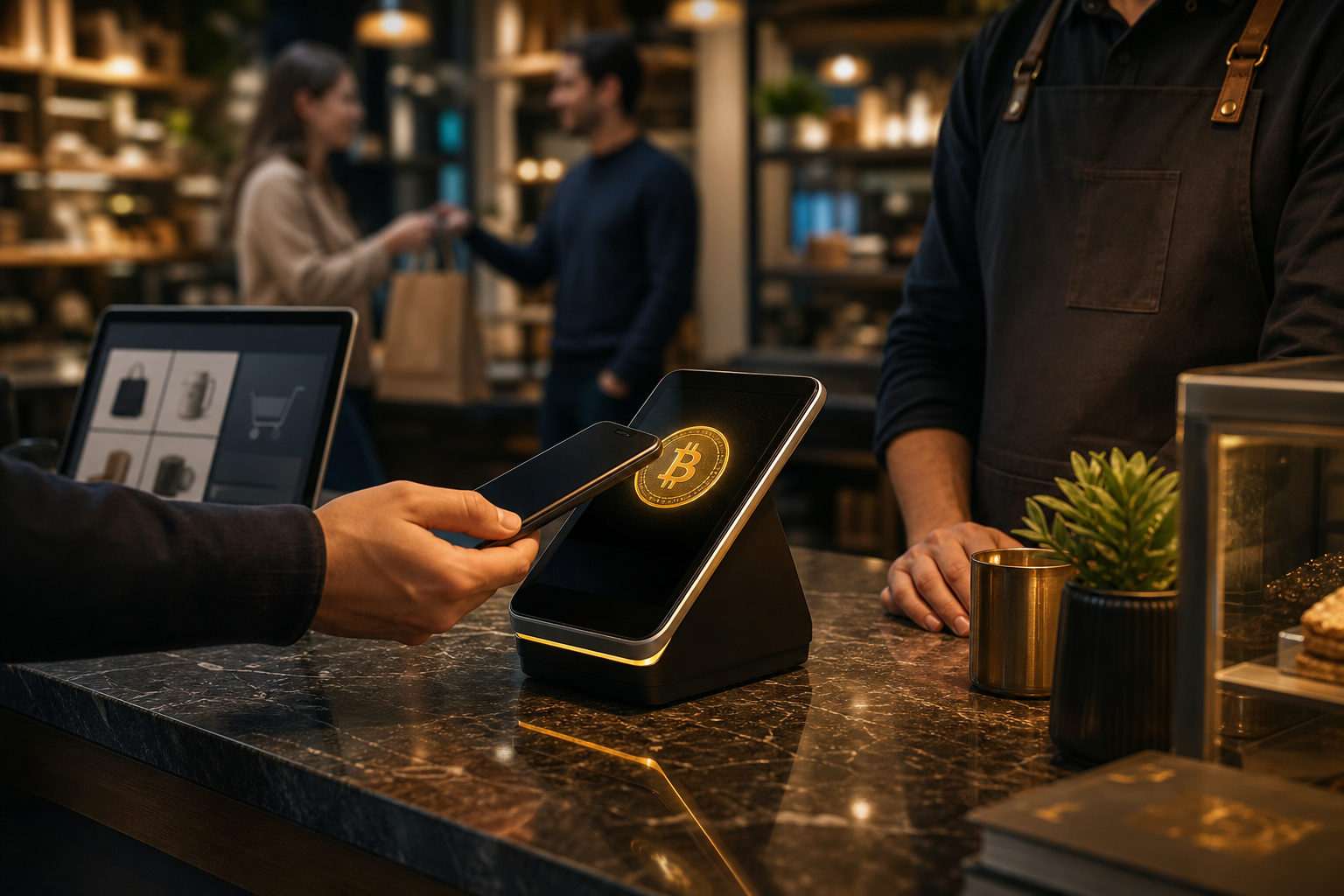
What places accept bitcoin? In practice, you are most likely to see it with online merchants, some in-person businesses, and direct peer-to-peer payments. The hard part is not finding a bitcoin logo. It is confirming that the seller really accepts BTC, that you are sending on the correct network, and that the refund and order rules are clear before you pay.
Start with the right categories of merchants
If you are trying to work out what places accept bitcoin, the easiest method is to sort the market by payment context instead of looking for random lists. Most real-world cases fall into three broad groups: online merchants, physical businesses, and person-to-person payments.
Online use is often the most visible. Digital goods, software services, memberships, consulting, creator payments, and some cross-border freelance work may offer a BTC payment option at checkout. That happens because bitcoin can fit internet-native commerce, especially when a merchant wants an extra payment rail for customers who do not want to use traditional card or bank methods.
Physical stores are less predictable. Some small shops, event booths, specialty businesses, or tech-friendly merchants may accept bitcoin at the counter. You might see a BTC sign near the register, on a menu, or at a point-of-sale screen. Even then, a sticker alone does not tell you how smoothly payment will work. In-store acceptance depends on staff training, internet access, confirmation policy, and the merchant's comfort with handling exceptions.
The third category is direct payment between individuals. This can include second-hand sales, one-off service work, design or development jobs, consulting, and personal reimbursement. It is flexible, but it also removes many of the safeguards that users expect from standard retail systems. If the address is wrong or the other side is dishonest, recovery is difficult.
That is why the better question is not simply where bitcoin is accepted. The better question is whether a seller supports bitcoin in a clear, repeatable, verifiable way. A social post, a logo, or an old screenshot is not enough. You need a working checkout process and rules you can inspect.
Step 1: Confirm the seller really accepts BTC
Your first move should be verification, not payment. Check the actual checkout page, invoice page, order terms, customer support reply, or in-store instructions. You want to know which asset is accepted, how the address is generated, how the order is matched to your payment, and what happens if there is a refund.
The reason is simple. Some merchants only accept crypto for certain products. Some have stopped offering it but left older marketing material online. Others do not accept bitcoin directly at all and instead use a third-party processor that handles conversion behind the scenes. That difference affects payment timing, customer support, and any refund path.
Before sending funds, look for these signals:
- A clear statement that BTC is accepted, not just a vague reference to crypto.
- Specific rules for product types, since subscriptions, gift cards, and pre-orders may have separate policies.
- A defined payment window so you know whether the order can expire.
- A refund policy that explains how returns or cancellations are handled.
- A support channel that can answer operational questions before you pay.
If the seller avoids these points and pushes you to send bitcoin first, treat that as a warning sign. A legitimate merchant should be able to explain the payment flow without vague promises or pressure.
Step 2: Check the asset and network before sending
Many bitcoin payment mistakes have nothing to do with merchant acceptance. They happen because the buyer sends the wrong asset or uses the wrong network. Before you hit send, confirm three things: the merchant wants BTC, the address matches the intended bitcoin payment method, and your wallet screen shows the same asset and route.
This matters because users often move between different wallets, exchanges, and token formats. Merchants, on the other hand, usually support a specific payment path. Some provide a standard BTC address. Others generate a payment request tied to a specific order. If you rely on memory instead of checking the current invoice, it becomes much easier to send funds in a way the merchant cannot match.
Use this practical checklist:
- Do not assume a small test payment is always helpful. Some order systems expect one exact amount and may fail to match partial transfers.
- After copying an address, compare the beginning and end characters before sending.
- If you scan a QR code, review the wallet details first instead of sending immediately.
- Do not trust a forwarded screenshot of a payment code from a chat room or private message.
If you plan to pay from an exchange withdrawal page rather than a wallet you control directly, be even more careful. Exchange withdrawal systems may involve delays, limits, or manual review. That can be a poor fit for a time-sensitive purchase.
Step 3: Understand pricing, timing, and order expiration
When people search for what places accept bitcoin, they are often really asking whether the checkout process is predictable. Without using any live market figures, the key point is this: the BTC amount due is usually calculated at checkout by the merchant or payment processor, then locked for a limited time.
Your job as the payer is to read that order page closely. Check whether it explains how long the amount is valid, what happens if the payment window expires, how the merchant detects payment, and when the order moves from pending to paid. If those details are missing, stop and ask before sending funds.
The reason merchants do this is straightforward. Bitcoin prices move, so they usually do not hold the same conversion result forever. The amount shown when you first browse a product and the BTC amount generated at final checkout may not be the same thing. The only amount that matters is the one tied to the live order you are about to pay.
There are a few common mistakes to avoid:
- Do not send funds before an order is created. The correct sequence is usually order first, payment second.
- Do not round the amount on your own. Even a small mismatch can break automatic payment matching.
- Do not assume shipment or service delivery starts right after broadcast. Some merchants act on a seen transaction, while others wait for confirmation.
Each merchant can set its own rules. A process that worked with one store may not work with the next one.
Step 4: Use a payment setup you can actually verify
The best wallet for spending is not always the one with the most features. For everyday payments, a better standard is whether you can understand the interface, verify the destination, review the transaction details, and save the records you may need later. If the payment matters, your setup should make verification easy rather than forcing you to guess.
That matters because bitcoin transactions are not like ordinary card purchases. Once funds are sent, reversal is often not available in the way people are used to. If your tool is confusing, you may not notice fee settings, address errors, or transaction status problems until it is too late.
Before paying, run through a simple sequence:
- Confirm that you actually hold spendable BTC for this order.
- Check that your balance covers both the purchase amount and the necessary network fee.
- Save the order reference before paying, but never expose your seed phrase, private keys, or sensitive wallet controls.
- After payment, keep the transaction record or hash in case the merchant asks for proof.
If anyone asks you to install remote access software, share your screen while entering wallet secrets, or reveal recovery words to resolve a payment issue, stop immediately. A normal merchant only needs your payment to arrive at the correct address. They do not need control over your wallet.
Step 5: Treat scam prevention as part of the payment process
Any useful guide to what places accept bitcoin has to cover fraud risk. Bitcoin itself can be verified on-chain, but many losses happen before or around the transaction because scammers exploit urgency and confusion. Once the payment goes to the wrong place, your options can narrow very quickly.
One common problem is a fake merchant page. A scammer may copy a real store's branding, create a fake checkout screen, or post in search results or social channels to steer users toward a false payment address. The safest response is operational, not technical: begin from the merchant's official entry point and avoid paying from a random message thread or copied image.
Another frequent problem is the fake support agent. After a delayed order, someone may claim the system failed and ask for a second payment to activate, verify, or release the first one. A legitimate merchant should review the existing order and transaction details first. Asking for another transfer as proof is a major red flag.
Then there is fake refund handling. You may be told to pay a fee before a refund can be issued, or to share one-time codes or wallet recovery information. That is not normal. Refund procedures should come from the merchant's stated terms, not an improvised private message.
Keep these precautions in mind:
- Do not let a countdown or exclusive BTC discount rush you into skipping checks.
- Do not send funds to a claimed manager's personal wallet instead of the store's normal payment flow.
- Do not complete a meaningful payment on an untrusted device or public connection if you can avoid it.
- Do not treat a successful send as the end of the transaction. For physical goods, shipping, returns, and support rules still matter.
If the process feels unclear, walking away is often the safer move.
FAQ
What kinds of businesses are most likely to accept bitcoin?
Online-first businesses are the most common place to find BTC payments, especially for digital goods, software, consulting, and creator services. Some physical stores accept it as well, but availability is less consistent and may depend on the staff on duty.
Does a crypto payment option always mean bitcoin is accepted?
No. Some merchants support only selected assets or use a payment processor with its own restrictions. The safer approach is to open the real checkout flow and confirm that BTC is listed with clear payment instructions.
Can a merchant refund a bitcoin payment?
Possibly, but the result depends on the merchant's policy and payment setup. Read the refund terms before paying, especially if the order involves digital goods, subscriptions, or custom work.
What should I check when paying with bitcoin in a physical store?
Start by confirming that the business is using a proper payment screen or order interface, not a random screenshot or handwritten address. Then verify the amount, asset, and payment instructions before you send anything.
What is the most practical way to tell whether a place really accepts BTC?
Look for a working checkout process, clear order terms, and support answers that match the payment instructions. A real bitcoin payment option should explain how to pay, how long the quote is valid, and how the merchant handles order matching and refunds.
Before any payment, follow the same order every time: confirm the seller really supports BTC, verify the asset and payment method, review the order window and refund rules, and keep your transaction record. That routine is more useful than any generic list of places that accept bitcoin.
Disclaimer: This article is for informational and educational purposes only and is not investment, financial, or legal advice. Crypto assets are highly volatile and you could lose your entire investment. Do your own research and decide carefully.