
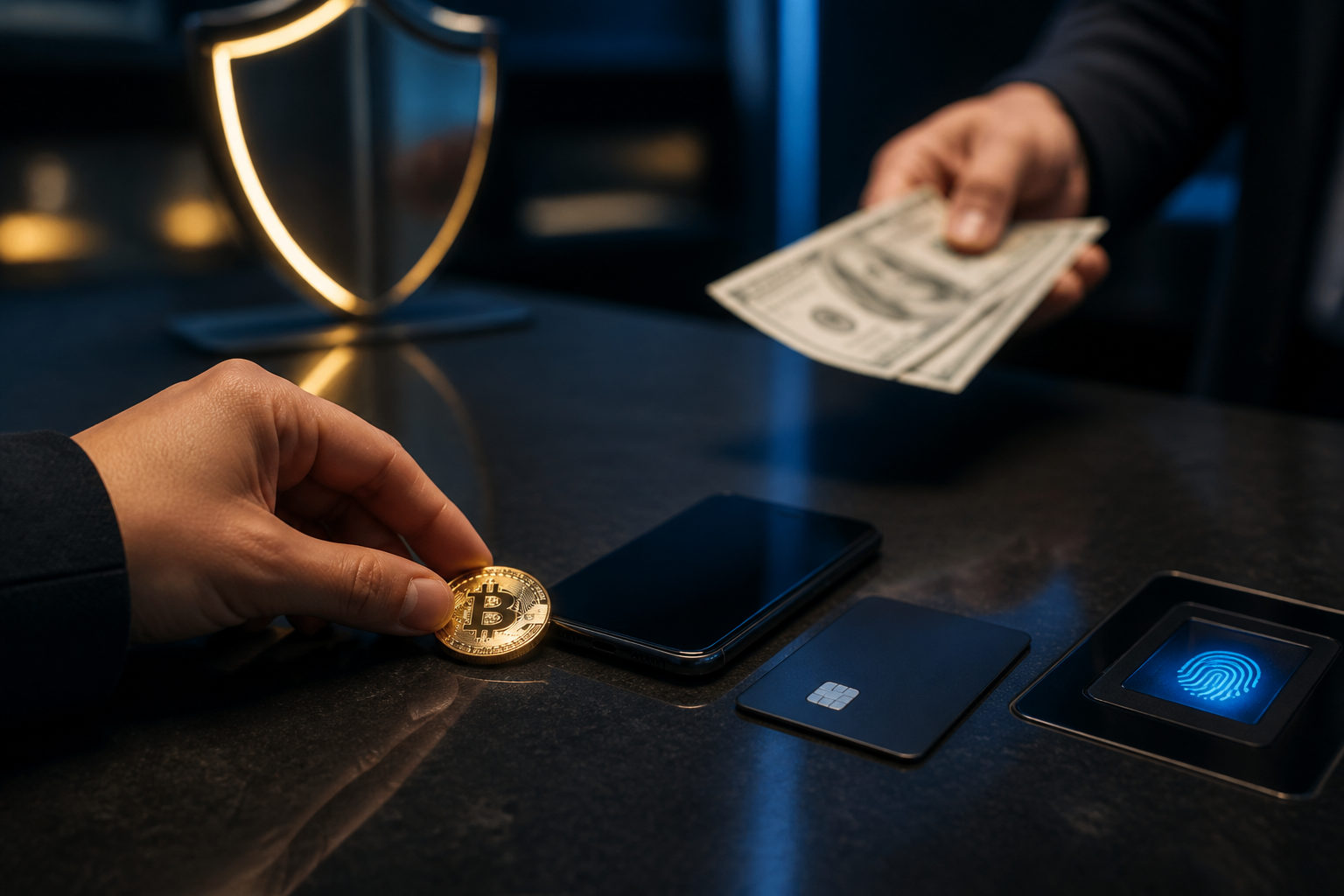
You can exchange bitcoins for dollars through a service that lets you sell BTC and withdraw USD to an account you control. The real question is not just where to sell, but where the full path from bitcoin to usable dollars is clearly supported.
Start by checking which services actually support USD withdrawals
A common mistake is assuming that any service with bitcoin trading also lets you cash out in dollars. That is not always true. Some services let you sell BTC into a USD balance inside the account, while the withdrawal options for that balance may be limited by region, identity checks, or account status.
In practice, people usually look at a few broad categories: centralized exchanges, peer-to-peer matching services, wallet apps with built-in sell features, and broker-style apps. This article does not recommend any specific platform. The useful comparison is whether the service supports BTC deposits, USD sales, and USD withdrawals to a payment route you can actually use.
| Service type | Best for | Main advantage | Main risk or limit |
|---|---|---|---|
| Centralized exchange service | Users who want a structured process | Trading and withdrawal steps are often clearly laid out | Identity verification and account reviews may be required |
| Peer-to-peer matching service | Users comfortable judging counterparty risk | Payment arrangements may be more flexible | Fake payment proof and off-platform fraud are bigger risks |
| Wallet sell feature | Users who want fewer app switches | Convenient interface | The actual sale may be handled by a third party with separate rules |
| Broker-style app | Users who prefer simpler trading screens | Easy to place an order | USD withdrawal support can vary by location and account type |
Step 1: Decide where the dollars will go before moving any bitcoin
The first practical step is to identify your final USD destination. If you skip that, you can end up with BTC sold into dollars that remain stuck inside a service you cannot use the way you expected.
Check the withdrawal section before doing anything else. Look for three points: whether USD is supported, whether USD can be sent to your own bank or payment account, and whether extra review may happen when you request a withdrawal.
This step matters because a USD balance on a screen is not the same thing as spendable dollars in your own account. Some services support dollar-denominated balances for trading, but that does not automatically mean every user can withdraw those funds externally.
Step 2: Complete identity checks before you deposit BTC
If you use a regulated service, identity verification is often part of the process. When a service handles bitcoin sales and dollar withdrawals, it may need to confirm who owns the account, whether the withdrawal route belongs to the same person, and whether the activity fits its internal risk controls.
The action here is simple: finish the account setup first. Review your legal name, location details, and payout information, then make sure they match across the account and withdrawal destination. A surprising number of delays come from inconsistent account details rather than from the sale itself.
The reason to do this early is straightforward. If you deposit BTC first and only then discover that the account cannot withdraw dollars yet, your funds may sit there while you work through additional checks. A cleaner flow is to get the account ready for withdrawals before you transfer in any bitcoin.
Step 3: Use a small test transfer and verify the deposit path
Before sending bitcoin from an external wallet, confirm that the service accepts BTC deposits and that you are using the correct deposit address shown inside your own logged-in account. A wrong address or a misleading deposit screen can turn a simple sale into an irreversible loss.
A small test transfer is a practical safety step. The purpose is to confirm, at low risk, that the address is correct, the service credits the deposit to your account, and the transfer path works the way you think it does.
The main caution here is to trust only the address shown inside the official account interface. Scams often rely on fake support messages, copied pages, altered clipboard data, or social messages that claim to provide a faster deposit route. If the address did not come from your own account session, treat it as unsafe.
| What to do | Why it matters | What can go wrong |
|---|---|---|
| Confirm BTC deposits are supported | Avoid sending coins to an unsupported flow | Using the wrong asset or wrong deposit page |
| Copy the address from your own account | Reduces fake-address risk | Trusting a message from a stranger or fake support |
| Send a small test amount first | Checks the route before larger transfers | Sending everything in one move |
| Wait for the account to show the deposit | Confirms the service credited your funds | Repeating actions before the first one is confirmed |
Step 4: Understand the sale screen before you place the order
Once the bitcoin arrives, the next step is selling it for dollars. Many users focus on the visible quote and forget to check order type, fees, spread, and withdrawal costs. The result is confusion when the final USD amount available for withdrawal is lower than expected.
The action step is to read the order screen carefully. Check whether you are placing an instant sale or another kind of order, and see where the service explains its charges. Some costs affect the trade itself, while others appear when you move the dollars out.
The reason this matters is practical. The amount you see during the sale, the USD balance shown after the trade, and the dollars you can finally withdraw are related but not identical ideas. If you separate those stages in your mind, it becomes easier to compare services and avoid surprise deductions.
Step 5: Review your payout details before requesting dollars
After the BTC sale is complete, the final stage is the USD withdrawal request. Before you submit it, review the payout account name, account details, currency choice, and any account alerts. Many cash-out problems appear at the withdrawal step rather than at the trading step.
The reason is simple: services often apply extra review when money leaves the platform. If the payout account does not match the account holder, if the region is unsupported, or if the account shows unusual login behavior, the withdrawal can be delayed or held for more information.
A practical habit is to test the withdrawal path with a smaller amount the first time you use a new service. That gives you a full end-to-end check of the process before you rely on that route again.
High-risk shortcuts to avoid when exchanging bitcoin for dollars
Scammers target users who want to exchange bitcoins for dollars quickly. The most dangerous setups are often simple: someone asks you to trade privately, a fake support account tells you to send BTC to a review address, a buyer shows a payment screenshot and asks you to release coins first, or a stranger offers a much better deal if you leave the normal process.
If you use a peer-to-peer service, stay inside the service's own order and dispute flow. The moment a counterparty asks to move the conversation to a chat app or finish the deal outside the platform, your protection usually drops sharply.
Another weak spot is search and social traffic. An ad, a cloned domain, or a direct message can lead you to a fake login page that looks close enough to the real one to fool a rushed user. Safer habits include typing the address yourself, using a saved bookmark, and keeping extra account security enabled.
| Warning sign | Typical pitch | Safer response |
|---|---|---|
| Request to trade privately | “Skip the platform and save time” | Keep the trade inside the formal order flow |
| Unsolicited support contact | “Send BTC to this review address” | Verify help requests only through the official account interface |
| Screenshot offered as proof of payment | “I paid, release the coins now” | Rely on actual funds received in your own account |
| Unusually attractive quote | “I can give you a better rate right now” | Treat the offer as suspicious until the rules are clear |
| Login request from an unknown link | “Click here for faster withdrawal” | Do not use the link; enter the site manually |
FAQ
What is the safest place to turn bitcoin into dollars?
The safer choice is usually a service with a clear account process, visible withdrawal rules, and support for USD payouts to an account in your own name. Safety comes from transparent steps and controlled access, not from a flashy quote or a promise of faster cash-out.
Can I sell BTC directly to another person for dollars?
You may find that option, but the fraud risk is much higher. If you use a matching service, keep every step inside its order and dispute system instead of moving to private chat.
Why can I sell bitcoin but still fail to withdraw USD?
Selling BTC and withdrawing dollars are separate stages. The sale changes your asset balance, while the withdrawal depends on account verification, payout setup, local availability, and the service's review process.
What should I check before sending bitcoin to an exchange service?
Confirm that the service accepts BTC deposits, supports USD withdrawals for your account type, and shows the deposit address inside your own logged-in session. If it is your first time using the service, a small test transfer is a sensible check.
Does a wallet app's sell button mean I can definitely receive dollars?
Not always. In many cases the wallet only provides the interface, while the actual sale and payout are handled by a separate provider with its own limits and requirements.
If you plan to exchange bitcoins for dollars soon, the cleanest order is this: confirm the USD withdrawal route, complete account verification, send a small BTC test transfer, make the sale, and then test the dollar withdrawal. Staying inside the official interface at each stage cuts down both mistakes and scam exposure.
Disclaimer: This article is for informational and educational purposes only and is not investment, financial, or legal advice. Crypto assets are highly volatile and you could lose your entire investment. Do your own research and decide carefully.