
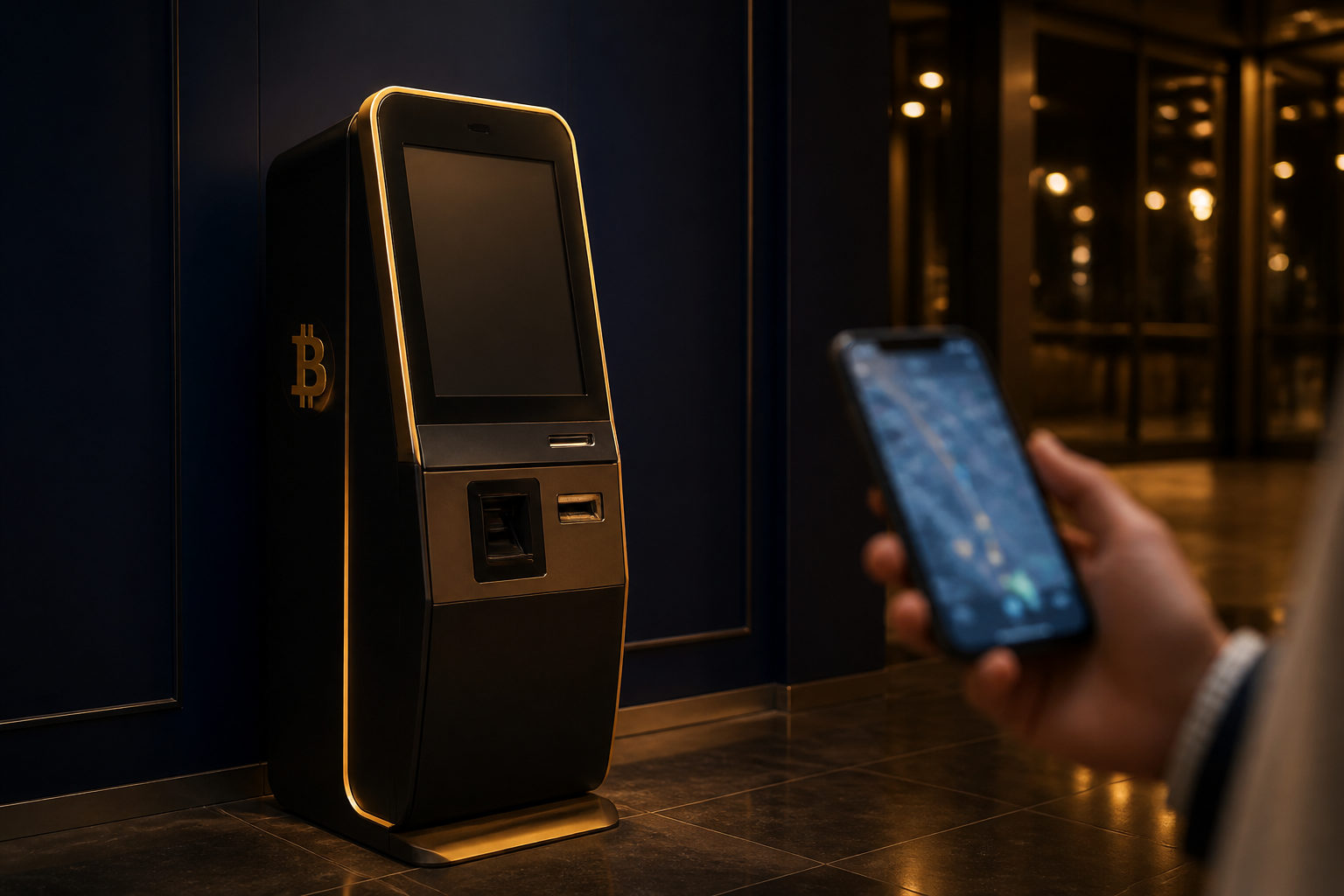
The nearest bitcoin machine is whichever nearby terminal is actually active, open, and suitable for what you want to do. In practice, the fastest way to find one is to check maps, compare bitcoin ATM directories, and confirm whether that location supports buying, selling, or both before you leave home.
Know what kind of bitcoin machine you are looking for
People often search for the nearest bitcoin machine when they really mean a bitcoin ATM that accepts cash for a Bitcoin purchase. That is only one category. Some terminals are true bitcoin ATMs, some are crypto-enabled kiosks with limited features, and some are store-based service points that only guide you through part of the process.
| Type of machine | What it usually does | What you should have ready | What to confirm first |
|---|---|---|---|
| Bitcoin ATM | Cash purchase of bitcoin; some also allow sales | Phone, Bitcoin wallet, identity documents if required | Buy-only or two-way, store hours, verification rules |
| Crypto-enabled kiosk | Purchase of selected coins with narrower features | Phone, receiving wallet address | Supported assets, payment method, payout process |
| Store counter or partner terminal | Assisted onboarding, voucher flow, or limited exchange service | Phone, account details | Whether the transaction is completed on site or only started there |
This distinction matters more than many first-time users expect. If you need to sell bitcoin for cash, a buy-only ATM is useless. If you expect a full self-service machine and arrive at a store that only offers a voucher or referral flow, you may have to start over.
How to find the nearest bitcoin machine that you can actually use
The best search method is not to trust one source. Start broad, then narrow the list. A machine that appears close on a map may be offline, removed, inside a closed business, or missing the feature you need.
- Search in a map app first: Try terms such as “Bitcoin ATM” or “crypto ATM.” This gives you a quick sense of nearby options and opening hours. It is useful for speed, but map entries can be stale or mislabeled.
- Check a bitcoin ATM directory: Directories often list whether a machine supports buying, selling, identity checks, and specific cryptocurrencies. That makes them better for filtering by function.
- Verify the operator: If the machine belongs to a known operator, look up that operator’s current location list. This is one of the easiest ways to avoid traveling to a dead listing.
- Review the host location: Many machines sit inside convenience stores, malls, gas stations, or small shops. The machine may exist, yet still be inaccessible because the host business is closed or has entry rules.
Focus on usability, not just distance. The nearest machine on paper is not always the fastest option in real life. A slightly farther location with confirmed hours and a clear service description can save you a wasted trip.
What to verify before you go
Most failed visits happen because users skip the basic checks. Bitcoin transactions usually cannot be reversed after they are sent, so a few minutes of preparation can prevent the most common mistakes.
| Item to verify | Why it matters | Common problem |
|---|---|---|
| Buy or sell support | It determines whether the machine fits your purpose | The listing mentions BTC but only supports purchases |
| Wallet requirement | Many machines ask you to scan a receiving QR code | You install a wallet in a hurry and fail to back it up |
| Identity checks | Rules vary widely by operator and jurisdiction | You arrive and learn that phone, ID, or a selfie is required |
| Fees and pricing | Physical machines often cost more than standard online trading | You focus on convenience and ignore the full cost |
If this is your first time, set up a wallet on your own device before leaving. Make sure you can open the receiving screen and display the QR code without relying on poor mobile signal inside a shop. You also do not need to buy one full bitcoin. Bitcoin is divisible down to 1 satoshi, which equals 0.00000001 BTC, so machines usually send a fractional amount based on the money you put in.
That point matters because many beginners overestimate the minimum size of a Bitcoin purchase. The hard part is not owning a whole coin. The hard part is making sure the address is correct, the fee is acceptable, and the transaction route is clear.
What the process usually looks like at the machine
Interfaces differ, but the basic sequence is similar across many terminals. You choose whether you want to buy or sell, select Bitcoin, complete any required verification, enter or confirm the amount, scan a wallet address, and approve the transaction. If you are buying, the machine will use the displayed exchange rate and fee structure at that moment. If you are selling, the common flow is that you send bitcoin to an address shown by the machine and then collect cash according to its rules.
The most sensitive step is address confirmation. If you send bitcoin to the wrong address, recovery is usually not possible. You should also expect some waiting time. Bitcoin aims for a block roughly every 10 minutes, so a machine showing a pending status does not automatically mean something went wrong. It may simply be waiting for network confirmation or for the operator’s internal policy to clear the transaction.
For selling, read the cash payout instructions carefully. Some machines dispense cash right away after the required conditions are met. Others issue a code first and release cash later. Both models exist, and mixing them up is an easy way to waste time.
Costs, privacy, and scams: the issues people miss most often
The appeal of a bitcoin machine is convenience. You can walk up, follow the prompts, and complete a transaction without learning a full exchange interface. The tradeoff is usually price. The total cost may appear through a visible service fee, a wider buy-sell spread, or both.
| Risk | How it usually appears | Safer approach |
|---|---|---|
| High total cost | The machine’s quoted price is less favorable than common market pricing, with extra fees added | Check the final BTC amount or final cash outcome before confirming |
| Privacy exposure | You display your wallet, phone number, or ID in a public place | Stand where others cannot easily watch your screen and put away receipts after use |
| Old or fake listings | A map entry exists, but the machine has been removed or never matched the listing | Cross-check the location with more than one source |
| Scam pressure | Someone tells you to deposit cash and send bitcoin to a specified address | Only use the machine for your own transaction, never on instructions from a stranger |
That last point deserves special attention. A common scam script tells people to go to the nearest bitcoin machine to pay a fake bill, security deposit, account recovery charge, or emergency fee. The machine itself is not fraudulent; the instruction is. If another person is pushing you to convert cash into bitcoin and send it to an address they provide, stop immediately.
You should also keep your expectations realistic about speed and anonymity. Some machines ask for more verification than users expect. Some have lower convenience than a normal exchange account if your phone, wallet, or documents are not ready. What looks simple from the sidewalk can become awkward once a timer is running on the screen and other people are nearby.
FAQ
What if there is no bitcoin ATM near me?
You still have other ways to buy bitcoin. A machine is only one access point, and in some places it is not the most practical one. You can look at regulated exchanges or broker services available in your area, then compare their verification steps and payment options.
Do all bitcoin machines let you sell bitcoin for cash?
No. Many locations are buy-only. Before you travel, check whether the machine is described as two-way or whether the listing explicitly mentions cash withdrawal from a bitcoin sale.
Do I need a wallet before using a bitcoin machine?
In most cases, yes. A machine often needs your receiving address as a QR code when you buy. Preparing a wallet in advance also lowers the chance of setting one up poorly under pressure.
Why has my bitcoin not arrived immediately?
Instant completion is not guaranteed. Bitcoin targets a block about every 10 minutes, and operators may wait for confirmations before they mark a transaction complete. Keep your receipt and check your wallet for a pending transaction before assuming there is a problem.
Do I need to buy a whole BTC at the machine?
No. Bitcoin can be divided into very small units. The smallest unit is 1 satoshi, equal to 0.00000001 BTC, so purchases are usually based on the amount of money you insert rather than on whole coins.
If your goal is to find the nearest usable bitcoin machine quickly, the practical sequence is simple: search maps, confirm the operator, verify the host store is open, and have your wallet QR code ready before you leave. At the machine, read the fee display, confirm whether it is buy-only or two-way, and check the destination address one more time before you approve anything.