
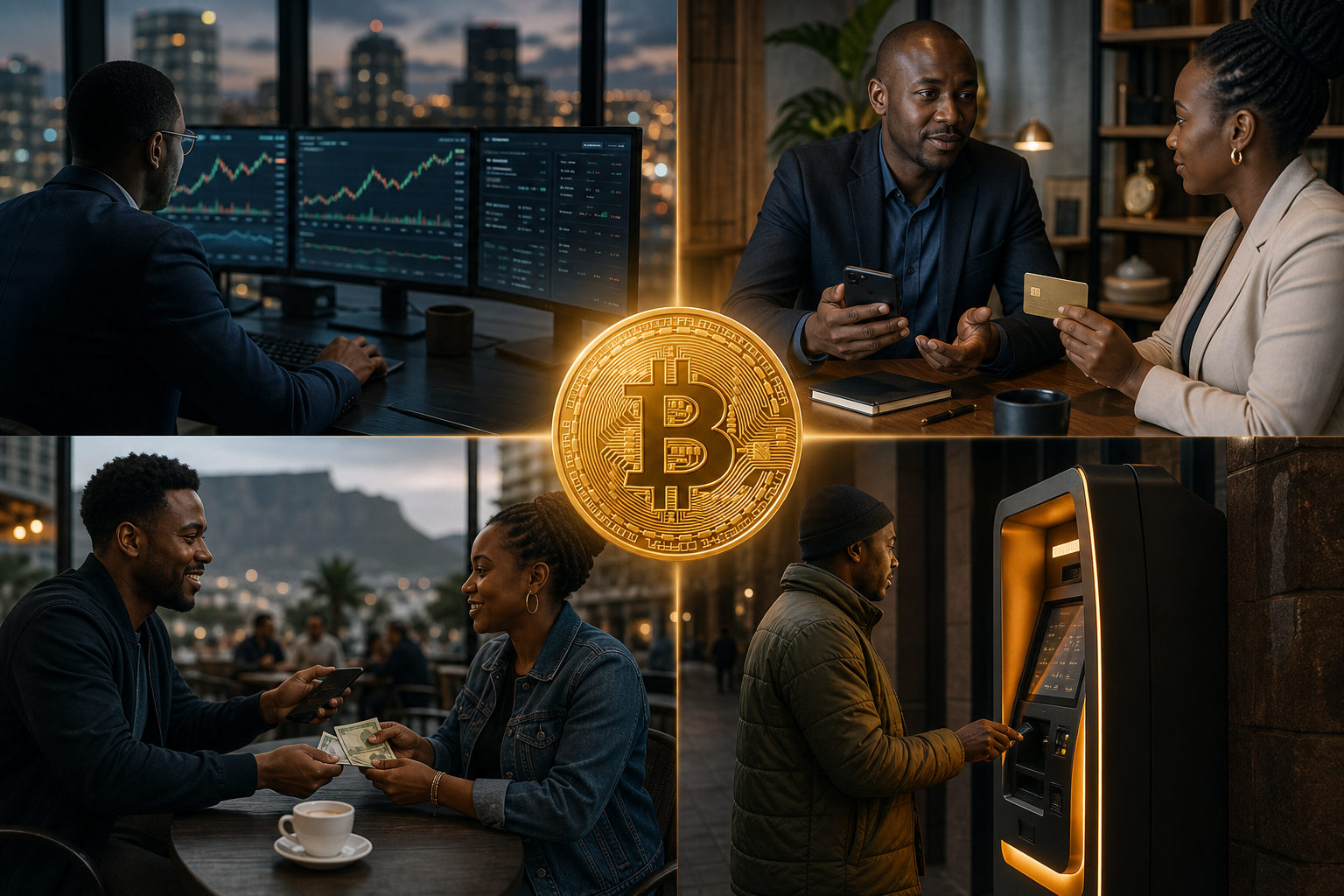
In South Africa, you can usually buy bitcoin through centralized exchanges, broker-style services, peer-to-peer markets, or bitcoin ATMs. The right choice depends less on branding and more on how you want to pay, whether you can withdraw to your own wallet, and how much counterparty risk you are willing to take.
Main ways to buy bitcoin in South Africa
If you are searching for where to buy bitcoins in south africa, start with channel type rather than marketing claims. Two services can both say they sell bitcoin, yet one may give you full on-chain withdrawal rights while another mainly offers a simple in-app balance with stricter limits and less flexibility.
The most common route is a centralized exchange. These platforms usually ask you to create an account, complete identity verification, fund the account with a supported payment method, and then place a buy order. For many beginners, this is the easiest starting point because the process is structured and the user interface tends to cover the whole flow in one place.
Another route is a broker-style app or instant-buy service. Here, the service simplifies trading into a quote-and-confirm experience. That can be useful if you do not want to learn order books right away. The trade-off is that the spread and service charge may be bundled into the quoted price, so the simplest option is not always the cheapest one.
Peer-to-peer markets work differently. Instead of buying from the platform itself, you trade with another user while the platform may provide escrow and dispute tools. This can offer more payment flexibility and, in some cases, more pricing variety. It also puts more weight on your judgment. You need to assess the seller, follow the platform process carefully, and keep records in case something goes wrong.
Bitcoin ATMs or in-person cash-style services exist in some places as well. They can feel more direct, but they often come with higher costs and less convenience for repeat use. For most people, they are a niche option rather than the default way to build a long-term bitcoin position.
What to compare before choosing a platform type
People often ask where to buy bitcoin in South Africa as if there should be one universal answer. There is not. A better question is which buying route fits your payment habits, security expectations, and plans after the purchase.
Payment compatibility
Check whether the service supports the funding method you are likely to use. A platform may look attractive on the surface, but if deposits are awkward, reversals are messy, or withdrawals are slow to process, the real experience can be frustrating. Smooth movement between your bank account and your bitcoin purchase path matters more than a promotional headline.
Identity checks and account rules
Most serious services ask for identity verification and may require proof of address or other checks. Many users dislike this step, but clear rules are usually safer than vague promises. What you want to know is simple: what documents are required, when limits apply, how reviews are handled, and what happens if your account is flagged.
Actual bitcoin withdrawal rights
This point is easy to miss. Some services are built around exposure to bitcoin price moves inside an app, while others are built around buying actual bitcoin that you can withdraw to your own wallet. If self-custody matters to you, make sure the service supports on-chain withdrawals and explains the conditions clearly.
Total cost, not just the headline fee
Buying bitcoin involves more than one visible fee line. The real cost may include the trading spread, deposit charges, withdrawal fees, and any premium hidden in the quoted price. A fair comparison should cover the full path from funding the account to moving bitcoin into your own wallet.
Customer support and dispute handling
This becomes especially important in peer-to-peer trading. If you pay and the seller does not release the bitcoin, or if your account review stalls during a withdrawal request, support quality suddenly matters a great deal. A polished home page does not tell you much about how problems are handled when money is involved.
Which route fits which kind of buyer
For a first-time buyer, a conventional exchange or a straightforward broker app is often easier than a peer-to-peer market. The reason is practical. New users are more likely to make mistakes around wallet addresses, two-factor authentication, order types, or confirmation steps. A simpler path reduces the chance of avoidable errors.
If you already understand self-custody and can read a trading interface without feeling rushed, an exchange may give you more control. You can decide whether to buy immediately or place an order and wait. That flexibility is useful, but only if you understand what the buttons mean and do not react emotionally to short-term price swings.
If payment flexibility matters more to you than interface simplicity, peer-to-peer trading may be worth considering. It can suit users who want more direct interaction with counterparties or who prefer payment methods outside a standard exchange flow. Even so, it demands a stronger risk filter. Ratings, trade history, chat logs, payment references, and the exact escrow process all deserve close attention.
ATMs and face-to-face options can appeal to people who want a more tangible experience. That does not make them better. Convenience can come with higher costs, limited availability, and fewer features once you want to buy repeatedly or move to stronger storage practices.
Key risks when buying bitcoin in South Africa
When people look up where to buy bitcoins in south africa, they often focus on price first. That is understandable, but many losses come from process mistakes and scams rather than from choosing the wrong chart entry. Knowing where risk lives is part of knowing where to buy.
- Off-platform pressure: If someone asks you to continue the deal through a chat app, social account, or personal bank transfer outside the platform process, your risk rises immediately. This is common in scams because it bypasses escrow and dispute systems.
- Weak account security: If a service supports an authenticator app for two-factor authentication, that is usually stronger than relying only on text messages. Your exchange account, email account, and device security are linked in practice.
- No records for disputes: In peer-to-peer deals, screenshots, payment references, and platform chat logs can matter if there is a problem. If you do not keep a record, resolving a conflict becomes much harder.
- Confusing platform balance with self-custody: Seeing BTC in an app does not automatically mean you fully control it. Control is much clearer when you can withdraw to a wallet where you hold the recovery phrase or private keys.
- Starting too large: A small test purchase is often the safest way to learn the deposit, buy, and withdrawal flow. That first trial can reveal practical issues before more money is involved.
There is also market risk. Bitcoin can move sharply in either direction. Without live market data, the most useful approach is not trying to guess the exact best moment to buy. It is setting a reason for buying, deciding whether this is a short-term trade or a longer holding, and making sure the storage plan matches that decision.
After buying, storage matters more than many people expect
Many users spend all their time comparing where to buy bitcoin in South Africa and very little time thinking about what happens after the purchase. That is backward. Buying is only the entry point. Long-term risk often sits in storage, account protection, and wallet management.
If you plan to hold for a while, learn the basics of self-custody. That means using a wallet you control, protecting the recovery phrase, checking withdrawal addresses carefully, and testing the process before moving larger amounts. The Bitcoin network produces a new block about every 10 minutes, so transaction confirmation can take time. A pending transfer is not unusual by itself.
Software wallets are usually more convenient for regular use. Hardware wallets are designed with stronger isolation in mind and may suit longer-term holders. Either way, the same rule applies: do not store your recovery phrase in a screenshot on an internet-connected device, and do not treat cloud storage or casual messaging as a safe backup method.
Even if you are not ready for self-custody yet, you can still improve your setup. Use strong passwords, protect your email account, enable two-factor authentication, learn to spot phishing pages, and use withdrawal allowlists if the platform offers them. Those steps are ordinary, but they reduce the chance of avoidable loss.
FAQ
What is the easiest way for a beginner to buy bitcoin in South Africa?
For many beginners, a standard exchange or a simple broker app is easier than a peer-to-peer market. The process is usually more structured, and that lowers the chance of making a mistake during the first purchase.
Is peer-to-peer buying always cheaper?
No. A P2P listing may look attractive at first glance, but you also need to factor in payment risk, the seller's reliability, and the time cost if a dispute appears. Lower sticker pricing does not always mean lower real cost.
Should I leave my bitcoin on the platform after buying?
That depends on your goal. For short-term convenience, some people keep a balance on a platform. For longer holding, many users prefer a wallet they control because it gives them clearer control over their bitcoin.
What should I verify before I make my first purchase?
Check the funding method, identity requirements, withdrawal rights, and total cost. Then make sure your account security is in place before you send money or request a withdrawal.
How can I lower the risk of my first bitcoin buy?
Start with a small test. Go through account setup, identity checks, funding, buying, and withdrawal once before committing more funds. That single rehearsal can expose weak points early.
Use this checklist before you choose
If you are still deciding where to buy bitcoins in south africa, compare channel types before comparing slogans. Confirm how you will fund the purchase, whether you can withdraw to your own wallet, what the full cost looks like, and how disputes are handled. Then run a small test transaction from start to finish before using the same route for larger purchases.
Disclaimer: This article is for informational and educational purposes only and is not investment, financial, or legal advice. Crypto assets are highly volatile and you could lose your entire investment. Do your own research and decide carefully.