
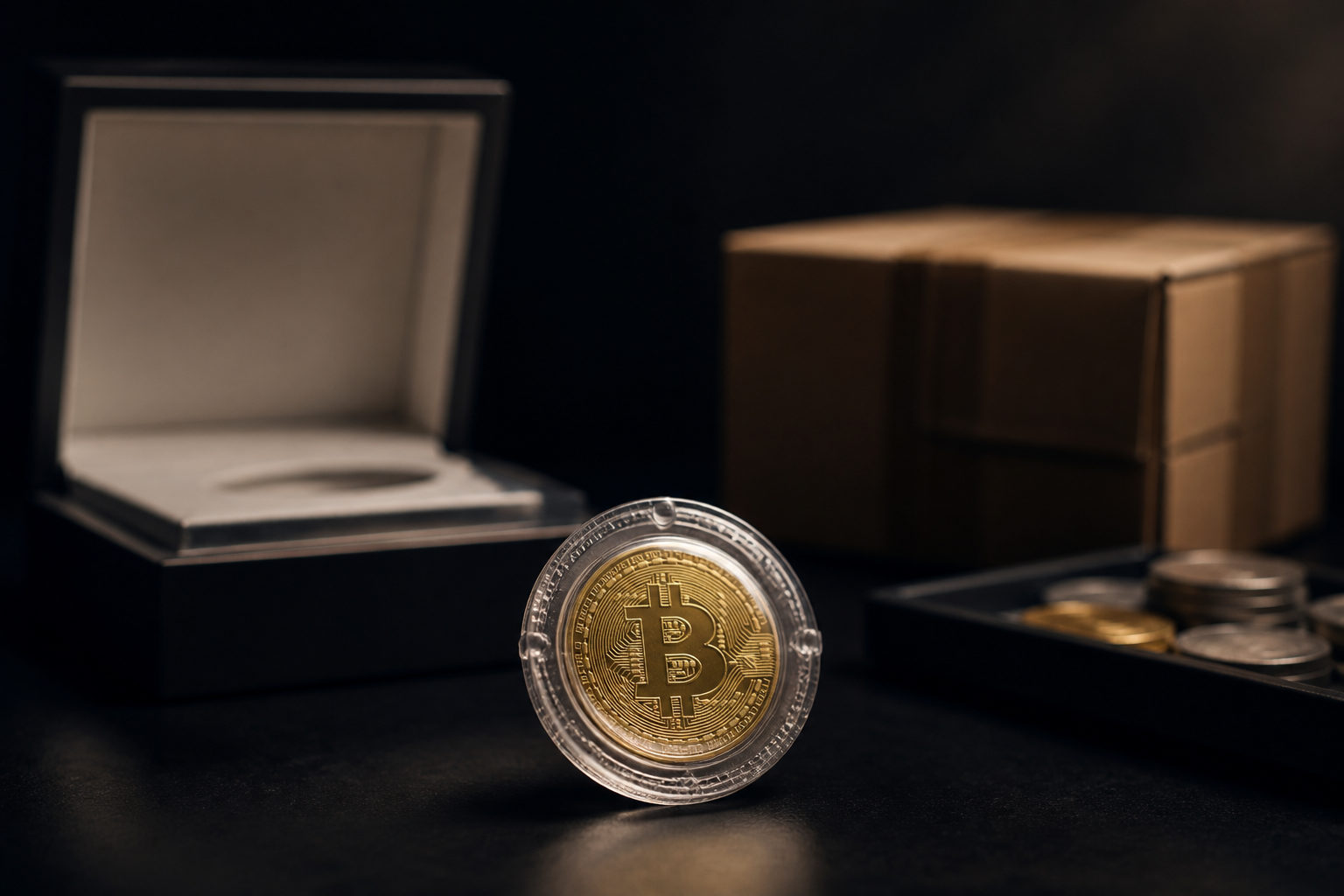
If you are asking where to buy physical bitcoin, the first answer is this: bitcoin itself is digital, and any “physical bitcoin” is usually either a souvenir or a physical object that stores access to bitcoin through a private key.
What “physical bitcoin” usually means
People use the term for very different products, which is why buyers get confused. One listing may be selling a decorative coin with the Bitcoin logo, while another may be offering a card, paper wallet, or sealed item tied to an on-chain address.
The simplest category is the souvenir coin. It may be metal, plated, engraved, or packaged like a collector’s item, but it does not give you control over any BTC. It is a themed product, much like any other crypto collectible.
The second category is a physical carrier for wallet information. That may be a paper wallet, a printed card, or a sealed insert that includes a public address and hides a private key. In that case, the physical object matters only because it holds the information needed to move bitcoin on-chain.
A third category blends presentation with custody. These products may come as sealed coins, cards, or premium collectibles that claim to contain bitcoin. They can look convincing, but the real question is never the finish or packaging. It is whether the private key was generated safely, whether anyone else has seen it, and whether you can move the funds without relying on the seller later.
Places people look when buying physical bitcoin
There is no single market for physical bitcoin because the products serve different purposes. Some buyers want a gift or display piece. Others want a funded item that can be redeemed later. Those goals lead to very different shopping routes.
Collector shops and general online marketplaces
This is the easiest place to buy bitcoin-themed physical items. You can compare design, material, packaging, and seller feedback with little effort. For decorative coins and gift items, this route is usually the most straightforward.
The weakness is obvious: many products use the word “bitcoin” in the title without offering any actual exposure to BTC. If a listing does not clearly explain whether it includes a private key, a public address, or any redeemable balance, assume it is a souvenir.
That assumption protects you from the most common mistake in this niche. Buyers see a polished coin, a hologram, or a branded box and start treating it like a financial product when it is really merchandise.
Secondary markets and private sellers
This is where you are more likely to encounter older physical pieces that claim to hold bitcoin. It is also where the trust problem becomes hardest to manage. Even if the item appears sealed, you often have no reliable way to know whether the private key was copied before the sale.
With secondhand physical bitcoin, the main issue is not wear and tear. A scratch affects appearance; a copied private key affects ownership. If the seller, the original creator, or anyone in the chain of custody ever recorded the key, the BTC attached to that item may no longer be under your exclusive control.
That does not make secondhand pieces useless. It means they are often better treated as collectibles first. If your goal is secure exposure to bitcoin, private resale markets ask you to accept uncertainty that would be hard to justify elsewhere.
Custom makers of physical carriers
Some businesses make engraved cards, metal backups, sealed sleeves, or presentation pieces for wallet information without funding them. This route makes more sense for buyers who already understand wallet basics and want the physical object without handing key generation to a third party.
In practical terms, you create the wallet yourself, keep the private key under your control, and use the maker only for the physical medium. That sharply reduces the trust you need to place in the seller because the sensitive step stays with you.
For many people, this is the closest thing to a sensible middle ground. You still get something tangible, but you are not buying an item that asks you to trust a stranger with the core of your bitcoin ownership.
Making your own physical bitcoin carrier
For anyone serious about self-custody, this is often the cleanest route. You can generate a wallet in a controlled setting, back up the information on paper or metal, and decide how much of that information should be visible on the outside.
This approach has its own demands. You need to think about the environment where the wallet is created, the risk of exposing the key while writing or printing it, the durability of the material, and the physical security of where it will be stored. Still, it lets you avoid a major weakness found in ready-made funded products: someone else may have created the secret before you ever touched the item.
How to judge whether a physical bitcoin product is worth buying
Before comparing style or price, figure out what exactly is being sold. A physical bitcoin item can represent collectible value, utility, access to BTC, or a confusing mix of all three.
- Does the listing clearly state whether a private key is included? If not, you should not treat it as a bitcoin-holding product.
- Who generated the private key? If the seller did, the seller may also have retained a copy.
- Can you verify the public address independently? A legitimate setup should let you inspect the address without exposing the secret needed to spend funds.
- Is there any tamper-evident design? This does not eliminate risk, but it helps you judge whether the item may have been opened or altered.
- Does the seller blur the line between collectible appeal and redeemable BTC? Confusion here often signals future disputes.
- Can you move the bitcoin out quickly after receiving it? If yes, you are less dependent on the long-term integrity of the object itself.
A buyer who cares about the “physical” part can easily overlook the only thing that actually controls the bitcoin: the secret. The coin, card, or sealed package is just a shell unless the key remains known only to you.
Why many buyers separate collectibles from actual bitcoin ownership
Once you understand the risks, a common conclusion follows. If you want a display piece, buy a display piece. If you want bitcoin, buy bitcoin through a standard route and decide later whether to create a physical backup for storage or gifting.
That split solves several problems at once. It prevents you from overpaying for packaging, lowers the chance of trusting a stranger with key generation, and makes it easier to explain to yourself what you are actually holding. A collectible can be judged on craftsmanship. A bitcoin storage method should be judged on key security and recoverability.
This distinction also matters for gifts. A funded physical bitcoin item may sound memorable, but it can create confusion for the recipient if they do not understand wallets, private keys, or how to redeem funds safely. A present that depends on technical handling can be less useful than it appears at first glance.
There is also the storage issue. Paper can be damaged, misplaced, or thrown away. Metal is more durable, but it can still be lost, stolen, or accessed by someone who understands what it contains. The physical format changes the failure mode, not the need for careful custody.
FAQ
Can you actually buy physical bitcoin?
Yes, but the term covers different things. You may be buying a souvenir, a funded physical carrier, or a blank item designed to hold wallet information that you add yourself.
What is the safest place to buy physical bitcoin?
If you only want a collectible, ordinary collector marketplaces are usually the clearest option. If you want an item tied to real BTC, buying a blank carrier and creating the wallet yourself is often easier to trust than purchasing a pre-funded piece.
Are secondhand physical bitcoin items too risky?
They can be, especially if they rely on a private key created or handled by someone else. A used physical piece may still be interesting as a collectible even when it no longer makes sense as a secure storage method.
What should you do after receiving a funded physical bitcoin item?
First, confirm what kind of item it is and whether the public address can be checked independently. If it does contain BTC, many buyers prefer to move the funds into a wallet they control rather than leaving long-term trust in the original object.
Is a paper wallet better than a metal physical bitcoin product?
Each format solves a different problem. Paper is simple and easy to create, while metal tends to be more durable, but the bigger issue is whether your key generation and storage process is private and clean.
What to decide before paying
If the seller cannot clearly explain whether the item includes a private key, who created it, whether the address can be verified, and how you would redeem the BTC, treat the product as a bitcoin-themed collectible and price it that way. The useful part of physical bitcoin is never the shine of the object. It is the clarity of ownership and how quickly that control can be placed in your own hands.
Disclaimer: This article is for informational and educational purposes only and is not investment, financial, or legal advice. Crypto assets are highly volatile and you could lose your entire investment. Do your own research and decide carefully.