
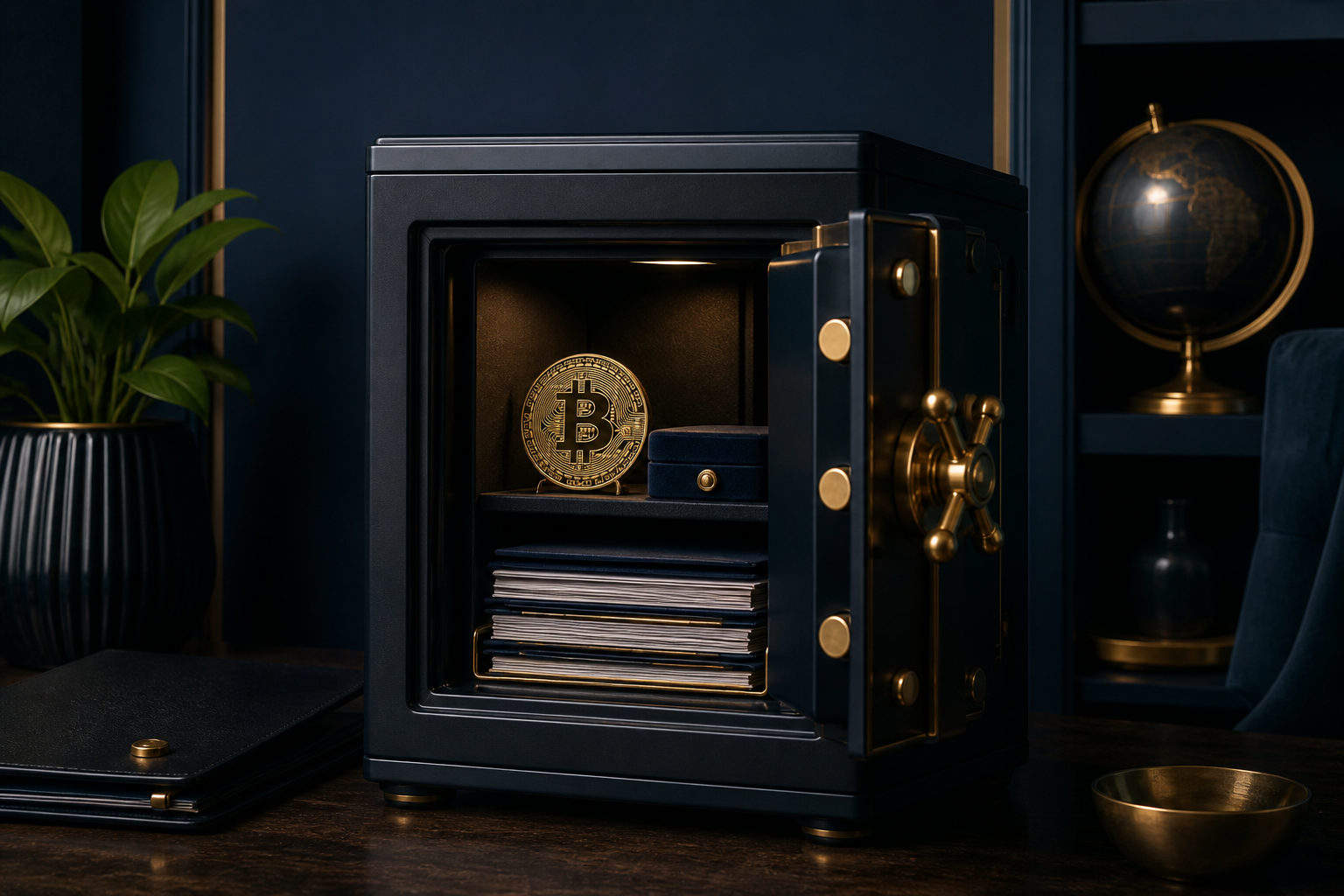
An IRA can hold Bitcoin directly only when the account provider allows BTC spot purchases and custody inside the IRA. The IRA label alone does not answer the question.
The short answer: the provider matters more than the IRA name
People often search for which IRA allows holding Bitcoin directly as if there were one account type that always works. That is not how this decision is made. Traditional IRAs and Roth IRAs are tax wrappers. Whether Bitcoin can sit inside the account depends on the firm behind the account, the custody setup, and the exact assets the platform offers.
That means two accounts with similar IRA labels can work very differently. One provider may allow direct exposure to BTC itself through an IRA structure, while another may limit you to products tied to Bitcoin without letting the account hold the asset directly. If your goal is actual Bitcoin ownership inside a retirement account, this distinction is the first thing to check.
What “holding Bitcoin directly” usually means in an IRA
The phrase gets used loosely in marketing, so it helps to define it before comparing providers. In practical terms, direct holding usually means the IRA has exposure to BTC itself as the underlying asset, not just to shares of a company linked to Bitcoin and not only to a separate security that tracks Bitcoin in some form.
You can test this by asking three simple questions:
- What is the underlying asset? If the account lists BTC as the asset, that is closer to direct holding.
- Can you trade Bitcoin inside the IRA? A provider that supports direct holding will usually state that you can buy and sell Bitcoin within the retirement account.
- How is custody handled? In many IRA setups, Bitcoin is held by a qualified or designated custodian rather than moved freely to your personal wallet.
That last point matters. Many investors say they want to hold Bitcoin directly in an IRA, but what they really want is personal wallet control. Those are not always the same experience. In a retirement account, direct holding often means the IRA owns BTC through a compliant custody arrangement, not that you can withdraw coins at will to a private address.
What kinds of IRA setups may allow direct Bitcoin exposure
There is no single universal category that always permits direct Bitcoin ownership. Still, some account structures are more likely than others to make it available.
Crypto-focused IRA providers
These are specialized firms that combine retirement account administration with digital asset access. They often present an all-in-one service: account opening, funding, trading, and custody. For a user, the main task is to look past the headline and confirm whether the account actually supports BTC spot trading inside the IRA.
The appeal is convenience. The process may feel more unified than trying to assemble several moving parts yourself. The trade-off is that fees, custody restrictions, and funding rules can vary widely. Some platforms make direct Bitcoin access central to the offering. Others use broad language that sounds similar but leads to indirect exposure only.
Self-directed IRA arrangements
Another path often discussed is the self-directed IRA route. This structure is known for wider asset flexibility, but flexibility does not mean automatic Bitcoin access. It still depends on whether the account's administration, custody framework, and execution process can support BTC directly.
This path may appeal to investors who want broader control over what sits in the retirement account. It also demands more care. You may need to review the custody chain, understand who executes trades, confirm how records are kept, and make sure the arrangement does what you think it does. A self-directed label by itself is not enough.
IRAs that only offer indirect Bitcoin exposure
Many retirement platforms let users invest in Bitcoin-related securities. That can include instruments designed to follow the Bitcoin market in some way, but that still does not mean the IRA is holding BTC directly. If your target is actual Bitcoin as the underlying asset, indirect products are a different category.
This is where many investors get tripped up. A provider may advertise access to Bitcoin in retirement accounts, yet the account only holds a related security. If the platform never clearly says the IRA can own BTC itself, assume you need more detail before moving money.
How to evaluate whether an IRA truly lets you hold Bitcoin directly
Rather than asking for a static list of names, it is more useful to build a review checklist. That way, you can evaluate any provider on your own terms.
- Confirm the asset is BTC, not a related product.
The first screen is simple: does the provider state that the IRA can buy and hold Bitcoin itself? If the language stays vague and talks only about crypto exposure, keep digging.
- Ask who holds the Bitcoin.
Direct holding inside an IRA usually comes with a custody arrangement. Find out who the custodian is, how the asset is stored, and whether trading and custody are handled by the same party or split between firms.
- Check funding and transfer options.
Many users are not starting from zero. They want to move assets from an existing retirement account. If the provider cannot clearly explain transfer or rollover procedures, the setup may be harder than it first appears.
- Review the full fee structure.
Costs may include account setup, annual maintenance, custody, trading commissions, and spread-related costs. A low advertised rate tells you very little if the total cost picture is unclear.
- Understand trading rules.
Can you place orders during a defined schedule only, or more freely within the platform's system? Are there approval steps? Is there a minimum transaction size? These details shape the real user experience.
- Find out whether personal wallet withdrawals are possible.
If your main goal is private wallet control, many IRA structures will not match that expectation. Retirement custody and open wallet movement often pull in different directions.
Why some investors prefer direct holding over indirect exposure
For some people, the attraction is straightforward. They want the retirement account's Bitcoin allocation to reflect BTC itself, not a company, fund structure, or another financial wrapper. In that sense, direct holding can be a cleaner expression of the investment view.
It may also reduce confusion about what the account really owns. If the underlying asset is Bitcoin, the account's exposure is easier to describe. You are not layering your thesis through another business model or product structure that may behave differently from BTC in certain conditions.
That said, direct holding is not automatically better for everyone. Some investors may care more about ease of use, familiar brokerage interfaces, or simpler account administration. If your priority is retirement account access to the Bitcoin theme rather than the asset itself, indirect products may still fit your goals better.
Limits and risks that should not be ignored
The search phrase sounds simple, but the actual choice is not. Several risks sit outside the usual marketing pitch.
Confusing the tax wrapper with the asset menu
An IRA is a tax and account structure. It is not a promise that any given asset is available. Seeing the words Traditional IRA or Roth IRA tells you almost nothing about direct Bitcoin access until you know who runs the account and what they permit.
Assuming custody means personal control
In many direct-holding setups, the IRA has economic ownership of BTC, but the investor does not control the private keys in the same way they would in a standard self-custody wallet. If self-custody is your priority, this gap matters.
Comparing fees without comparing exit paths
Buying gets the most attention. Selling, transferring, closing the account, or changing providers often gets less space in marketing material. Those details matter just as much in a retirement account.
Treating “Bitcoin exposure” as the same thing as “Bitcoin ownership”
Those phrases can describe very different products. If a provider says you can invest in the Bitcoin market, that still leaves open the question of whether the IRA owns BTC directly or only something related to it.
FAQ
Can a Traditional IRA hold Bitcoin directly?
It can, but only if the provider supports direct BTC purchases and custody within that IRA structure. The account name alone does not decide the answer.
Can a Roth IRA hold Bitcoin directly?
Yes, it may be possible with some providers. What matters is whether the firm offers Bitcoin itself as an eligible asset inside the Roth IRA and has a custody process for it.
How do I tell direct Bitcoin holding from indirect exposure?
Look for a clear statement that the IRA buys and holds BTC as the underlying asset. If the provider talks only about access to the Bitcoin market, you may be looking at an indirect product.
Do I control the private keys if my IRA holds Bitcoin directly?
Often, no. In many retirement setups, custody is handled by a designated provider or custodian, so direct holding in the IRA does not always mean personal key control.
What should I check first when comparing Bitcoin IRA providers?
Start with the asset itself: is it BTC or a related security. After that, review custody, fees, transfer options, and withdrawal limits in that order.
Before opening any IRA for direct Bitcoin exposure, ask for the fee schedule, confirm that BTC is the actual underlying asset, read the custody terms, and make sure the provider can explain how retirement funds move in and out of the account without vague language.
Disclaimer: This article is for informational and educational purposes only and is not investment, financial, or legal advice. Crypto assets are highly volatile and you could lose your entire investment. Do your own research and decide carefully.