
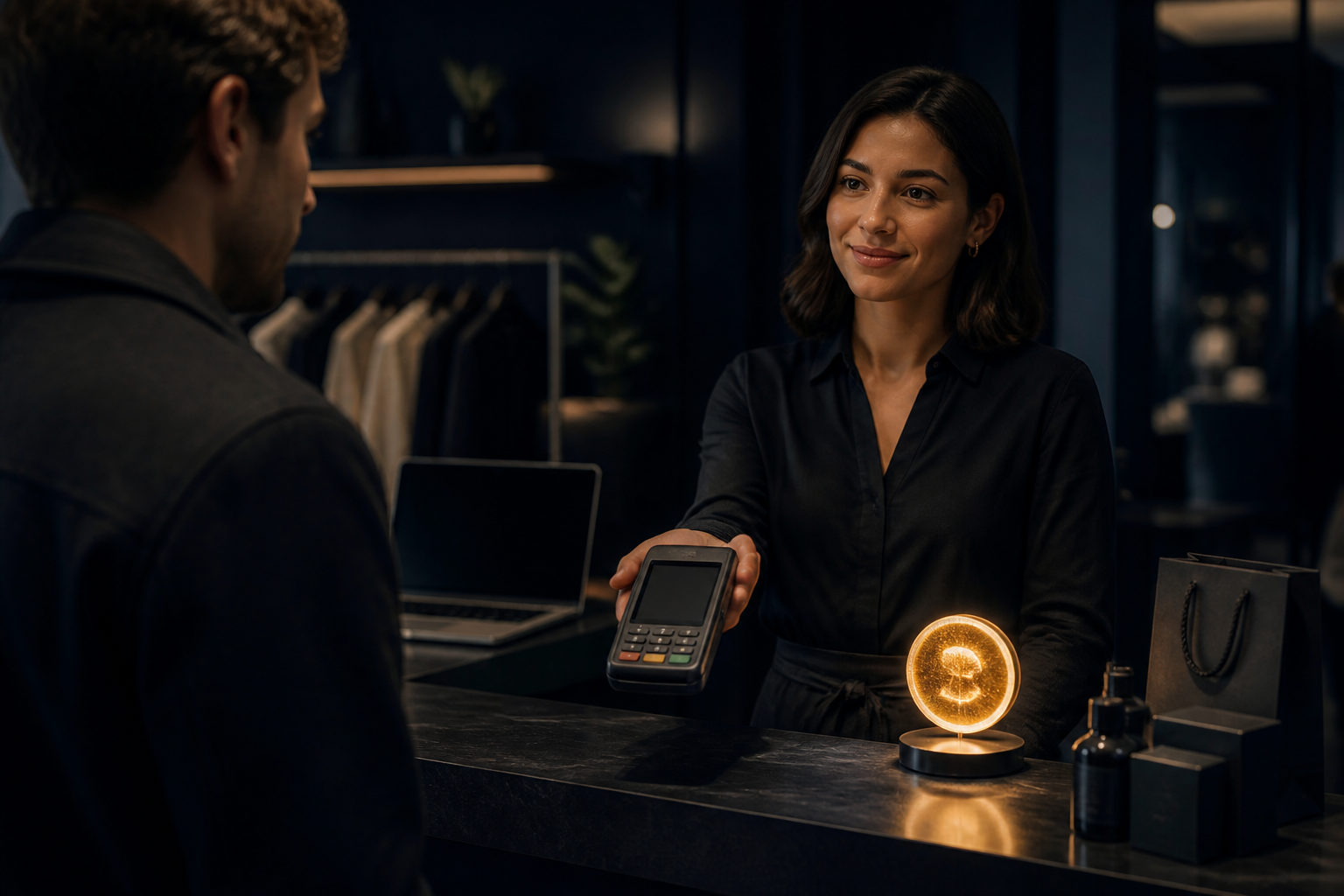
Who accepts bitcoin? Online stores, freelancers, creators, and some small businesses may take it as payment, but the real issue is whether the checkout process is clear, usable, and safe before you send any BTC.
Who usually accepts bitcoin
Bitcoin payments show up in a few recurring groups. Digital merchants, remote service providers, small international sellers, and independent creators are among the most common examples. For them, bitcoin can be a flexible way to get paid, especially when customers come from different countries or prefer crypto.
That said, a business that says it accepts bitcoin may not hold bitcoin after the sale. Some merchants use payment processors that convert the incoming BTC into US dollars right away. From the buyer's side, that distinction matters less than knowing exactly how the payment page works and what happens if something goes wrong.
Common types of bitcoin-friendly sellers
- Merchants selling digital goods such as software, memberships, or downloadable content
- Freelancers offering design, writing, development, consulting, or other remote services
- Small e-commerce sellers serving international customers
- Some in-person businesses using a QR code or a payment device at checkout
- Creators and communities that accept tips, donations, or direct support
If you want to know whether someone really accepts bitcoin, do not stop at a homepage badge or a social post. Go to the checkout page, request an invoice, or ask for the exact payment steps. A real payment option should come with a wallet address, a QR code, a payment window, and basic order details.
How to verify that bitcoin payment is actually supported
People searching for "who accepts bitcoin as payment" often make one basic mistake: they confuse "accepts crypto" with "accepts bitcoin directly." Those are not always the same thing. A seller may mention crypto in general while only supporting a different asset, or they may have removed BTC without updating their marketing copy.
- Check the actual checkout page. Add the item to your cart and move to the payment step. The reason is simple: landing pages can be outdated, while the checkout page reflects what is currently available. Do not send BTC based only on a logo shown on the front page.
- Confirm the payment format. See whether the seller provides an on-chain bitcoin address, a QR code, or a hosted payment page. This matters because each setup affects fees, confirmation handling, and refund processing. Make sure you are paying with bitcoin, not a different coin or network.
- Read the payment window carefully. Some orders expire if payment is not completed within a short period. Sellers do this because bitcoin prices move and invoices are often time-limited. If the order expires, do not reuse the old address without checking again.
- Ask about underpayment and split payments. Some merchants want one full payment and do not want multiple transfers for the same order. That reduces manual review and avoids disputes. Include network fees in your planning so the received amount is not short.
This step prevents many avoidable problems. In a lot of cases, the dispute is not about bitcoin itself. It starts because the buyer skipped the order rules and sent funds too early.
A safer step-by-step way to pay with bitcoin
If you are paying in bitcoin for the first time, slowing down is usually the right move. The process is not hard, but each step has a purpose.
- Verify the product or service first. Check what you are buying, how it will be delivered, and what the refund terms are. The reason is that bitcoin transfers are usually irreversible once sent. Save screenshots of the item page and any relevant chat before paying.
- Confirm that the seller wants BTC. Ask them to state BTC clearly or provide a standard bitcoin payment QR code. This matters because beginners often confuse similar-looking assets or payment rails. Never rely on a username or profile picture as proof of the recipient.
- Use a small test payment for a first transaction. Send a small amount first and confirm that the seller or the payment page can detect it. This can reveal address errors, mismatched invoices, or missing order references before a larger transfer is made. After a successful test, follow the same order instructions for the rest.
- Check the first and last characters of the address. Compare the beginning and the end after pasting the address or scanning the QR code. This is a practical defense against clipboard hijacking and fake payment pages. Avoid jumping across many apps after copying the address.
- Keep proof and wait for the order status to update. Save the transaction details and give the system time to recognize the payment. Some merchants need a short delay before the order moves forward. Do not send the payment again just because the page does not refresh right away.
In a physical store, the flow may be shorter, but you still need to be alert. Make sure the QR code belongs to the merchant in front of you. If a staff member suddenly changes the address or asks you to pay through a personal chat account, stop and verify everything again.
Why some merchants choose to accept bitcoin
There are a few practical reasons. Some sellers serve global customers and want another payment option besides cards or bank transfers. Others have a customer base that already uses bitcoin and expects that choice at checkout.
Some merchants also prefer bitcoin because it can fit digital-first businesses. Even then, many of them are not trying to build a long-term BTC treasury. They may simply want payment flexibility while converting incoming funds into US dollars as soon as the transaction is processed.
For buyers, that means you should not assume the seller sees bitcoin the same way you do. One person may treat it as an investment asset, while another sees it only as a payment rail. That difference can shape refund terms, payment deadlines, and support expectations.
Scam warnings: when to stop immediately
The biggest risk in searching for who accepts bitcoin is not failing to find a seller. It is sending funds to a fake payment setup. A few warning signs should make you stop at once.
- There is only a wallet address and no order detail. A legitimate seller should explain what you are paying for, how much is due, and when the invoice expires.
- You are pushed to pay fast but cannot get a clear explanation. Pressure without clarity is a bad sign.
- Someone claims the bitcoin transfer can always be reversed. On-chain bitcoin payments are usually irreversible, so that claim should not be trusted.
- The payment address changes in the middle of the conversation. Unless you recheck the order through the official payment flow, do not continue.
- You are told to send BTC first and get the account, contract, or delivery details later. That flips the normal order and raises the risk sharply.
Another common trick is a fake support message that sends a replacement QR code. If that happens, go back to the original checkout page or invoice and verify the payment details there instead of trusting the chat message.
FAQ
How can I find merchants that take bitcoin?
The best method is to inspect the actual checkout page or ask for a formal invoice. If you are dealing with a freelancer or service provider, ask whether BTC is accepted and how refunds are handled before you agree to pay.
Can individuals accept bitcoin too?
Yes. Freelancers, consultants, creators, and private sellers may all accept bitcoin. The key issue is not whether they can receive it, but whether both sides agree on delivery terms, proof of completion, and dispute handling first.
Does accepting bitcoin mean the seller keeps bitcoin?
Not always. Some sellers convert incoming BTC into US dollars right away. For buyers, the more important question is whether the payment process is documented and reliable.
Can I get a refund after paying with bitcoin?
That depends on the merchant's refund policy, not on bitcoin alone. Before paying, check whether refunds are sent back in bitcoin, calculated in US dollars, or issued as store credit.
What matters most on a first bitcoin payment?
Verify the address, confirm the order details, and use a small test payment if possible. Many first-time mistakes happen because people trust the seller too quickly and skip the basic checks.
If you plan to pay with bitcoin, choose sellers with clear order rules, test with a small amount, and keep your payment records. A successful transaction usually depends less on who accepts bitcoin and more on whether you verified each step before sending BTC.
Disclaimer: This article is for informational and educational purposes only and is not investment, financial, or legal advice. Crypto assets are highly volatile and you could lose your entire investment. Do your own research and decide carefully.