
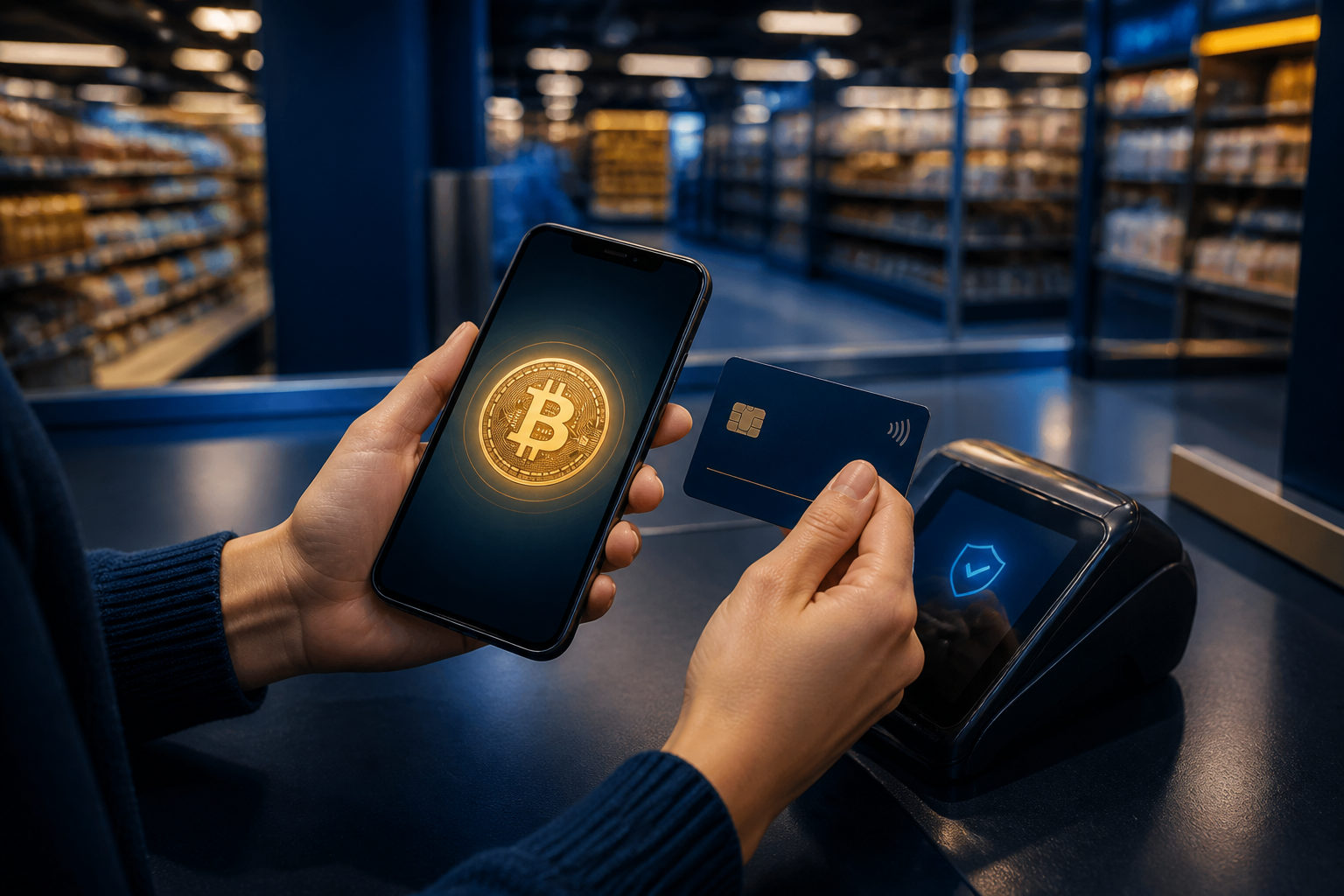
In most cases, you should not assume Walmart accepts Bitcoin directly at checkout. If you want to use Bitcoin at Walmart, the real question is whether you are dealing with direct merchant acceptance or an indirect method such as a gift card, balance conversion, or a third-party payment flow.
That distinction matters more than people think. Many shoppers say they “used Bitcoin at Walmart” when what actually happened was a conversion step before the purchase. The end result may look similar, but the payment rules, refund path, and scam risk can be very different.
Step 1: Define the exact shopping situation before you do anything
What to do: separate online orders, in-store checkout, and gift card use
Start by identifying your real use case. Are you trying to place an order on Walmart's website, pay in a physical store, use a self-checkout machine, or buy a Walmart-related gift card with Bitcoin and spend that later? Do not lump these together.
The reason is simple: those are not the same payment event. A claim that Bitcoin can be used for Walmart purchases may refer to a third-party gift card service rather than Walmart's own checkout system. If you skip this step, you can end up chasing the wrong instructions.
What to watch for: buying Walmart goods is not the same as Walmart taking BTC
This is the biggest source of confusion. If you convert Bitcoin into a code, store balance, or gift card and then spend that value on Walmart products, that is an indirect route. It does not mean Walmart itself is processing Bitcoin as a native payment method.
That difference affects what happens when something goes wrong. A native checkout option is governed by the merchant's payment and refund process. An indirect route adds another party, another set of terms, and another place where things can break down.
Step 2: Trust only the live checkout page, official payment information, and official support
What to do: verify with the actual checkout flow
If you want a reliable answer, check Walmart's official website or app and look at the payment methods shown during the real checkout process for your order. If Bitcoin or a related option does not appear there, do not treat social posts, old screenshots, or message-board comments as proof that it is supported for your purchase.
This matters because payment options can vary by region, order type, item category, and external service integrations. A method that worked for someone else may not be available for your cart, your store, or your delivery setup. Old information creates expensive mistakes.
What to watch for: “special support agents” and off-platform payment requests
Be extremely careful if someone claiming to represent Walmart asks you to leave the normal checkout process and send Bitcoin to a wallet address in chat, email, or a separate page. A legitimate payment flow should happen within a normal purchase interface, not through a private conversation.
Scammers often rely on urgency and borrowed credibility. They may mention your order details, item name, or store location to sound real. That does not prove they work for Walmart. It may only show that they copied information you already shared.
Step 3: If the route is indirect, read the fine print before you send any Bitcoin
What to do: identify exactly what you are receiving
If your route involves gift cards, redeemable codes, wallet balances, or a third-party payment bridge, confirm what you will actually receive before you pay. Is it a single-use code, reloadable balance, store credit, or an outside service that settles the purchase on your behalf? Each one comes with different limits.
You also need to check where it works. Can it be used online, in-store, or both? Are certain products excluded? Can it be combined with other payment methods? Can you split the payment if the full amount is not covered? These details decide whether the method is practical or just technically possible.
What to watch for: refund rules may not mirror card payments
People are used to card refunds going back through the same route. Bitcoin-related purchase flows often do not work that way. A return may come back as store balance, as a gift card, or through a manual support process that takes longer than a standard payment reversal.
That is why refund policy matters before the purchase, not after it. This is especially important for items that are often returned, items that may go out of stock, and anything you are not fully sure you will keep. “Can I buy it?” is only half the question. “What happens if I need to undo it?” is the other half.
Step 4: Run a scam check before every Bitcoin payment
What to do: inspect the recipient, the page, and the communication channel
Before you send any Bitcoin, stop and run a short checklist. Who provided the wallet address? Is the payment page part of the standard checkout process? Did the support conversation begin from Walmart's official site or app? Is someone pushing you to pay right away? If any answer feels unclear, pause.
This step is not paranoia. Bitcoin transactions usually do not offer the same recovery path people expect from cards. Once funds are sent, your options may be limited. That makes pressure tactics, fake support chats, and copied brand pages much more dangerous.
What to watch for: red flags that should end the process immediately
- Private wallet instructions: someone tells you not to use checkout and instead send BTC to a wallet pasted in chat.
- Unusually large discount claims: you are promised a special Bitcoin-only deal without clear written terms.
- Time pressure: you are told to pay at once or lose the order, the item, or the rate.
- Vague refund answers: support says “don't worry” but will not explain whether refunds return as Bitcoin, balance, or something else.
- Inconsistent branding: the page language, support identity, or payment explanation does not line up.
If you already sent Bitcoin and only then noticed a problem, do not send more to “verify,” “unlock,” or “complete” the order. Save the chat, address, order details, and screenshots. Then stop the interaction and return to official support channels.
Step 5: Test with a small purchase first
What to do: use a low-risk trial before relying on the method
Even if a route appears to work, do not start with a large order. A small test purchase can show whether payment goes through cleanly, whether value is delivered on time, whether the balance works as expected, and whether order cancellation creates problems later.
This approach is practical, not cautious for its own sake. Many issues are invisible until the final steps: delayed code delivery, product restrictions, failed balance application, unclear cancellation handling, or slow support when something breaks. A small test keeps those lessons cheap.
What to watch for: convenience can turn into bigger risk
Some shoppers see the words “crypto accepted” and move too fast. Then they find out that the route does not apply to the product they wanted, that the payment succeeded but the order did not settle correctly, or that the return process is much more rigid than expected.
Bitcoin payments are not a good place for assumptions. Confirm first, act second. That order matters.
Why some people say yes and others say no
Usually, they are describing different things. One person may be talking about direct Bitcoin acceptance at checkout. Another may mean a third-party method that converts crypto into spending power for a Walmart purchase. Someone else may be referring to a gift card flow rather than checkout at all.
All of those can sound like “using Bitcoin at Walmart,” but they are not equal. The legal relationship, payment path, customer support responsibility, and refund outcome may all change depending on which route is involved.
| Method | What it really means | What to confirm first |
|---|---|---|
| Direct payment | Walmart's checkout recognizes Bitcoin natively | Whether the option appears in checkout and how refunds work |
| Third-party payment route | An outside service connects the payment flow | Whether the process is trustworthy and who handles failures |
| Gift card or balance conversion | Bitcoin is exchanged for spendable value first | Usage limits, exclusions, and refund destination |
When using Bitcoin for a Walmart purchase may not be a good idea
If you are new to crypto payments, or if the item you want is likely to be returned, Bitcoin may not be the best first choice for this purchase. The more layers involved, the harder it can be to sort out responsibility when a payment, code, refund, or order goes wrong.
The same applies if your main motivation is a claimed discount. A promotion may look attractive at first glance, yet hidden costs, conversion spreads, service fees, exclusions, or slow settlement can erase the benefit. Once multiple parties are involved, solving a dispute also gets harder.
If your real goal is simply to get the product without trouble, the better priority is not “must use BTC.” It is choosing a payment route with clear rules, a clear refund process, and records you can keep.
FAQ
Can I pay with Bitcoin at Walmart the same way I pay with a card?
In most cases, you should not assume that. The safer move is to check the live checkout page or official support and see whether a Bitcoin-related option is actually offered for your purchase.
Does a “crypto accepted” message mean Walmart officially takes BTC?
Not always. It may refer to a third-party flow, a gift card conversion route, or another service connected to the purchase. You need to know where the payment is really happening and who is responsible if something fails.
Can I buy a gift card with Bitcoin and then shop at Walmart?
That can be an indirect way to use Bitcoin for a Walmart purchase. Before doing it, check where the gift card or balance works, whether there are product restrictions, and what happens if you return the item later.
Why is a small test purchase such a common recommendation?
Because many problems appear only in real use. A small order can reveal delivery delays, checkout restrictions, balance issues, or unclear support steps before you risk a larger amount.
What should I do if “support” asks me to send Bitcoin to a wallet address?
Stop right there. Do not send funds, do not pay extra for “verification,” and do not continue the chat as if it were normal checkout. Save the evidence and go back to Walmart's official support channels to verify the claim.
What to confirm before you pay
If you want to use Bitcoin for a Walmart purchase, confirm only three things first: the exact shopping scenario, whether the payment path is officially supported, and how refunds are handled. If the process moves you outside normal checkout, asks for payment to a private wallet, or stays vague about returns, do not proceed.