
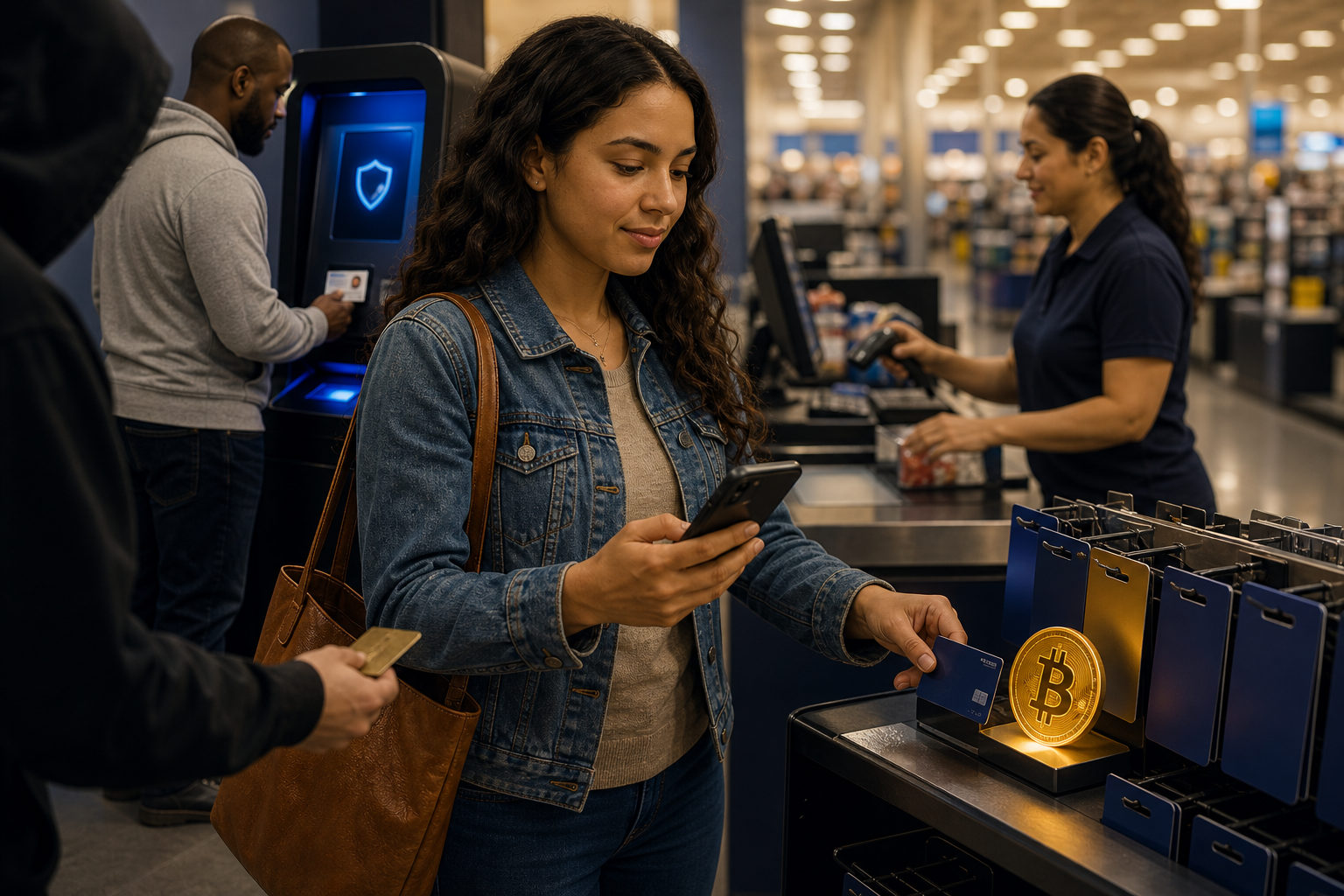
Can you buy bitcoins at Walmart? Sometimes you may come across a third-party service in or around a Walmart store, but that does not mean Walmart itself is selling Bitcoin to you. The real question is whether the purchase path is clear, whether the BTC goes to a wallet you control, and whether the process avoids common scams.
Start by separating Bitcoin purchases from gift card or cash-loading schemes
Many people asking whether they can buy bitcoins at Walmart are really looking for an easy in-person way to turn dollars into BTC. That sounds simple, yet the in-store option people imagine is often not a direct Bitcoin sale. What you may actually find is a third-party kiosk, a payment instruction, a cash-to-code process, or a prompt to finish setup online.
Your first move should be inspection, not payment. Read the screen, receipt, or service terms and look for plain details: Bitcoin or BTC, wallet address entry, identity verification, fees, and how delivery works. If the process only talks about a code, reload, voucher, or gift card, without explaining where the Bitcoin is sent, you should not treat it as a direct BTC purchase.
This matters because scams often hide behind familiar retail settings. A person may think they are buying Bitcoin at Walmart when they are really buying a gift card for a scammer or loading money into a route they do not control. If anyone tells you to buy a gift card first and send the code to complete the Bitcoin purchase, stop there.
Common situations people confuse with buying Bitcoin
- A third-party crypto kiosk or service point: You may pay there, but the service provider is not the store itself.
- A Bitcoin ATM-style machine: The machine may allow a BTC purchase, but you still need to verify who operates it.
- Gift cards or prepaid codes: These are not the same thing as receiving Bitcoin in your wallet.
- Informal help from staff or strangers: If the process moves outside an official interface, treat it as unsafe.
If you cannot see where the Bitcoin will be delivered and under whose terms, you do not yet know what you are buying.
A safer step-by-step way to check any in-person Bitcoin purchase path
If your goal is to buy Bitcoin in a store setting, the safest approach is to slow the process down. Each step below has a practical action, a reason behind it, and one warning that often gets missed by first-time buyers.
Step 1: Identify the actual service provider
What to do: Check the machine screen, payment page, receipt, or printed notice for the company actually handling the transaction.
Why it matters: A Walmart location can host a service without being the party selling you Bitcoin. The brand on the building is not proof that the store stands behind the crypto transaction.
Watch out for: Vague branding with no clear company name, no terms, and no visible support process. If you cannot tell who is taking your money, you should not continue.
Step 2: Prepare your own wallet before paying
What to do: Set up a Bitcoin wallet in advance and confirm whether the service will send BTC to a wallet address you control.
Why it matters: If the service only shows a balance on an account you do not control, you may not have real possession in any meaningful sense. What matters is whether you can receive, hold, and later move the Bitcoin.
Watch out for: New buyers often assume that a balance display means the job is done. It is not enough to see BTC credited somewhere. You need to know whether withdrawals are allowed, whether extra review is required, and whether the destination wallet is yours.
Step 3: Review the identity verification process
What to do: Check whether the service asks for a phone number, ID, selfie verification, or similar steps.
Why it matters: A structured identity process can be a sign that the service follows basic compliance procedures. It also helps you distinguish a real checkout flow from a random person asking for money.
Watch out for: Never send ID photos, account screenshots, or verification codes through a chat app because someone claimed to be support. Sensitive information should only be entered through the official interface you are using.
Step 4: Read the full fee breakdown before confirming
What to do: Look for the total payment amount, service charges, any network-related fee, and the expected BTC delivery amount before final approval.
Why it matters: Convenience often comes with higher costs. Even if the purchase path is legitimate, you need to understand the total cost rather than focus on the word Bitcoin alone.
Watch out for: Hidden or late-stage charges. The issue is not just whether the fee is high. The bigger issue is whether the service shows the cost clearly before you pay.
Step 5: Test with a small amount first
What to do: If this is your first time using a specific in-person crypto service, make a small test purchase that you can afford to lose.
Why it matters: Bitcoin transfers are generally not something you can reverse like a standard retail refund. A test run helps you confirm that the wallet address is correct and that the delivery process works as presented.
Watch out for: Pressure. If someone says you need to act right away or miss the chance, that is a warning sign. A legitimate process does not need urgency to stop you from checking the details.
Why the phrase “buy bitcoins at Walmart” attracts scams
This search query often overlaps with fraud because scammers borrow trust from familiar retail names. They know that a store setting feels ordinary. Once the transaction is framed as buying a card, using a kiosk, or loading cash, the buyer may let their guard down and assume the process is routine.
The danger is usually not a technical flaw in Bitcoin itself. The bigger risk is that the buyer is pushed into the wrong transaction entirely. Instead of buying BTC, they may end up sending value to a scammer through a gift card, a payment code, or a transfer to a stranger’s wallet.
Red flags that should stop the process
- You are told to buy a gift card to “convert” it into Bitcoin: That is a classic scam pattern.
- Someone pressures you to finish right now: Scammers want speed because speed reduces verification.
- Support exists only in chat messages: No proper interface, no clear terms, and no real receipt means you should walk away.
- You are promised guaranteed profits: Buying Bitcoin is not the same as getting a fixed return.
- You are told to send BTC to an “advisor,” “agent,” or “tax representative”: That is not part of a normal purchase process.
- Fees and delivery are unclear: Lack of transparency is a risk by itself.
Another mistake is assuming that because the activity happens in a large retail store, the transaction is automatically safe. It is not. What deserves your trust is a process you can verify, not the building where the machine happens to sit.
A better order of operations: learn the wallet side before choosing the store route
If you are new to Bitcoin, do not start with the store. Start with custody. You should know where your Bitcoin will go after purchase, who controls access to it, and what recovery information must stay private. Once you understand that, you are in a far better position to judge whether an in-person option is worth using.
Three things to do first
- Choose a wallet type: Learn the difference between custodial and self-custody options. One is easier for beginners, the other gives you more direct control.
- Practice checking wallet addresses: Copy, paste, then verify again. Address errors can be costly.
- Understand that transfers are hard to undo: That fact changes how careful you need to be at the point of payment.
The reason this order works is simple. If you understand custody first, it becomes much harder for someone to trick you with lines such as “I will hold the Bitcoin for you,” “send me the code and I will complete it,” or “give me your verification details so I can help.” A normal support team does not need your recovery phrase or private keys. No exception should be made on that point.
A practical checklist you can use on the spot
If you are standing in a store and trying to decide whether the purchase path is real, run through this checklist before paying anything.
- Is this a third-party service rather than Walmart itself? Know who the counterparty is.
- Can you identify the service company clearly? You should see a name, terms, fees, and a support route.
- Do you know where the Bitcoin will be delivered? It should be a wallet or account path you understand.
- Does the process involve gift cards, private chat instructions, or code sharing? If yes, stop.
- Can you make a small test purchase first? If not, the risk is higher.
- Do you understand each step yourself? If one step feels opaque, do not force the transaction.
Seen this way, the question is not really whether Walmart sells Bitcoin. The more useful question is whether an in-person setting gives you a clear, verifiable, and scam-resistant path from dollars to BTC. Sometimes it may. Sometimes it may not. The location alone does not answer it.
FAQ
Does seeing a Bitcoin-related machine in Walmart mean Walmart sells Bitcoin directly?
Not necessarily. In many cases, the machine or service belongs to a third party that happens to operate in or near the store. Check the receipt and terms so you know who is actually handling the transaction.
Can I buy Bitcoin in a store without setting up a wallet first?
Some services may show a balance in an account before you use a wallet, but that does not remove the custody issue. If you do not control where the BTC goes or how it can be withdrawn, you do not have full control.
Is buying a gift card first a normal way to get Bitcoin?
No, that is one of the most common scam patterns tied to this topic. A standard purchase flow should show payment details, identity steps, fees, and wallet delivery without asking you to hand over gift card numbers to a stranger.
How should I check the live Bitcoin price without relying on a sales pitch?
Use a mainstream market data site or the official interface of the service you plan to use. Compare the quoted BTC amount with the full fee breakdown, not just a headline price shown by another person.
Is buying Bitcoin in person safer than buying it online?
Not by default. In-person payment may feel easier to trust, yet the same scam patterns can appear if the process depends on gift cards, private messages, or vague instructions. Safety comes from verification, not from the setting alone.
If you plan to act today, the safest sequence is to set up your own wallet first, confirm who runs the service, read the fees, and make a small test purchase before doing anything larger. If the process shifts toward gift cards, private code sharing, rushed payment, or requests for your private recovery information, stop immediately.
Disclaimer: This article is for informational and educational purposes only and is not investment, financial, or legal advice. Crypto assets are highly volatile and you could lose your entire investment. Do your own research and decide carefully.