
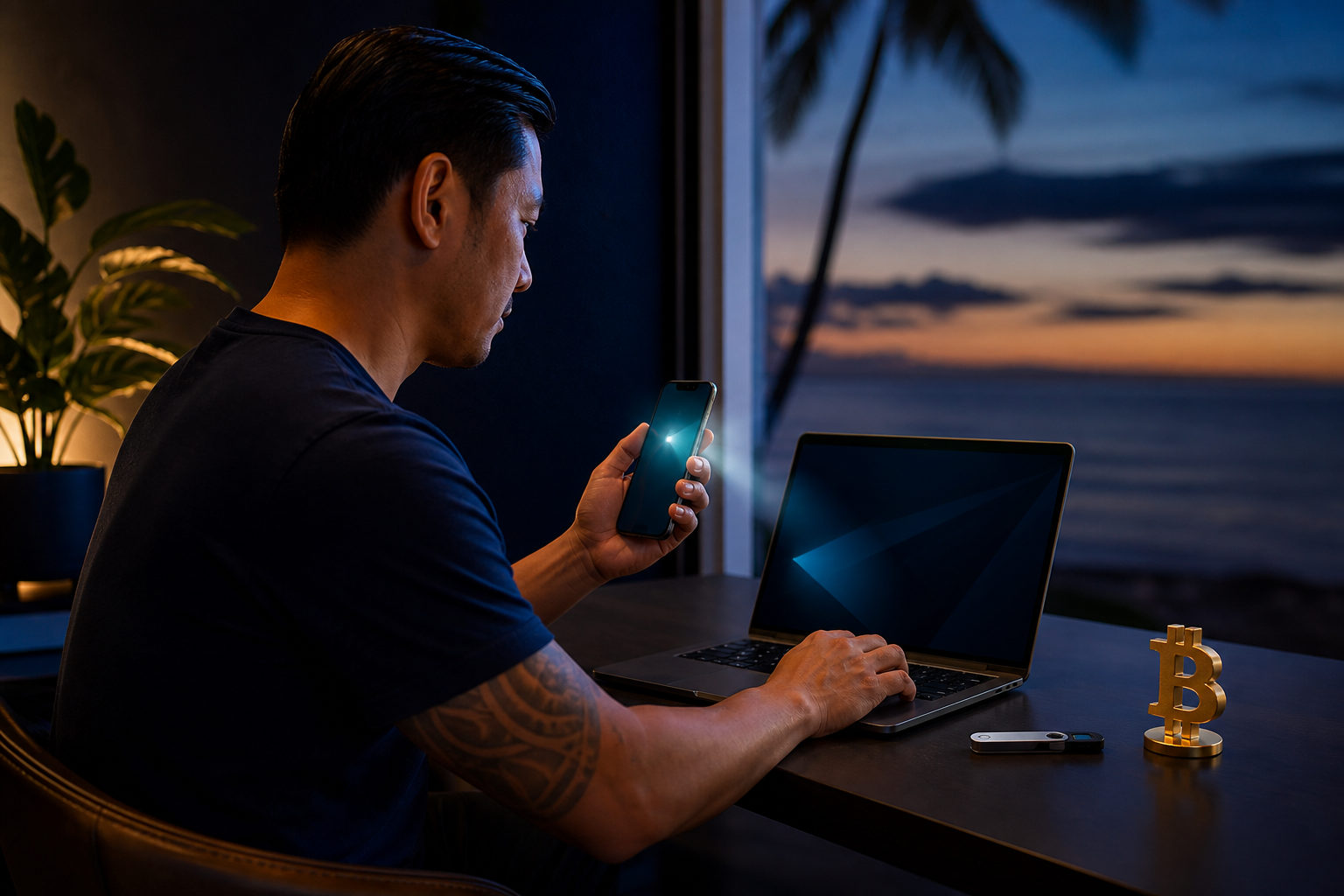
Yes, you can buy bitcoin in Hawaii, but your actual access depends on whether a service supports Hawaii residents, approves your identity checks, and accepts your payment method.
Start with the question behind the question
When people ask whether you can buy bitcoin in Hawaii, they often mean something more practical: can I open an account, fund it, complete a purchase, and later move or sell what I bought without getting stuck halfway through? That is the right frame. The issue is rarely the existence of a buy button. It is whether the full path works for your location, your documents, and your intended use.
Before looking at any service, decide why you want bitcoin in the first place. A person who wants to learn with a small purchase needs a different setup from someone planning a long holding period. If your goal is self-custody, transfer capability matters early. If your goal is simply to understand the process, a test purchase and a test withdrawal may teach you more than reading a long list of features.
You should also be honest about risk tolerance. Bitcoin can move sharply, and that matters more than most first-time buyers expect. Money meant for bills, debt payments, or emergency spending should stay out of the experiment.
Step 1: Confirm that the service actually supports Hawaii
Your first action should be reading the service terms, account eligibility pages, and help materials. Some companies operate in the United States with state-by-state differences in access, verification, or payment rails. A service may look available at the marketing level, then block you at the identity or funding stage.
Check for three things before you submit any personal data. First, does the service accept Hawaii residents? Second, what documents does it require for identity and address verification? Third, can users in your situation buy only, or also withdraw bitcoin to a personal wallet later? Those answers tell you whether the service fits your plan.
Do not rely on search snippets, ads, or social posts as your final answer. A broad claim that a service is “available in the US” may still leave out local restrictions or product differences. The useful source is the service’s own documentation, especially anything tied to signup, verification, deposits, withdrawals, and account limitations.
A major warning sign is any offer to bypass these checks. If someone says they can register for you, verify your account with someone else’s documents, or route your purchase through their profile and send the bitcoin later, stop there. Once your money and identity trail split apart, fixing problems becomes much harder.
Step 2: Prepare identity checks, payment setup, and account security
After you confirm access, gather what you need for account creation. Many compliant services ask for identifying information and a payment source such as a bank transfer, a debit card, or another supported method. The choice affects speed, fee presentation, and sometimes what you can do after purchase.
Identity checks exist for a reason. The service wants to know who is using the account, and it may need to apply its own compliance controls. From your side, completing this early reduces the chance that you line up a purchase and then get delayed by missing documents. Submit information only through the official app or official website while logged in to your own account.
Never send ID images to a stranger in a chat app who claims to be support. Real support channels do not need you to bypass the normal upload flow to “speed things up.” That tactic is common in scams because it feels personal and urgent at the same time.
Security setup deserves its own attention. Use a unique password for the account. If your email, exchange account, and other online services all share the same login secret, one breach can spread into the next. Turn on two-factor authentication if the service offers it, and store backup codes somewhere you control.
Match names carefully across your account and your funding source. Services often compare the payment origin with the account holder details. Mismatches can delay purchases, trigger reviews, or complicate refunds. This sounds administrative, but it causes real friction when ignored.
Step 3: Make a small test purchase and read the order screen closely
Your first buy should be small enough that a mistake stays manageable. The point is to learn the flow, inspect the terms shown at checkout, and see what the service delivers after the order settles. New buyers often focus on the amount they want to spend and miss the structure around that decision.
Read the order screen line by line. Look for the total amount you will pay, the amount of bitcoin you expect to receive, how the fee is shown, and whether the displayed price is final or estimated until execution. If the service does not make those details clear, treat that as a reason to slow down.
You also need to know what exactly you are buying. Some products provide direct bitcoin ownership with withdrawal capability. Others may give exposure inside an app but limit movement or add conditions before transfer is allowed. If your plan includes moving funds to your own wallet, confirm that option before buying rather than after.
Be careful with urgency. Countdown timers, limited-seat claims, signal groups, “expert traders,” and private account managers are common pressure tools. They try to push you from verification into payment before you have checked fees, withdrawal rights, and account protections.
A separate trap appears when someone offers to “help” you buy bitcoin faster through a direct bank payment or a wallet transfer to them. Once you send money to a private party, you are no longer using a normal purchase flow with standard account records. You are trusting a stranger to deliver later, and many victims only realize the difference after the money is gone.
Step 4: Decide where the bitcoin will live after you buy it
Buying is only half the process. After the purchase settles, choose whether to leave the bitcoin with the service for now or move it to a wallet you control. That choice changes who holds the keys, who controls transfers, and who becomes responsible if access is lost.
If you plan to use a self-custody wallet, start with a small test withdrawal. Verify the receiving address carefully. Copying and pasting is convenient, but malware can alter clipboard contents. A tiny test transfer gives you a clean way to confirm that the address, wallet, and process are all working before you move a larger balance.
Recovery phrases deserve strict handling. If your wallet gives you a backup phrase, keep it offline and private. No support worker, seller, teacher, or recovery service should ever need it. Anyone who asks for it is asking for control over your funds.
If you leave bitcoin on the service for a period of time, your security work is still not finished. Review device logins, withdrawal confirmations, login alerts, and any account activity notices available to you. A lot of account theft begins with an email compromise, followed by password resets and then unauthorized withdrawals.
Also check withdrawal rules before you need them. Some services separate buying, selling, and withdrawing across different menus, with conditions explained in different places. Read those details early so you are not surprised later by transfer reviews, waiting periods, or extra confirmation steps.
How to spot bad offers before they cost you money
Fraud prevention matters more than clever timing. Scams around bitcoin purchases often look simple at first: a fake support account, a copycat app, a social media message, or a private group that promises easy gains. The common thread is that someone tries to move you away from the normal process into direct contact and direct payment.
Watch for requests to act outside the service interface. If a person tells you to skip the official payment method and send funds to a personal account, stop. If a “coach” wants remote access to your phone or computer to help with setup, refuse. If a wallet app asks for your recovery phrase during a routine task, leave and verify what you installed.
Another danger comes from confusion between account access and asset ownership. A polished app screen can show a balance, but that does not guarantee easy withdrawal, and it does not prove the operator is trustworthy. The safest habit is to verify one function at a time: signup, identity check, funding, purchase, withdrawal, and backup.
FAQ
Can Hawaii residents buy bitcoin with a regular bank account?
In many cases, buyers try to connect a bank-based payment method, but the exact options depend on the service and its rules for Hawaii users. The practical step is to check supported funding methods before opening an account or sending any money.
Do I have to verify my identity to buy bitcoin in Hawaii?
Many compliant services require some level of identity verification, though the exact process varies. If a seller advertises large purchases with no checks and wants payment outside a standard account flow, treat that as a warning sign.
Should I leave bitcoin on the service after I buy it?
That depends on your goal and your comfort with self-custody. If you want direct control, learn wallet backups and do a small test withdrawal first; if you are still learning, take time to understand the process before moving funds.
What is the safest first purchase if I am new?
A small test purchase is usually the safest starting point because it lets you inspect fees, execution, and withdrawal options without taking oversized risk. It also helps you spot account or payment issues before they matter more.
How do I avoid bitcoin buying scams in Hawaii?
Stay inside official signup and payment flows, ignore private “helpers,” and never share wallet recovery phrases. If a deal depends on urgency, secrecy, or payment to a person instead of a service account, walk away.
If you are ready to act, keep the order simple: confirm Hawaii support, complete identity checks through official channels, secure the account with unique credentials, make a small test purchase, and verify withdrawal options before committing more money. That sequence will protect you far better than chasing a faster shortcut.
Disclaimer: This article is for informational and educational purposes only and is not investment, financial, or legal advice. Crypto assets are highly volatile and you could lose your entire investment. Do your own research and decide carefully.