
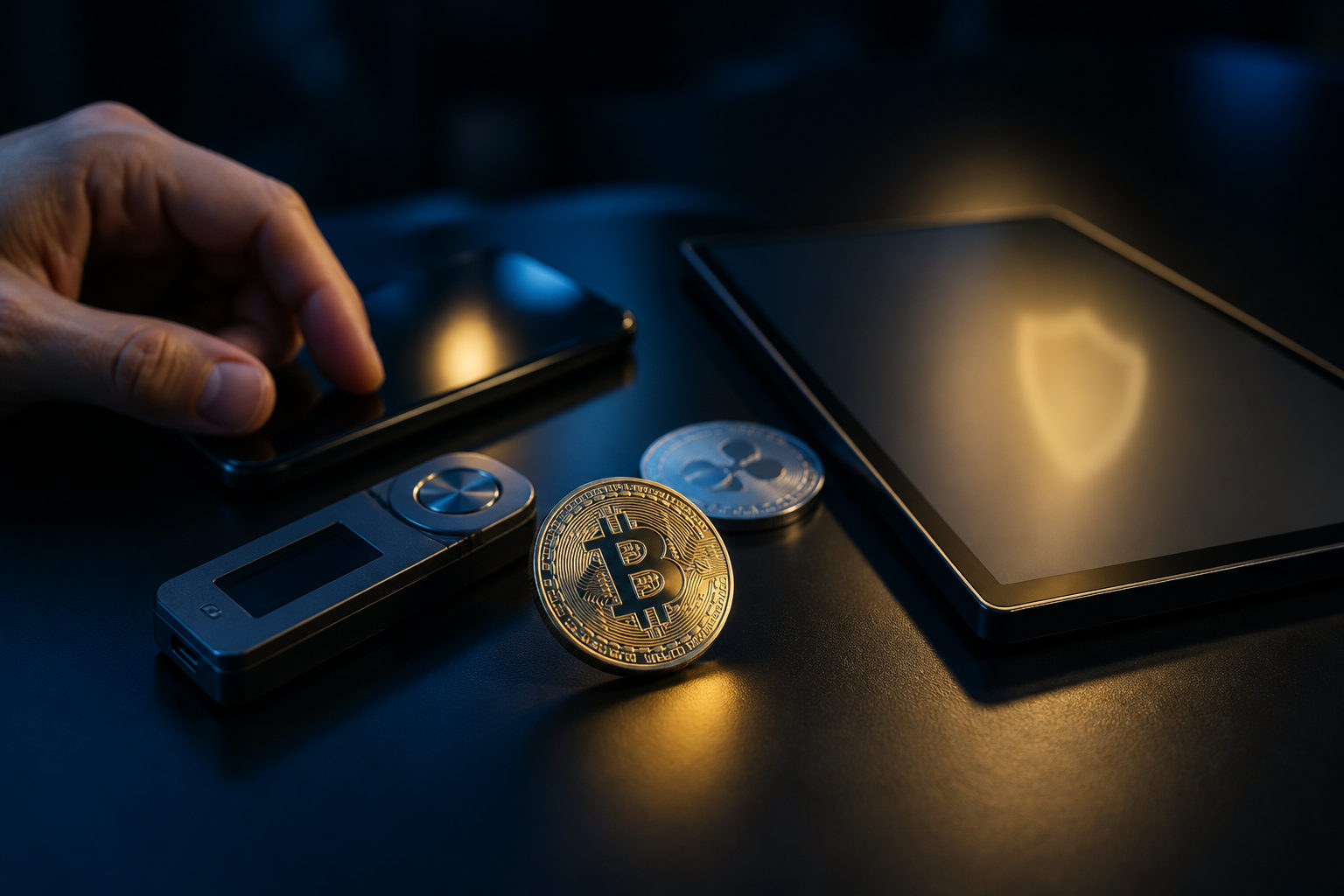
To convert XRP to Bitcoin, start with the Bitcoin side, not the trade screen. Set up a BTC wallet, confirm how the swap will happen, verify every transfer detail, then complete the conversion and check that the bitcoin actually arrives. Most mistakes happen before the swap goes through.
What “convert XRP to Bitcoin” actually means
You are exchanging one crypto asset for another: you send or sell XRP and end up holding BTC. Sometimes that happens through a direct XRP/BTC pair. Sometimes there is an extra step in the middle. For a regular user, the back-end path matters less than this: the asset you receive, the address you use, and the transfer rules all need to match.
Bitcoin launched with its genesis block in January 2009. Its supply is capped at 21 million coins, and its smallest unit is the satoshi, with 1 satoshi equal to one hundred millionth of a BTC. That matters here because the BTC you receive after a conversion is often shown in small fractions, not in full coins.
| Stage | What you see | Why it matters | Common mistake |
|---|---|---|---|
| Prepare a receiving wallet | BTC address | Determines where the bitcoin goes | Using a non-BTC destination |
| Choose a conversion route | Direct pair or multi-step path | Changes the process and fee structure | Looking only at marketing copy |
| Transfer or place the order | XRP deposit, sale, purchase | Determines whether the trade can complete | Wrong network or missing extra field |
| Withdraw BTC | Withdrawal record | Confirms you actually received the asset | Wrong address or no test transaction |
Step 1: Prepare a Bitcoin wallet before you do anything else
Do not wait until after the XRP conversion to find a Bitcoin wallet. That makes it more likely you will paste the wrong address, mix up assets, or make a rushed decision after the trade is done.
Open your wallet and confirm that the address shown is for receiving bitcoin, not another asset or a lookalike entry in the same app. The conversion only ends well if the BTC has a valid place to land.
Protect the wallet credentials too. Keep your recovery phrase or private key out of chats, email drafts, and screenshots stored on connected devices. Real support does not need the information that gives full control of your funds.
If you plan to leave the BTC inside a trading service instead of moving it to self-custody, that is a different risk profile. It may be convenient, but account security matters more, so your password, two-factor checks, and withdrawal confirmation settings should already be in place.
Step 2: Figure out whether you are doing a direct swap or a multi-step conversion
There is more than one way to turn XRP into Bitcoin. In some cases you can use a direct XRP/BTC market. In others, the service converts XRP into another asset first and only then into BTC.
| Route | How it works | When it fits | Main caution |
|---|---|---|---|
| Direct XRP/BTC | Shorter path, easier to follow | When the service supports that pair | Check the gap between estimate and execution |
| Multi-step conversion | May involve two trades | When no direct pair is available | Total cost can rise across steps |
This matters because some interfaces complete only the first leg, and the BTC purchase or withdrawal still needs your action. If you do not know where you are in the process, you can stop halfway without realizing it.
Some third-party pages advertise speed or unusually good rates but stay vague about failed transfers, fees inside the quote, quote validity, or refunds. If the page is clear about nothing except how easy it is, slow down.
Step 3: Before sending XRP, check the address, network rules, and any extra identifier
If your XRP is sitting in a wallet or in another account, the next move is often to transfer it into the service you will use for the conversion. If the XRP is already there, you can move straight to the trade screen. Either way, this is where a lot of damage happens.
XRP transfers sometimes require more than an address. Certain receiving setups also ask for an extra identifier, such as a tag or memo, to match the funds to the right account. Leave that out, or type it incorrectly, and the deposit may not be credited in the normal flow.
Do not trust copy and paste blindly. Paste the destination, then compare the first characters and the last characters with the original. Check the asset name again while you are at it. Clipboard hijacking malware can swap in a different destination.
| Check item | What to do | Why | Watch for |
|---|---|---|---|
| Asset name | Confirm you are sending XRP | Prevents funds from going to the wrong entry point | Do not rely on icons alone |
| Network rule | Follow the receiving page requirement | A mismatch can trap funds | If unsure, stop and verify first |
| Extra identifier | Check whether a tag or memo is required | Helps the service assign the deposit correctly | Missing data can delay or block crediting |
| Address review | Compare the first and last characters | Reduces clipboard replacement risk | Check again after pasting |
Step 4: When you execute the conversion, read the pricing and fee logic carefully
Check whether the page is showing an instant conversion estimate or a live market order. Those are not the same experience, and they do not present cost in the same way.
An instant conversion tool is often easier for beginners, but the amount shown can be an estimate that shifts with market movement or built-in spread. A trading interface gives more control, yet it expects you to understand whether the order has fully executed or is still waiting.
Read the fee display again before you approve anything. Is the cost listed separately? Is it baked into the quote? Will there be another BTC withdrawal fee after the swap is complete? Users often think one number is final when the service meant it as a preview.
For a first attempt, a small test transaction is often the smartest move. It confirms the whole path in real conditions: XRP transfer, conversion, BTC withdrawal, wallet receipt.
Step 5: After the swap, verify that the bitcoin reached your wallet
A completed conversion is not the same thing as completed custody. If the BTC is still sitting in an intermediate account, you have finished a trade but not the handoff. If your goal is to control the bitcoin yourself, withdraw it to the wallet you prepared and keep the transaction records, order reference, and on-chain identifier available for checking.
Bitcoin produces a new block roughly every 10 minutes, so withdrawal status can move through several labels before the funds appear as usable in your wallet. One platform may say submitted, pending, or complete. Check whether the BTC was sent, and then check whether your wallet has recognized it.
If the bitcoin does not show up right away, start with the basics. Was the withdrawal address correct? Was the asset definitely BTC? Does the service show the withdrawal as sent? Does your wallet support the destination format you used? Do that first. Do not rely on search results promising manual acceleration or instant recovery service.
Scams that show up during XRP to Bitcoin conversions
| Scam type | Typical pitch | Real risk | How to respond |
|---|---|---|---|
| Fake support | Asks for your recovery phrase, code, or remote access | Direct fund theft | End the conversation immediately |
| Fake swap page | Promises unusually strong rates or no fees | Your XRP is sent away with no safe return path | Use only an entry point you verified yourself |
| Address replacement | Your pasted address changes to a different one | BTC goes to the attacker | Check the beginning and ending characters |
| Private “helper” in a chat group | Offers to swap faster by hand | You send funds and lose contact | Do not send coins to a stranger for off-platform exchange |
Another risk is installing random browser extensions, rate tools, or “assistants” on the same device you use for crypto. Some can read page data, alter clipboard contents, or push you toward a fake sign-in screen.
FAQ
Do I have to swap XRP into a stablecoin before buying bitcoin?
No. Some services support a direct XRP-to-BTC route, while others use an intermediate asset. What matters is the real conversion path and the full cost.
What is the easiest mistake to make when converting XRP to BTC?
The transfer checks are where most users slip. Address errors, network mismatches, and missing tags or memos can cause more trouble than the trade itself.
Can I leave the bitcoin on the service after the conversion?
You can, but then your main risk sits at the account and platform level rather than with your own wallet management. If you do that, tighten the account security before you move on.
Why does the page say completed if my wallet still shows no BTC?
Sometimes “completed” means the order process finished, not that your wallet has fully received usable bitcoin. Check the withdrawal record and the wallet receipt status together before assuming something is wrong.
What is the safest way to do this for the first time?
Run a small test from start to finish. Send a limited amount of XRP, complete the conversion, withdraw the BTC, and confirm that your wallet receives it correctly before doing anything larger.
If you want the cleanest workflow, prepare the BTC wallet first, confirm whether the route is direct or multi-step, verify every XRP deposit detail, review the fee logic before approval, then make sure the BTC lands in a wallet you control. If any screen feels unclear, stop there.
Disclaimer: This article is for informational and educational purposes only and is not investment, financial, or legal advice. Crypto assets are highly volatile and you could lose your entire investment. Do your own research and decide carefully.