
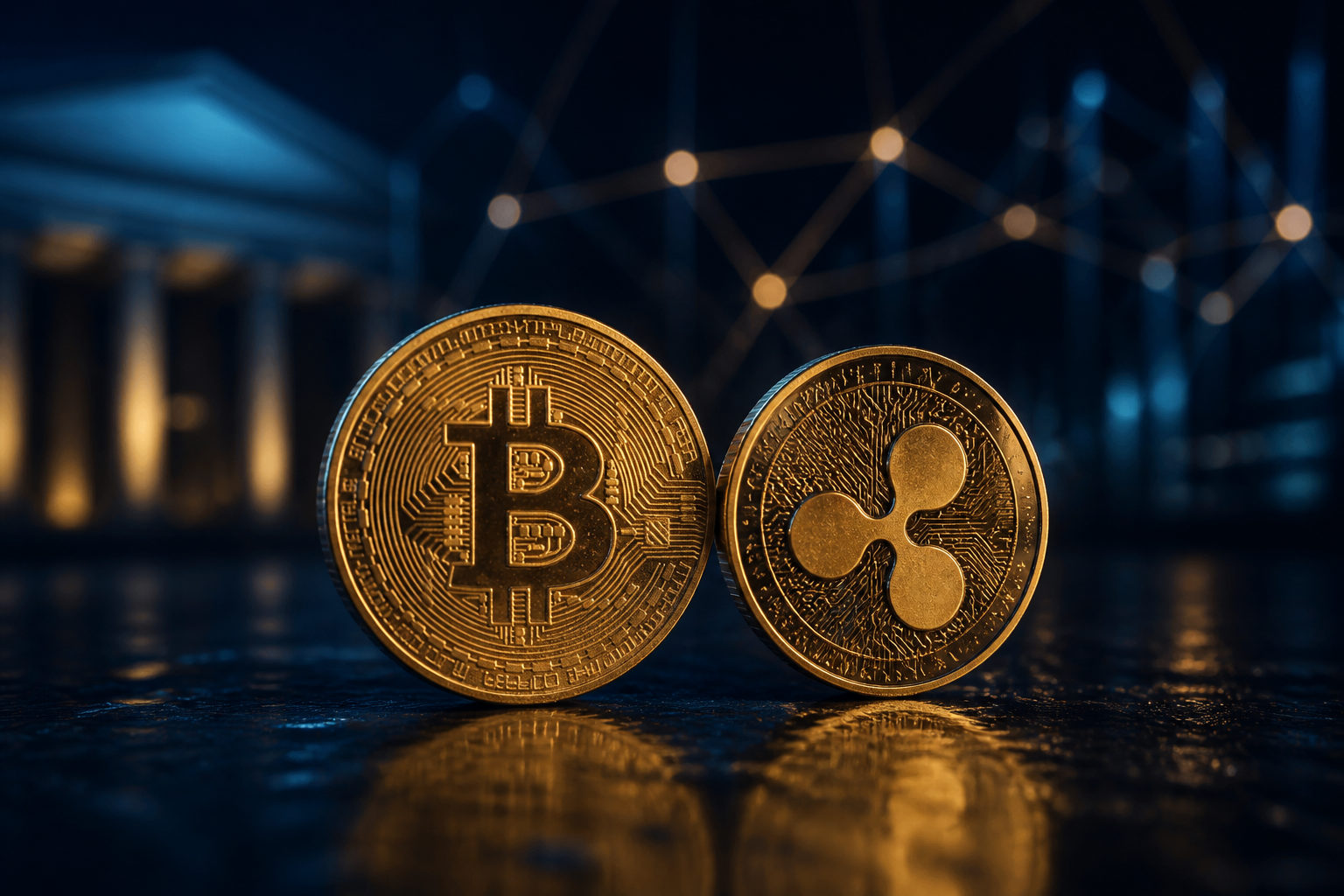
Is XRP going to be the next Bitcoin? In most practical terms, probably not. The more useful question is whether XRP can build a durable value case of its own, because Bitcoin and XRP are judged on different foundations.
Start by fixing the question
When people ask whether XRP could be the next Bitcoin, they are often comparing several things at once without separating them. They may mean long-term price potential, cultural status inside crypto, perceived scarcity, or the chance of becoming a default benchmark asset. Those are not the same test.
Bitcoin sits in a special category because its market story is unusually clear. It began with the 2008 white paper, the genesis block arrived in January 2009, its total supply is capped at 21 million, new issuance falls on a known schedule, and the network is tied to mining and broad node participation. Roughly every 10 minutes a block is added, and the halving cycle happens about every 4 years, or every 210,000 blocks. XRP needs a different frame: does it have lasting demand, and can that demand support an independent role over time?
| Dimension | Bitcoin | XRP | Why it matters |
|---|---|---|---|
| Main narrative | Scarcity and decentralized money network | Payments and transfer efficiency | You need to know which thesis you are actually buying |
| Market role | Often treated as a reference asset | More tied to use-case expectations | Their portfolio function may differ |
| Core test | Consensus strength, issuance schedule, network security | Adoption, regulation, and real demand | One standard does not fit every asset |
Why this comparison keeps coming up
The comparison survives because it is easy to tell and easy to repeat. Both assets are well known, so newer market participants often group them together before they understand the structural differences. Media coverage and social posts also reward simple labels, and “the next Bitcoin” is one of the simplest labels available.
That shortcut creates a problem. Bitcoin is often evaluated through scarcity, resilience, decentralization, and long-term conviction. XRP is more likely to be judged through utility claims, payment-related relevance, ecosystem traction, and rule changes that could affect how it is traded or used. If you merge those two frameworks, your expectations can become badly misaligned.
That is why the better question is not whether XRP can turn into Bitcoin. It is whether XRP can sustain a value proposition that does not need Bitcoin's identity as a crutch.
Five factors that matter more than the slogan
1. Asset identity
Bitcoin benefits from broad agreement about what it is supposed to represent. Different holders may stress different reasons, yet many still orbit the same core ideas: fixed supply, decentralization, and long-term store-of-value logic. That shared understanding helps support a durable narrative.
XRP faces a harder identity test. If an asset is framed one day as a payment rail, another day as a broad industry replacement, and later as a short-term trading vehicle, valuation becomes unstable because the market is not pricing one thing. A fair XRP assessment starts with a plain question: what is the stable reason people would want to hold or use it?
2. Supply structure and scarcity
Bitcoin's supply story is easy to explain. The cap is 21 million, issuance declines on a known path, and that simplicity helps the scarcity thesis travel across market cycles. People do not have to agree with the thesis to understand it.
With XRP, investors usually need to pay closer attention to supply structure, circulating dynamics, release expectations, and whether future supply changes are easy to interpret. This does not mean only one kind of supply design can work. It means clarity matters. The harder the supply profile is for ordinary participants to understand, the harder it can be to build stable long-term conviction.
3. Source of consensus
Bitcoin's consensus is not just a branding success. It comes from an open rule set, long operating history, mining-based security, and the absence of a central public founder figure directing the narrative. Satoshi Nakamoto remains unidentified, and that has strengthened Bitcoin's image as a system larger than any single organizer.
XRP may derive more of its market confidence from ecosystem momentum, use-case expectations, or external developments. That does not make it automatically weaker, though it does make it different. Investors should ask whether confidence in the asset grows mostly from distributed market belief or from organized efforts, business expectations, and regulatory interpretation. Those sources of consensus do not behave the same way under stress.
4. Utility versus durable demand
This is where many investors make the biggest mistake. A network can be fast or efficient, yet that alone does not guarantee that its token captures lasting value. Technical usefulness and durable token demand are related questions, but they are not identical.
For XRP, the key issue is whether the token is necessary inside meaningful activity or whether it is one option among many. If similar payment or settlement outcomes can be achieved through other crypto assets, stablecoins, or different infrastructure, the token's bargaining power may be weaker than the headline narrative suggests. If the token remains hard to replace in real workflows, the case becomes more interesting. You need to test the economic role, not just the product pitch.
| Observation | Closer to Bitcoin logic | Closer to utility-token logic | What to examine |
|---|---|---|---|
| Why people hold it | Scarcity and long-term conviction | Transactional or operational use | Whether demand persists across conditions |
| Where value comes from | Consensus accumulation | Use-case adoption | How replaceable the story is |
| What drives volatility | Risk appetite and halving narrative | Policy shifts, business expectations, ecosystem news | Whether catalysts are durable or temporary |
5. Regulation can change the valuation model
All crypto assets face policy risk, yet not all of them face it in the same way. Bitcoin's global profile is relatively established. XRP is often discussed in a setting where regulatory interpretation can have a more direct impact on trading access, custody comfort, and institutional willingness to engage.
That matters because regulation does not just affect sentiment. It can alter the way the market prices the asset in the first place. Even when a token appears efficient or useful, persistent uncertainty around treatment and compliance can keep a discount in place for longer than many investors expect.
Turn the claim into a decision framework
If you want to evaluate XRP seriously, replace the label with a checklist. The goal is to identify what must be true for the thesis to work and what would invalidate it. That process is more valuable than debating whether one famous asset can inherit the title of another.
| Question | What to review | Common mistake |
|---|---|---|
| Is the long-term story clear? | Whether the market has a stable understanding of the asset's role | Treating short-term excitement as a long-term base case |
| Is the supply profile easy to understand? | Circulating dynamics, release expectations, and possible selling pressure | Looking at the ticker and skipping the structure |
| Is demand real? | Whether the use case is active, necessary, and hard to replace | Confusing possible adoption with proven demand |
| What are the main risks? | Regulation, liquidity, competition, and sentiment shocks | Thinking only about upside and not about failure conditions |
| How is it fundamentally different from Bitcoin? | Consensus source, portfolio role, and market identity | Assuming all large crypto assets follow the same path |
A useful self-test is simple: if you were not allowed to call XRP “the next Bitcoin,” could you still explain clearly why you would own it or study it? If the answer becomes vague, the thesis may depend too much on borrowed narrative strength.
FAQ
Is XRP a long-term asset in the same way Bitcoin is?
It may be a long-term asset for some investors, but usually not for the same reasons. Bitcoin is often held for scarcity and decentralized monetary exposure, while XRP is more likely to be judged by utility, demand persistence, and policy sensitivity.
What is the biggest flaw in calling XRP the next Bitcoin?
The label hides the differences that matter most. It can push investors to ignore supply structure, the source of consensus, and the risk that utility expectations may not translate into durable token demand.
What should I check first if I want to research XRP?
Start with the value proposition in one sentence. Then test whether that sentence depends on stable long-term conditions or on temporary market excitement; if it leans on the second, the research is not finished.
Does strong payment utility mean XRP can match Bitcoin's status?
No. Payment usefulness answers whether a system can perform a task well, while Bitcoin's status is tied more closely to long-term holding behavior, scarcity perception, and benchmark-asset identity.
What risk do retail investors miss most often here?
Many miss narrative mismatch. They buy an asset tied to utility expectations but expect it to behave like a store-of-value asset, which can distort both entry decisions and risk tolerance.
If you want one practical next step, write two separate notes: one for Bitcoin and one for XRP. List value source, demand assumptions, and failure conditions for each. If those lists look fundamentally different, that alone is your answer to whether XRP is likely to become the next Bitcoin.
Disclaimer: This article is for informational and educational purposes only and is not investment, financial, or legal advice. Crypto assets are highly volatile and you could lose your entire investment. Do your own research and decide carefully.