
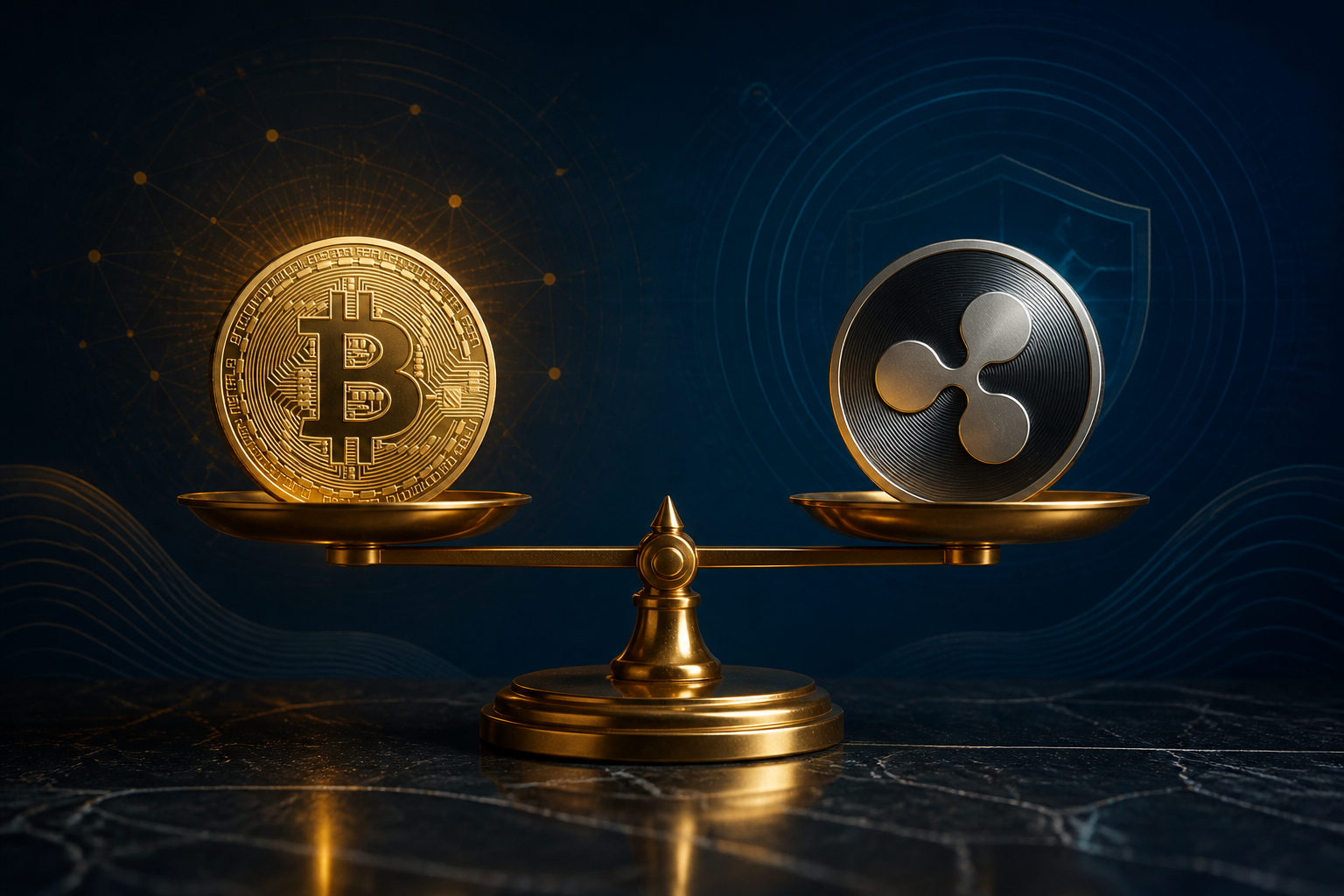
Is XRP the next Bitcoin? The safer answer is no. Both are crypto assets, but they are built around different goals, different market narratives, and different risk profiles, so treating XRP as Bitcoin's successor can lead to weak analysis.
Why people keep comparing XRP and Bitcoin
The comparison is easy to understand. Bitcoin is the best-known crypto asset, and XRP has had strong name recognition for years, so new market participants often place them side by side.
There is also a simple headline effect: people want to know which asset could repeat Bitcoin's path. That framing gets attention, but it can blur the real issue. The better question is not whether XRP looks like Bitcoin. It is whether XRP has its own durable reason to attract demand over time.
To judge whether XRP could be "the next Bitcoin," break the question into parts
Start with asset identity
Bitcoin's core story has been unusually clear since the genesis block in January 2009. It has a hard cap of 21 million coins, a visible issuance schedule, and a system that many holders value for scarcity and decentralization.
XRP is usually discussed in a different way. People often focus on transfer efficiency, settlement use cases, and the possibility of adoption in payment-related settings. If two assets are trying to satisfy different kinds of demand, one should not be judged as a replacement for the other.
Ask whether the scarcity story works in the same way
Many investors who ask whether XRP can be the next Bitcoin are really asking whether it can gain a similar scarcity premium. With Bitcoin, that narrative is easy to explain: supply is capped at 21 million, a new block is produced about every 10 minutes, and the block subsidy is cut roughly every 4 years, or every 210,000 blocks. Its smallest unit is 1 satoshi, equal to one hundred millionth of a BTC.
But supply rules alone do not create lasting value. Markets also need a reason to care about those rules for a long time. That is where many "next Bitcoin" comparisons begin to fall apart. Efficient transfers and long-term scarcity are not the same investment case.
Look at where network effects come from
Bitcoin's network effect is not just about being first. It also includes custody services, wallet support, security practices, educational content, and a very strong long-term holding culture.
XRP may have strengths in other areas, yet that does not automatically produce the same kind of market position. What matters is whether demand is driven by sustained real-world use, or mostly by rotating market attention. If the demand base is different, price behavior can also be different.
Compare the risk structure, not only the upside story
Bitcoin holders usually focus on volatility, custody, time horizon, and broad market liquidity conditions. XRP analysis often includes those same market risks, but also puts more weight on ecosystem development, outside disputes, regulatory pressure, and changes in narrative.
That does not make one asset automatically better than the other. It means the risks are not interchangeable. Two assets can both rise and fall sharply while doing so for very different reasons.
A better decision framework: three factors to check
- Source of demand: Is demand coming from long-term holding, payment use, trading activity, or a single market theme?
- Stability of consensus: Do market participants share a fairly consistent view of the asset's purpose, or does the story change every cycle?
- Clarity of rules: Can an investor understand supply, circulation, governance, and the main points of uncertainty without relying on slogans?
If those three areas are unclear, asking whether XRP is the next Bitcoin does not help much. It turns a research task into a popularity contest.
For most readers, the practical move is to stop looking for a successor and start checking whether each asset stands on its own. That shift in framing is small, but it usually improves judgment.
Common mistakes in the "next Bitcoin" debate
- Confusing popularity with similarity. A well-known asset is not necessarily comparable to Bitcoin in how it captures value.
- Treating payment utility as the same as store-of-value demand. Fast transfers and long-term holding demand are different things.
- Using short-term price moves as proof of a long-term thesis. A rally can come from sentiment or liquidity, not from a fully formed durable case.
- Ignoring whether the holding thesis stays consistent. If the reason to own an asset keeps changing, the risk may be higher than it first appears.
Bitcoin is often placed in a category of its own not only because it came first, but because its core narrative has stayed relatively consistent over time. Any other asset that wants a similar standing would need more than a catchy comparison. It would need a durable market belief that survives changing conditions.
FAQ
What is the biggest difference between XRP and Bitcoin?
The biggest difference is the main investment narrative. Bitcoin is often framed around scarcity and long-term value storage, while XRP is more often discussed through payments and transfer efficiency.
Does buying XRP mean betting that it will copy Bitcoin?
No. Some buyers may be trading momentum, some may be focused on adoption themes, and others may simply be following attention. Those reasons are not the same as believing in Bitcoin's long-term case.
Why do people keep asking whether XRP can become the next Bitcoin?
Because markets like simple stories. "Is XRP the next Bitcoin" is easy to repeat, but it can hide the more useful questions about demand, rules, and risk.
If I ignore price, what should I compare first?
Start with purpose, then demand source, then rule clarity. Once those pieces are separated, many surface-level similarities stop looking very important.
How can beginners avoid getting pulled in by the "next Bitcoin" pitch?
Try rewriting the question. Instead of asking whether XRP could become Bitcoin, ask why someone would want to hold XRP over a long period and what keeps that demand alive.
Use a checklist before making up your mind
Write down the asset's purpose, the likely source of demand, the supply and governance rules you understand, and the main risks that could change the thesis. Then ask a simpler question: can this asset make sense without borrowing Bitcoin's story?
If the answer is still vague, that is a sign to slow down and do more work before taking any position.
Disclaimer: This article is for informational and educational purposes only and is not investment, financial, or legal advice. Crypto assets are highly volatile and you could lose your entire investment. Do your own research and decide carefully.