
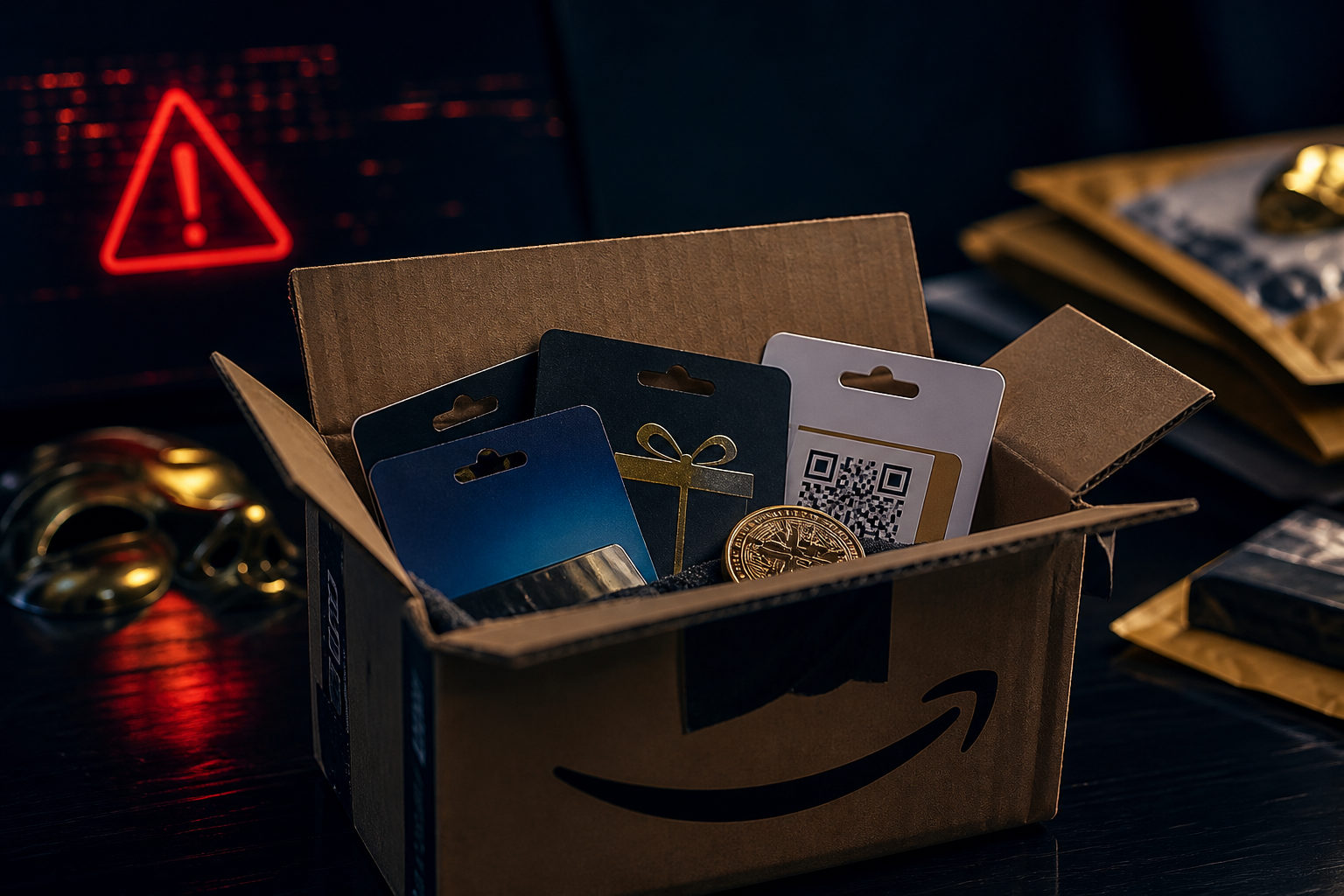
Amazon usually does not sell Bitcoin directly. In most cases, what people find instead are related products, gift-card workarounds, or scams that borrow Amazon's name to look safer than they are.
Start with the basic distinction: a product page is not a Bitcoin transfer
When people search whether Amazon sells bitcoins, they often mix up three very different things: physical crypto-related products, payment methods involving Amazon gift cards, and offers from third parties claiming they can deliver BTC after payment. Only an actual blockchain transfer to a wallet or account you control would count as receiving Bitcoin.
That matters because Bitcoin is not delivered like a normal retail item. A book, device, or code can appear on an e-commerce page, but BTC ownership depends on a valid transfer on the network. If a listing never gets specific about how the coins reach your wallet, you are not looking at a clear Bitcoin purchase.
Use this step-by-step filter before you pay anyone
Step 1: Check what is being delivered
Your first move is simple: read the offer as if you were looking for proof, not promises. Is the seller offering a hardware wallet, a mining accessory, a class, a voucher, or an actual transfer of Bitcoin to your address? Those are not the same thing, even if the word “bitcoin” appears in the title.
The reason to start here is that many risky offers rely on vague wording. They suggest you will “get crypto” later, after a manual review or a private message, without stating how delivery works. If the transfer method is unclear, stop there.
One more caution: if the seller asks you to continue the deal by email, chat app, or direct message, the risk rises fast. Once the transaction moves off the original checkout flow, your record of what was promised gets much weaker.
Step 2: Look at the payment path, not just the pitch
A common trap is indirect payment. Instead of charging you for Bitcoin in a transparent way, the other side tells you to buy an Amazon gift card, send the code, and wait for BTC in return. Sometimes the wording sounds casual, as if this were just a handy shortcut.
There is a reason scammers like that setup. Gift card value can be spent quickly, and disputes are usually harder to unwind after the code has been shared. The problem is not only fraud; even a dispute in good faith can become messy because you paid for a gift card, not for a verifiable Bitcoin transfer.
If an offer depends on card codes, screenshots, or “our agent will convert it for you,” treat that as a red flag. A complicated path is often the whole point.
Step 3: See whether the amount of BTC and the fees are explained clearly
A legitimate buying flow should make the basics understandable: how much BTC you receive, what fees apply, and when you can withdraw. Risky offers often hide those details behind sales language such as “fast release,” “special access,” or “no need to do anything yourself.”
The reason this step matters is that vague pricing creates room for abuse. You may pay one amount and receive far less Bitcoin than you expected, or find that “delivery” depends on extra charges that were never explained at the start.
The warning sign is not that a deal sounds expensive or cheap. It is that the seller avoids a clear explanation of what you get and how the final amount is calculated.
Step 4: Make sure you control the asset after the purchase
Before you buy, decide where the Bitcoin is supposed to go. That could be a self-custody wallet or an account that you personally control and can access. If the seller says the BTC will stay with them for a while and you can withdraw later, you do not actually control the asset yet.
This step matters because ownership without control is weak in practice. If you cannot withdraw, verify receipt, or view the transfer in a way that matches your own destination, then you are relying on someone else's promise rather than your own access.
Phrases like “we will hold it for you,” “custody first, withdrawal later,” or “we lock it on your behalf” should trigger extra care. Convenience is not the same as possession.
Why “buying Bitcoin with Amazon” tends to create more risk
Part of the confusion comes from trust transfer. People know Amazon as a mainstream retail brand, so anything connected to it can feel more ordinary than it really is. A scammer may use that familiarity to make a high-risk transaction look like routine online shopping.
Another issue is that e-commerce rules and crypto settlement do not work the same way. Retail purchases can be tracked through order history, shipment status, and product records. Bitcoin ownership depends on an actual network transfer, and that requires a different kind of verification.
The final problem is evidence. If a deal includes a product page, a gift card purchase, a private chat, and a promise of later BTC delivery, you now have several moving parts and no clean record of what each payment was really for. That makes disputes harder to resolve and scams easier to hide.
| Scenario | What it looks like | What the risk really is |
|---|---|---|
| Buying a crypto-related physical item | Feels connected to Bitcoin | You usually receive a device or book, not BTC |
| Using an Amazon gift card to get BTC | Seems like a simple extra step | The code can be used quickly and is hard to recover |
| Moving the deal off-platform | Looks faster or more personal | Your proof of the agreement becomes weaker |
| Seller keeps custody after payment | Sounds convenient | You do not control the Bitcoin |
If your real goal is to buy Bitcoin, use a safer process
A better approach is to stop asking whether Amazon sells bitcoins and start checking whether the purchase path itself is clear and verifiable. You want a method where the payment route is obvious, the fee structure is explained, and the withdrawal rules are visible before money moves.
In practice, that means preparing your receiving wallet or account first, reading the terms around buying and withdrawing, and testing the full process with an amount you can afford to risk. The point is not hesitation for its own sake. The point is to understand every handoff in the transaction before you scale up.
You should also be suspicious of urgency. If someone pushes you to pay immediately, refuses to explain the delivery method in writing, or keeps changing the process, there is no reason to continue. The safest standard is simple: if you cannot verify each step yourself, do not pay.
FAQ
Can you buy BTC directly on Amazon?
Usually not in the sense of a normal retail checkout that ends with Bitcoin arriving in your wallet. What you are more likely to find are related products or indirect, higher-risk arrangements.
Is using an Amazon gift card for Bitcoin safe?
It is generally riskier than a clear buying flow because gift card codes can be used quickly and are difficult to recover. If the transaction depends on sending a code or screenshot, be careful.
If a seller says they will send the coins manually after payment, should I trust that?
Do not rely on a verbal promise alone. What matters is whether you can verify the transfer and whether the BTC ends up in a wallet or account you control.
Does buying a hardware wallet on Amazon mean I bought Bitcoin?
No. A hardware wallet is a storage tool for keys, not Bitcoin itself. You only hold BTC after the asset has been transferred to an address associated with your wallet.
What if I only want to know where to check the Bitcoin price?
Use a mainstream market data page or a trading service with real-time quotes. An e-commerce listing is not a reliable source for the current BTC price because it may include accessories, courses, or misleading offers.
If you plan to take the next step, verify three things before paying: where the Bitcoin will be sent, how fees work, and whether you can withdraw on your own. If any one of those is unclear, pause the transaction.
Disclaimer: This article is for informational and educational purposes only and is not investment, financial, or legal advice. Crypto assets are highly volatile and you could lose your entire investment. Do your own research and decide carefully.