
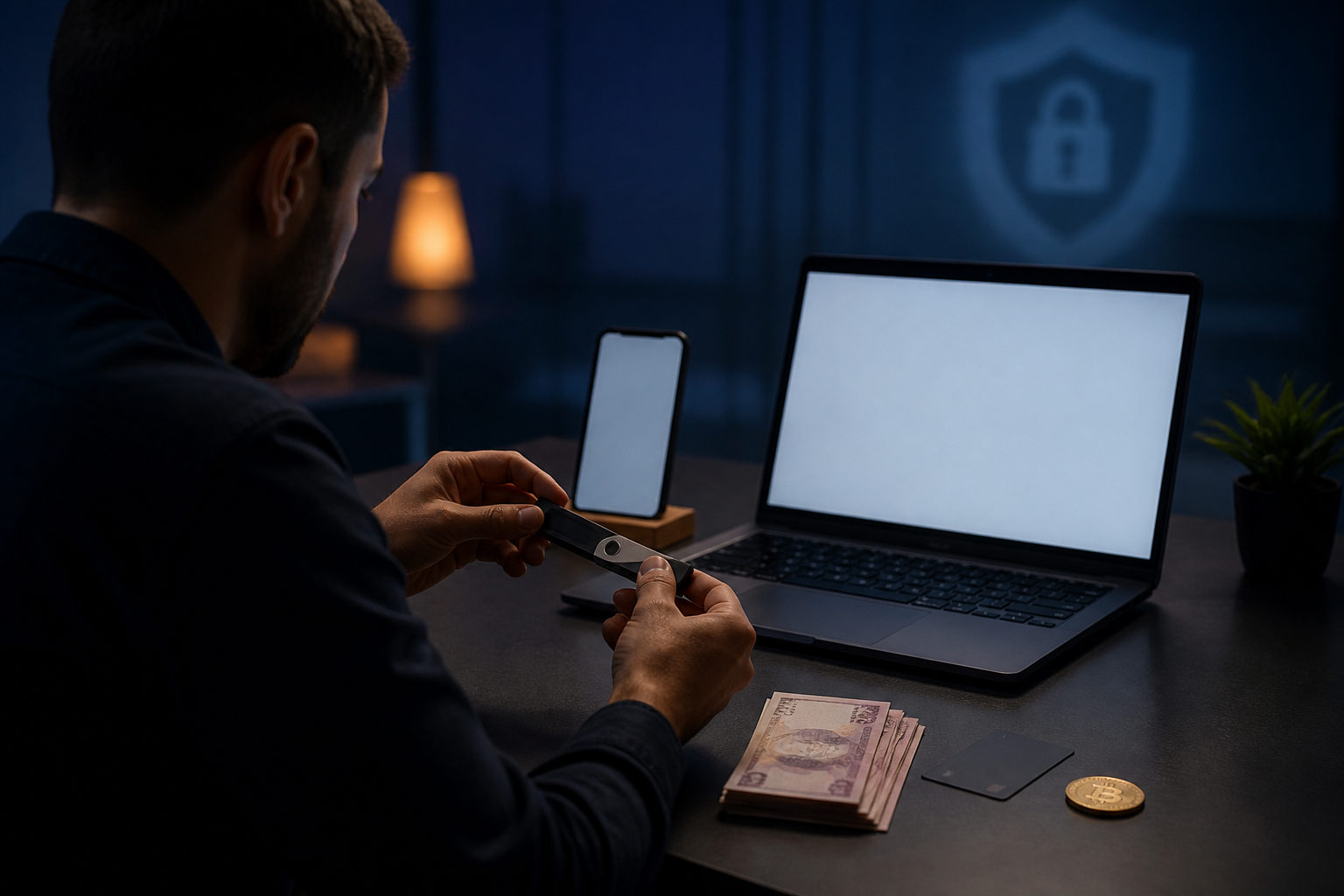
There is no single “standard path” for buying bitcoin in Iran right now. The rial keeps losing value, so more people want to convert savings into crypto just to protect their purchasing power. At the same time, the central bank has tightened rial on-ramps, capped how much stablecoin people can buy and hold, and several of the country's largest domestic exchanges were hit with fresh US sanctions in 2026. International platforms, meanwhile, simply don't let Iranian users in. Before picking a method, it helps to understand these constraints, because they shape every decision that follows — which wallet to set up, which channel to use, and what records to keep.
Three things about Iran's situation that change the playbook
Generic buying guides assume a fairly open market. Iran's situation has a few structural differences that matter more than the usual advice about comparing fees.
- Demand side: the rial's annual inflation has run roughly 40-50% in recent years, and the currency has lost close to 90% of its value since 2018. For a lot of Iranians, converting salary into USDT or bitcoin isn't speculation — it's an attempt to stop losing purchasing power month over month.
- Regulatory side: the Central Bank of Iran (CBI) cut off rial-based payment gateways for most domestic exchanges on December 27, 2024. When it partially reopened access in January 2025, exchanges were required to connect to a CBI-run API and report user identity and transaction data directly to the central bank. In September 2025, the CBI's High Council announced a $5,000 annual cap on individual stablecoin purchases and a $10,000 cap on total holdings.
- Access side: because of the broader US sanctions regime on Iran, mainstream international platforms like Binance and Coinbase don't accept Iranian ID verification or Iranian IP addresses. That pushes most people toward domestic exchanges or informal over-the-counter arrangements — and several of the biggest domestic exchanges were themselves added to US sanctions lists during 2026.
Put together, these three points mean the real question isn't just which platform has the best rate. It's whether the platform will still be operating next month, whether your ID data ends up in a government database, and whether your funds could get stuck if the exchange runs into legal trouble.
Step one: set up your own wallet — this part doesn't change by country
Wherever you are, leaving bitcoin sitting in an exchange account after you buy it means someone else still controls it. That's true everywhere, but it matters more in Iran, where domestic platforms carry extra layers of risk from sanctions exposure and security incidents. Moving coins to a wallet where you hold the private keys removes at least one of those layers.
Wallets generally split into software and hardware types. Software wallets are quick to set up and fine for people just getting started. Hardware wallets keep the signing process isolated from an internet-connected device, which makes them a better fit for anything you plan to hold for a while. Either way, download only from official sources — not from a link someone sent in a chat group, not from a repackaged file on a random cloud drive.
When you create a wallet, you get a seed phrase. That phrase is the only way to recover your funds if something goes wrong, and it's also the single thing scammers ask for most often. Never photograph it, never upload it anywhere, and never read it out to anyone claiming to be “support.” Write it down offline, store the copies separately, and make sure nobody can see or record the process.
Step two: understand which channels are actually available
Setting marketing claims aside, Iranian users realistically have three routes: licensed domestic exchanges, informal peer-to-peer trading often organized through Telegram or personal introductions, and, for a small number of people, legally licensed mining. Each carries a different risk profile.
Domestic exchanges: the main channel, but a rough 2026
Nobitex is Iran's largest domestic exchange, historically handling roughly half of the country's digital-asset trading volume with more than six million active users. But the platform had a serious security incident on June 18, 2025: a hacking group describing itself as pro-Israel breached its systems, drained more than $90 million in assets, and sent the funds to addresses with no recoverable private key, effectively destroying rather than stealing the money. Days later, the exchange's source code and internal infrastructure documentation leaked online. Then, on June 2, 2026, the US Treasury's Office of Foreign Assets Control (OFAC) sanctioned Nobitex along with three other domestic exchanges, Wallex, Bitpin, and Ramzinex, accusing them of processing transactions tied to Iran's Islamic Revolutionary Guard Corps and helping evade sanctions. Treasury followed up on August 7, 2026, sanctioning two more Iran-linked exchanges in a separate action. Tether, the issuer of USDT, has also frozen several hundred million dollars' worth of Iran-linked stablecoin addresses across multiple actions during 2026.
None of this means these platforms are unusable — it means their operating status, security, and compliance situation are all moving targets. A deposit method that works today could stop working within weeks if another sanctions round lands or another security incident happens. Check a platform's current status before relying on it, and don't treat any exchange as a safe long-term place to store funds.
Peer-to-peer and Telegram trading: flexible, but the highest counterparty risk
When exchange on-ramps tighten and international platforms are simply off-limits, people naturally shift toward Telegram groups or deals arranged through personal contacts. The problem is that when centralized, regulated channels get squeezed, both legitimate liquidity and scam activity tend to migrate to these informal channels. Security researchers tracking 2026 crypto crime trends specifically flag this pattern around sanctioned exchanges — fake support accounts, forged payment screenshots, and phishing links are the most commonly reported tactics. If you go this route, insist on an escrow arrangement where coins are locked before you pay, and treat any “pay first, receive later” promise as an immediate red flag.
Mining: legal, but you don't get to keep what you mine
Iran officially recognized cryptocurrency mining as a legitimate industry in 2019, partly as a way to generate export-equivalent revenue under sanctions. Licensed miners, however, are required to sell what they mine to the central bank through the National Iranian Money Changer Association rather than holding or exporting it freely. This route isn't realistic for someone just looking to buy bitcoin — the equipment and electricity costs alone rule that out — but it's a useful data point: even officially sanctioned crypto activity in Iran comes with strings attached to where the money ultimately flows.
| Channel | What it offers | What to watch for |
|---|---|---|
| Licensed domestic exchanges (e.g. Nobitex and similar) | Established interface, more direct rial deposits, large user base | Repeatedly added to US sanctions lists in 2026; past security incident with stolen and destroyed funds; ID data reported to the central bank |
| Telegram / personal P2P deals | Flexible, doesn't depend on one platform staying online | Counterparty default, faked payment screenshots, impersonation scams; almost no formal dispute process |
| Licensed mining | Officially sanctioned legal route | Output must be sold to the central bank, not freely held; high equipment and power costs |
Step three: due diligence matters more here than in most places
In an environment where sanctions and counter-measures are both moving fast, a platform's standing can change faster than most people expect. Before you commit funds, confirm three things beyond price and fees: whether the platform is currently operating normally, whether it has had a recent security incident or sanctions action, and how your identity information will be stored and used.
The first time you deal with a new counterparty or channel, run a small test trade first. The point isn't saving money — it's confirming that your payment gets accepted, the other side actually releases the coins, you can see the funds land, and withdrawal works cleanly. If anything about that process feels off, stop there instead of trying a larger amount to “make it worth it.”
Once coins arrive, check immediately that what you received is genuinely bitcoin, on the right network, in the right amount. Clipboard-hijacking malware that swaps a copied address, and assets mislabeled as “BTC,” are documented causes of real losses, not hypothetical risks.
After you buy: self-custody, recordkeeping, and staying inside the limits
Unless you're actively trading, moving coins to a wallet you control as soon as possible is the most direct way to remove exchange-level risk — freezes, hacks, sanctions actions — from the equation. That only works if you've already practiced address verification and backed up your recovery phrase somewhere safe.
Worth keeping on record: purchase date, counterparty or platform identifier, payment proof, receiving address, and withdrawal records. Under the CBI's September 2025 announcement, individuals face an annual purchase cap and a total holding cap on stablecoins, though several Tehran-based traders and economists told local media that enforcing this kind of rule with “outdated banking tools” is difficult in practice. Regardless of how strictly it's enforced, keeping clean records is safer than relying on memory later. Separately, Iran began folding crypto trading gains into a broader “speculation and profiteering” tax framework starting in August 2025, treating them somewhat like gains from gold, foreign currency, or real estate. Exact rates and filing requirements vary and the rules are still being worked out, so check current official guidance rather than assuming rules from another country apply.
The scams worth knowing about specifically
The first pattern is fake support: someone posing as exchange or “central bank” staff, claiming your account needs verification, and asking for a code, your seed phrase, or your private key. There's no legitimate reason anyone needs those from you, ever.
The second is a forged payment or release screenshot. Whether funds actually arrived should be judged from your own wallet balance and the blockchain record, never from an image someone sends you. This comes up constantly in Telegram-arranged deals specifically.
The third is the “trusted friend” setup — a deal introduced through a personal contact or group endorsement that lowers your guard right before the payment or verification step goes wrong. The Nobitex breach is a useful reminder here: even the largest, most established platform in the country lost tens of millions of dollars overnight to a security failure. If that can happen to an exchange with millions of users, a one-on-one deal with a stranger deserves at least as much scrutiny. Any request to pay in full upfront, send coins to a “verification address,” or rush the payment should end the conversation.
FAQ
What's actually driving bitcoin demand in Iran right now?
Mostly currency protection, not speculation. With inflation running around 40-50% annually and the rial down close to 90% since 2018, many people convert salary into USDT or bitcoin quickly after getting paid, just to slow the erosion of what that money can buy.
Why can't I just use Binance or Coinbase from Iran?
That's a consequence of the broader US sanctions regime on Iran — mainstream international platforms generally don't accept Iranian ID documents or IP addresses for account creation, which is why most local activity happens through domestic exchanges or informal channels instead.
Are domestic exchanges safe to use?
It depends, and the situation is genuinely fluid. Nobitex, the largest domestic exchange, suffered a breach in June 2025 that destroyed over $90 million in assets, and was added to the US sanctions list in June 2026. That doesn't mean avoid domestic exchanges entirely — it means treat them as a transfer point, not a storage location, and move funds to self-custody promptly.
Is there a limit on how much bitcoin or stablecoin I can hold?
Per the CBI's September 2025 announcement, individuals face a $5,000 annual purchase cap and a $10,000 total holding cap on stablecoins specifically. Traders and economists have publicly questioned how enforceable this is in practice. Confirm current details against official guidance rather than assuming these numbers are fixed or comprehensive.
Can I keep bitcoin I mine myself?
Not freely. Mining has been a legally recognized industry in Iran since 2019, but licensed miners are required to sell their output to the central bank rather than hold or export it independently.
Someone on Telegram offered to buy for me at a better rate — is that safe?
Treat it with real caution. Analysts tracking 2026 crypto crime trends note that when centralized exchanges face sanctions pressure, both trading activity and scam activity shift toward Telegram and similar informal channels. Impersonated support accounts and faked release screenshots are the most commonly reported tactics. Any arrangement requiring payment before coins are released is a hard pass.
Disclaimer: This article is for general information and education only and does not constitute investment, financial, tax, or legal advice. Iran's cryptocurrency regulations, sanctions designations, and compliance requirements are changing quickly — verify current official rules before acting, and consult a qualified local professional where needed. Cryptocurrency prices are highly volatile and you could lose your entire investment; do your own research and decide carefully.