
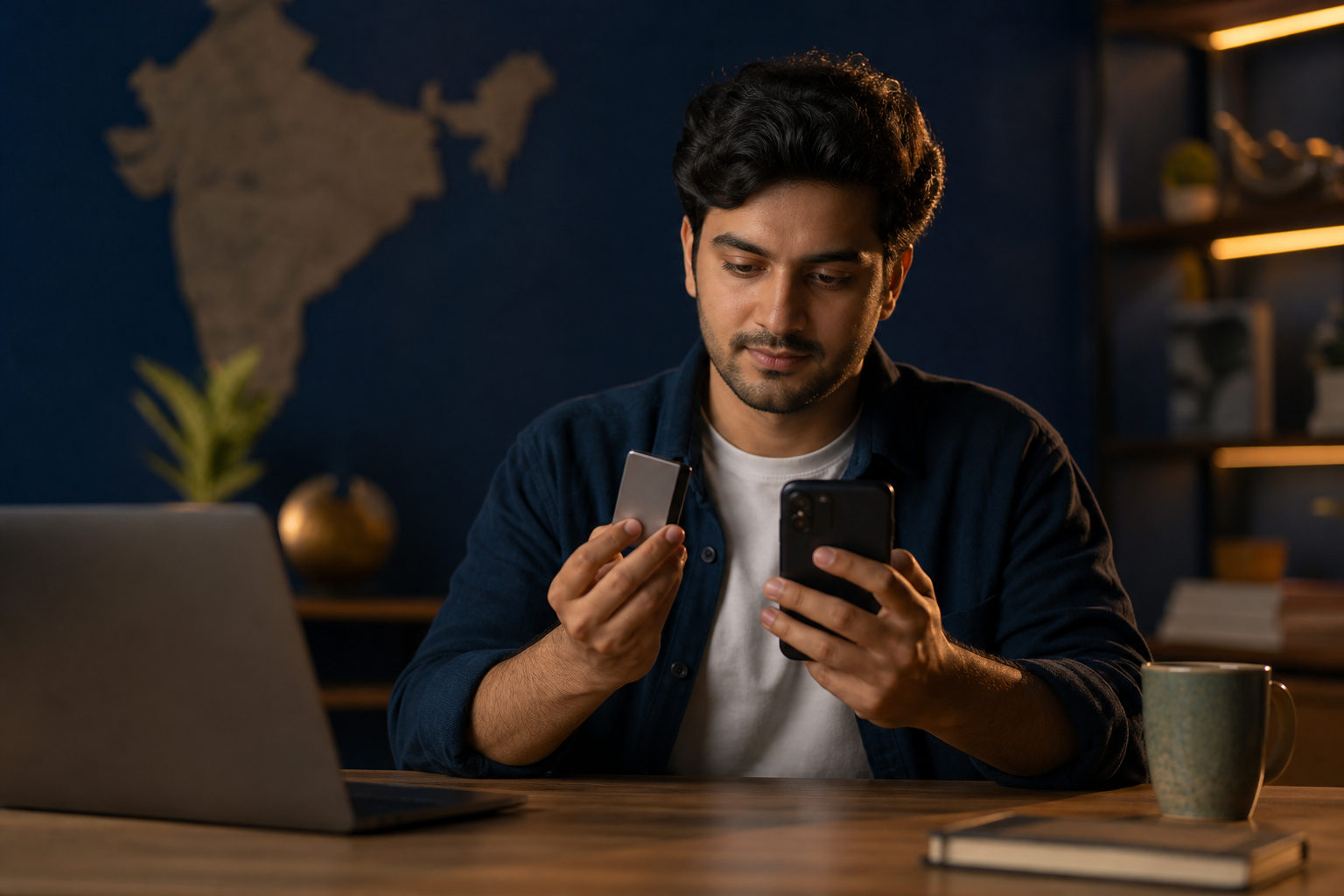
To get bitcoins in India, the safest path for most beginners is simple: prepare a payment method, choose a service with clear rules, complete identity checks, buy a small amount first, and move the coins to a wallet you control.
Choose the route before you choose the app
People often treat this as a single question, but there are several ways to get bitcoin. You can buy it with fiat money, accept it as payment for work or goods, or receive it from someone who already holds it. For a first-time user, buying with fiat is usually the easiest route because the steps are easier to follow and easier to document.
| Route | What you do | Best for | Main risk to watch |
|---|---|---|---|
| Buy with fiat | Open an account, complete verification, fund it, place an order | Beginners | Withdrawal rules and account restrictions |
| Earn in bitcoin | Share a receiving address with a client or buyer | Freelancers and merchants | Whether the payer can actually send bitcoin |
| Receive a transfer | Ask someone to send bitcoin to your wallet | People with a trusted contact | Wrong address or unclear coin source |
This choice matters because the risks are different in each case. A private deal with a stranger can sound quick, yet it often creates more trouble than a standard purchase flow. If someone pushes “no verification,” “better rates in a group,” or “I will buy it for you,” slow down and inspect the trade before you send any money.
Step 1: Prepare your account, payment method, and wallet
New users get confused when they mix up a trading account and a wallet. They are not the same tool. A trading account is where you buy or sell, your payment method is how you fund the purchase, and your wallet is where you receive and hold the bitcoin after the trade is done.
Start by setting up a clean, consistent account profile using your own details, your regular email, and a phone number you can access without trouble. The reason is practical: identity checks, security reviews, and withdrawals all become harder when names or records do not match. Using another person’s documents or registering on someone else’s behalf can create avoidable problems later.
Next, create a non-custodial wallet so you have your own receiving address ready. That step gives you direct control over the keys instead of leaving everything with a third party. Keep the recovery phrase offline, do not store it in chat apps, and do not upload it to cloud storage. Convenience is not worth losing control of the wallet.
| Item to prepare | What to do | Why it matters | Key caution |
|---|---|---|---|
| Identity details | Register with your own matching information | Helps avoid account review issues | Do not borrow documents |
| Payment method | Use one you regularly control | Makes a small test deposit easier | Name consistency matters |
| Personal wallet | Create an address and back it up before buying | Lets you withdraw to self-custody | Store the backup offline |
Step 2: Pick a service by its rules, not by its marketing
A common mistake is choosing a service because it looks popular or easy. A better filter is to read the basic rules first: how identity verification works, what funding methods are allowed, whether withdrawals to an external wallet are supported, how fees are shown, and what happens if a payment or withdrawal is flagged for review. If these points are vague, the smooth-looking interface does not help much.
The reason to focus on rules is simple. For many beginners, the worst experience is not a price swing. It is getting through the purchase only to find that the account cannot withdraw, or that a funded order is stuck and support is hard to reach. Read the operational details before you deposit anything.
| Checkpoint | What to inspect | Why it matters | Warning sign |
|---|---|---|---|
| Verification | Whether the service requires you to verify your own identity | Affects normal account use later | Promotion built around skipping checks |
| Funding rules | Accepted payment methods and name-matching requirements | Reduces failed or frozen deposits | Unclear instructions to pay a private account |
| Withdrawal process | Whether you can send bitcoin to an outside wallet | Determines if you can take possession | Pressure to keep coins only inside the service |
| Fee display | Spread, withdrawal fee, and other charges | Prevents hidden costs | Fees explained in vague language |
| Support path | Formal help channel for disputes or delays | Important when something goes wrong | Only informal chat groups |
If you are considering a peer-to-peer trade, apply a stricter standard. Be careful when a counterparty asks you to leave the platform chat, wants you to confirm too early, or sends only a screenshot as proof of payment. Screenshots can be faked. What counts is actual settlement in your account or wallet.
Step 3: Make a small test purchase and complete the full cycle
Once your account is verified, do not rush into a large purchase. Run a small end-to-end test instead. Fund the account, place a simple buy order, check that the trade is recorded, request a withdrawal, and confirm that your personal wallet receives the bitcoin.
This test does two useful things at once. It confirms that your funding method, account settings, and wallet setup all work together, and it lets you learn the process while the stakes are low. A small test also exposes friction points early, such as confusing order screens or withdrawal holds.
When you withdraw for the first time, check the address carefully before you send. Copy and paste it, then verify the first and last characters rather than trying to memorize a long string. If the interface offers leverage, futures, lending, or any other advanced feature, skip those for now. Your goal here is to get bitcoin safely, not to add a second layer of risk before you even understand the first one.
| Test stage | Action | What to confirm | Common mistake |
|---|---|---|---|
| Funding | Deposit a small amount by the stated method | Balance appears correctly | Name mismatch on payment |
| Buying | Place one simple order | Trade record is visible | Ignoring the final cost before submitting |
| Withdrawal | Send bitcoin to your own wallet | Wallet shows receipt | Using the wrong address |
| Recordkeeping | Save order and transfer records | Easier follow-up if support is needed | Keeping only chat screenshots |
Step 4: Put scam prevention ahead of speed
If you want to know how to get bitcoins in India without trouble, fraud prevention should be part of the process, not an afterthought. Scammers target beginners by promising a faster route, a lower fee, a special rate, or personal assistance. The pitch sounds helpful because it removes friction. That is exactly why it works.
Before you send money or release coins, stop and verify four things: who you are dealing with, where the money is going, which wallet address will receive the bitcoin, and whether the full trade stays inside a formal process with records. Once bitcoin is sent, reversal is usually difficult. That makes careful checking more important than speed.
| Scam or trap | Typical pitch | Why it is dangerous | Safer response |
|---|---|---|---|
| Private middleman purchase | I can buy it for you faster and cheaper | You cannot verify whether the person ever bought any bitcoin | Use a service with a recorded process |
| Payment screenshot pressure | I already paid, release now | A screenshot is not proof of settlement | Wait for actual receipt |
| Fake support contact | System issue, send funds to this new account | It redirects money through panic and urgency | Check only inside the official interface |
| Fake wallet app | Install this version for better performance | It may steal the recovery phrase or replace addresses | Download wallet software only from trusted sources |
| Managed yield offer | Send me your bitcoin and I will grow it | You lose control over the asset | Keep custody separate from speculation |
One more trap deserves attention: receiving or forwarding bitcoin for someone else. It can look harmless, especially if the person is introduced through a social group. In practice, you may be placing your account or wallet in the middle of funds whose source you cannot explain. At the beginner stage, keep your setup limited to your own purchases, your own receipts, and your own withdrawals.
FAQ
Should I open a trading account first or set up a wallet first?
Set up the wallet first if you can. Even if you leave the coins in a trading account for a short time, knowing how your own receiving address and backup process work will reduce mistakes later.
Is it fine to leave bitcoin on the service where I bought it?
For a short testing period, many beginners do that while they learn the steps. If you plan to hold the bitcoin yourself, moving it to a wallet you control gives you clearer ownership and fewer custody questions.
What should I check if someone wants to send bitcoin to me directly?
Confirm that you are sharing the correct receiving address for your wallet and that both sides are talking about the same asset and network. Do not rely on verbal confirmation that the transfer was sent; wait until your wallet shows the receipt.
Is peer-to-peer buying a good option for a beginner?
It can work, but it demands better judgment because you are evaluating the counterparty as well as the payment. If the other side pushes you off the formal process, rushes you, or asks you to act on screenshots, treat that as a reason to stop.
What is the single most important part of a first small purchase?
The first withdrawal is usually the most important moment. Buying itself may feel easy, but address checks, network selection, and confirming that the coins reached your wallet are the steps that show whether you really understand the process.
Before you begin, make a short checklist for yourself: use matching personal details, back up the wallet, test with a small amount, and continue only after the bitcoin reaches your own wallet. That sequence keeps the process clear and reduces the chance of learning through an expensive mistake.
Disclaimer: This article is for informational and educational purposes only and is not investment, financial, or legal advice. Crypto assets are highly volatile and you could lose your entire investment. Do your own research and decide carefully.