
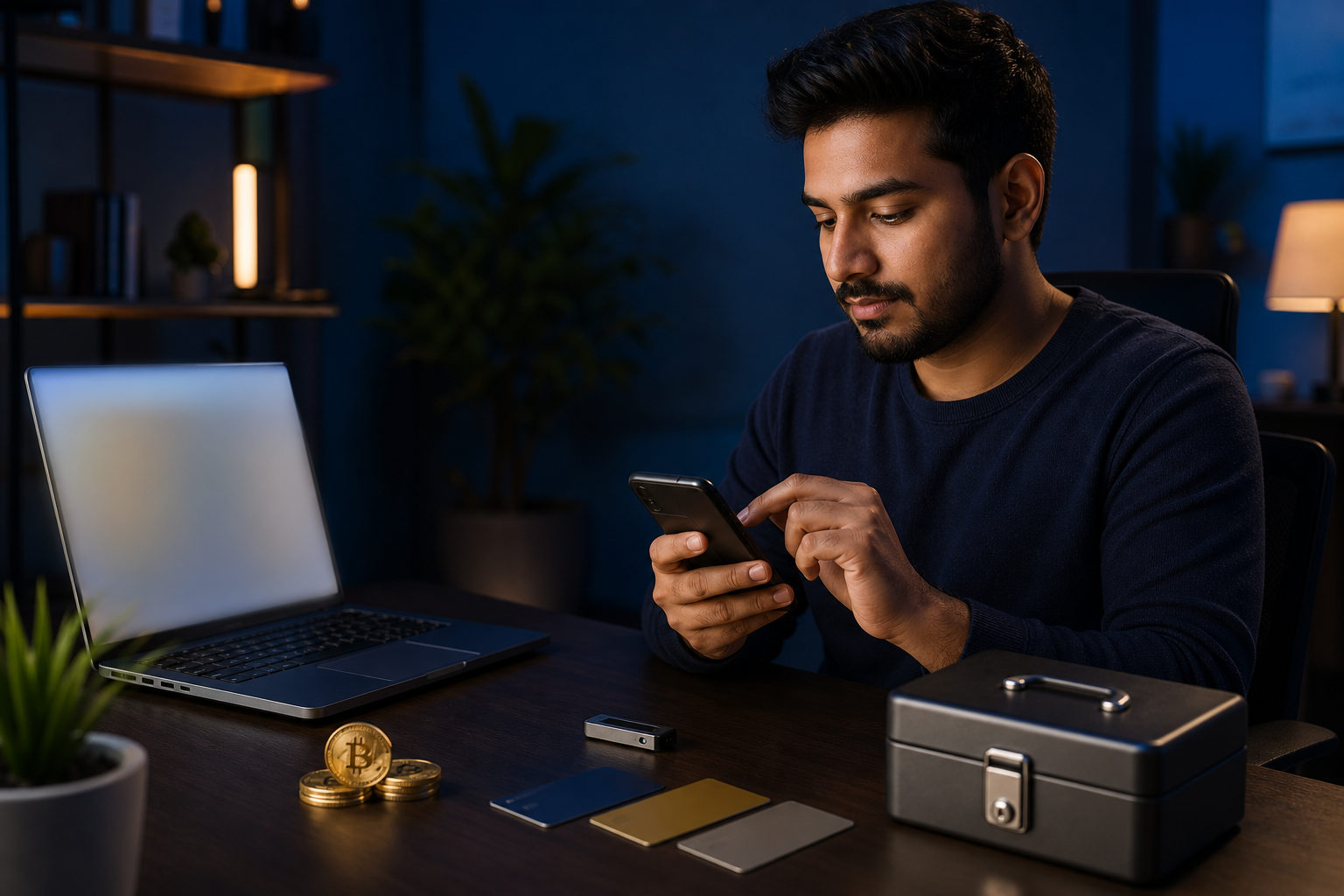
To trade bitcoin in India, start with a clear route, lock down account security, and test the full buy-and-sell flow with a small amount before putting more money at risk.
Decide whether you want exposure or active trading
People searching how to trade bitcoin in India often jump straight to where to place an order. A better first step is to define the job you want bitcoin to do. Buying and holding calls for a different setup than frequent trading.
If your goal is simple exposure, you mainly need to understand spot buying, custody, withdrawals, and how to pace entries. If you want to trade more often, execution matters more: order types, position sizing, emotional control, and the ability to follow a plan when price moves quickly.
This distinction matters because beginners often confuse activity with skill. Making many trades does not mean you understand the market. In practice, people get hurt when they start with short-term trading before they can read an order screen, verify balances, or tell the difference between a submitted order and a filled one.
| Situation | Best starting point | Why it helps | What to watch |
|---|---|---|---|
| Small long-term allocation | Learn spot buying and withdrawals | The workflow is easier to understand | Know how storage and transfers work |
| Frequent trading goal | Study order entry and position rules first | Execution mistakes can stack up fast | Do not begin with oversized trades |
| No crypto experience | Run a small test trade | You can spot process errors early | Treat the test like a real procedure |
Step 1: Check the trading route before you send any money
When thinking about how to trade bitcoin in India, your first practical job is not choosing the “best” name. It is checking whether the route you plan to use is clear enough to trust. That means reading how identity checks work, how fiat deposits and withdrawals are handled, whether bitcoin can be withdrawn, and what happens if your account is restricted.
The reason is simple. A service can make buying look easy while making selling, withdrawals, or account recovery difficult. If the rules are vague, hidden in support chat, or dependent on a private contact, you are taking on operational risk before the trade even begins.
Be careful with any setup that asks you to pay a person directly, move to a chat app for settlement, or accept instructions that do not appear inside the formal account interface. Speed is not a safety feature. If the money path is unclear, treat that as a warning, not a convenience.
| Checkpoint | What to verify | Why it matters | Warning sign |
|---|---|---|---|
| Identity process | Clear account verification steps | Affects access and dispute handling | Money first, rules later |
| Fiat transfers | Deposit and withdrawal rules | Prevents getting stuck after buying | Deposit details are clear, withdrawal details are not |
| Bitcoin withdrawal | Ability to move BTC out | Shows whether you control the asset path | Transfers out are restricted without a clear reason |
| Support trail | Formal process with records | You need documentation if something goes wrong | Only private contacts or group admins |
Step 2: Build account security before funding the account
If you want to trade bitcoin in India without avoidable damage, account security has to come before your first deposit. Use a dedicated email for the trading account, create a strong unique password, enable two-factor authentication with an authenticator app, and store recovery information separately.
That is not a side task. Price risk is only one part of the picture. Login theft, fake support, copied websites, and social engineering attacks can wipe out the value of good market decisions. A careful entry plan does not help much if someone else gets access to your account.
One common mistake is keeping password, code backup, and account email on the same device with weak protection. Another is letting a “mentor” or “account manager” log in for you. The moment someone asks for your password, code, remote screen access, or wallet recovery phrase, the issue is no longer education. It is control.
| Security action | How to do it | Benefit | Typical mistake |
|---|---|---|---|
| Dedicated email | Use a separate email for trading | Limits spillover from other sites | Using the same email as everyday accounts |
| Unique password | Create a long password not reused elsewhere | Reduces credential stuffing risk | One password across many services |
| Two-factor authentication | Enable app-based two-factor login | Adds a second barrier | Relying only on text messages |
| Recovery storage | Keep backup details separate | Helps if a device is lost | Saving everything in one cloud folder |
Step 3: Fund, place a test order, and verify every stage
After setup, move through the workflow in order. Read the fiat funding instructions first. Then identify the spot market area, the order entry box, your open orders, and your balance sections. Place a small test order, then confirm whether it actually filled by checking the order history and the asset page.
This sequence matters because beginners often think “I clicked buy” means “I own bitcoin now.” It may only mean the order was submitted. A test trade helps you see how the interface reports pending status, partial fills, completed trades, and where balances appear afterward.
Do not stop at buying. Run a small sell test as well. If you only test entry, you still do not know whether the exit path works smoothly, where the proceeds return, or whether you understand the transfer steps needed later.
| Stage | Action | Why do it this way | Watch for |
|---|---|---|---|
| Before funding | Read deposit and settlement instructions | Prevents confusion about the money path | Match account details with the formal instructions |
| First order | Use a small amount for a test trade | Lets you learn the screen with limited risk | Do not deploy all your funds at once |
| After the trade | Check order history and balances | Confirms the position was actually opened | Separate “submitted” from “filled” |
| Exit test | Sell a small amount once | Verifies the closing path | Avoid testing only the buy side |
Step 4: Put risk rules in writing before you scale up
Learning how to trade bitcoin in India is less about finding signals and more about surviving your own mistakes. Before increasing size, write down why you are entering, what would invalidate the trade, how you plan to exit, and how much loss you can tolerate without changing your behavior.
Bitcoin can move fast. Without a prewritten plan, people start reacting to every swing, every rumor, and every screenshot from trading groups. That usually leads to chasing, panic selling, revenge trading, or adding to a position for the wrong reason.
Your rules do not need to be fancy. They need to be usable. If a trade is small enough that you can still think clearly, you are more likely to follow your process. If the size makes you stare at the screen and abandon your plan, the position is already too large for your current skill level.
| Risk area | Better practice | Poor practice |
|---|---|---|
| Position size | Keep it within your comfort and loss tolerance | Putting most of your funds into one idea |
| Trade rationale | Write entry and exit conditions first | Deciding based on group messages |
| After profits | Stick to the original framework | Increasing size just because the last trade worked |
| After losses | Review execution and reasoning | Trying to win it back quickly |
Step 5: Treat fraud prevention as part of trade execution
For beginners, the most expensive threat around how to trade bitcoin in India is often fraud rather than market direction. The common patterns are fake support agents, fake deposit instructions, private over-the-counter offers with attractive pricing, managed-account offers, guaranteed-return groups, and requests to share your screen or install unknown software.
These scams work because they combine urgency with borrowed authority. The scammer tries to sound technical, then pushes you to act before you verify anything. Once that pressure works, people stop checking the account interface, the wallet address, or the identity of the payment recipient.
Build a fixed verification habit. If someone asks for extra margin, an unlocking fee, a payment to a personal account, a one-time code, or remote access to your device, stop the process and check everything through the official interface on your own. Anyone trying to prevent independent verification is giving you the answer already.
| Scam type | Typical pitch | How to judge it | Safer response |
|---|---|---|---|
| Fake support | Your account is frozen; send funds to release it | Formal support does not collect money in private chat | Use only the account's official support flow |
| Managed account | Give me access and I will trade for you | This is a request for control, not help | Never share passwords or verification codes |
| Private high-price buyer | I will pay more; just transfer directly | Good pricing can be used to hide settlement risk | Prefer routes with clear rules and records |
| Extra deposit scam | Pay one more fee to withdraw | Repeated demands for more money are a classic red flag | Stop paying and keep records |
FAQ
Should a beginner in India start with spot trading?
For most people, yes. Spot trading helps you learn the core mechanics: funding, buying, selling, reading order status, and understanding where your bitcoin or cash balance sits after a trade. If you skip those basics, you can mistake an interface error for a market error.
Do I need to move bitcoin to my own wallet right away?
That depends on your goal. If you are still testing the trading process, a small balance can help you learn the platform flow first. If you plan to hold for longer, learn self-custody, backups, and address checks before deciding when to withdraw.
Can I follow calls from trading groups if they look experienced?
You can observe them as sentiment, but do not outsource your decisions to screenshots or bold claims. The moment a group or individual pushes you to deposit quickly, pay privately, or hand over account access, the risk changes from market risk to counterparty risk.
Why did I place an order but my balance did not change as expected?
The most common reason is that the order has not filled yet, or you are looking at the wrong balance section. Check the order history first, then confirm whether the funds moved into an open order, a filled position, or another account segment inside the interface.
What is the best habit to build before trading bigger size?
Write down the reason for every trade and keep a fixed security checklist. The first habit helps you spot impulsive decisions; the second protects you from fake links, bad transfer habits, and rushed actions when someone pressures you.
If you are ready to begin, make your own short checklist before funding any account: security settings complete, fiat rules understood, first test trade planned, and a clear response prepared for private messages that push urgency. That list will help you more than any promise of easy profits.
Disclaimer: This article is for informational and educational purposes only and is not investment, financial, or legal advice. Crypto assets are highly volatile and you could lose your entire investment. Do your own research and decide carefully.