
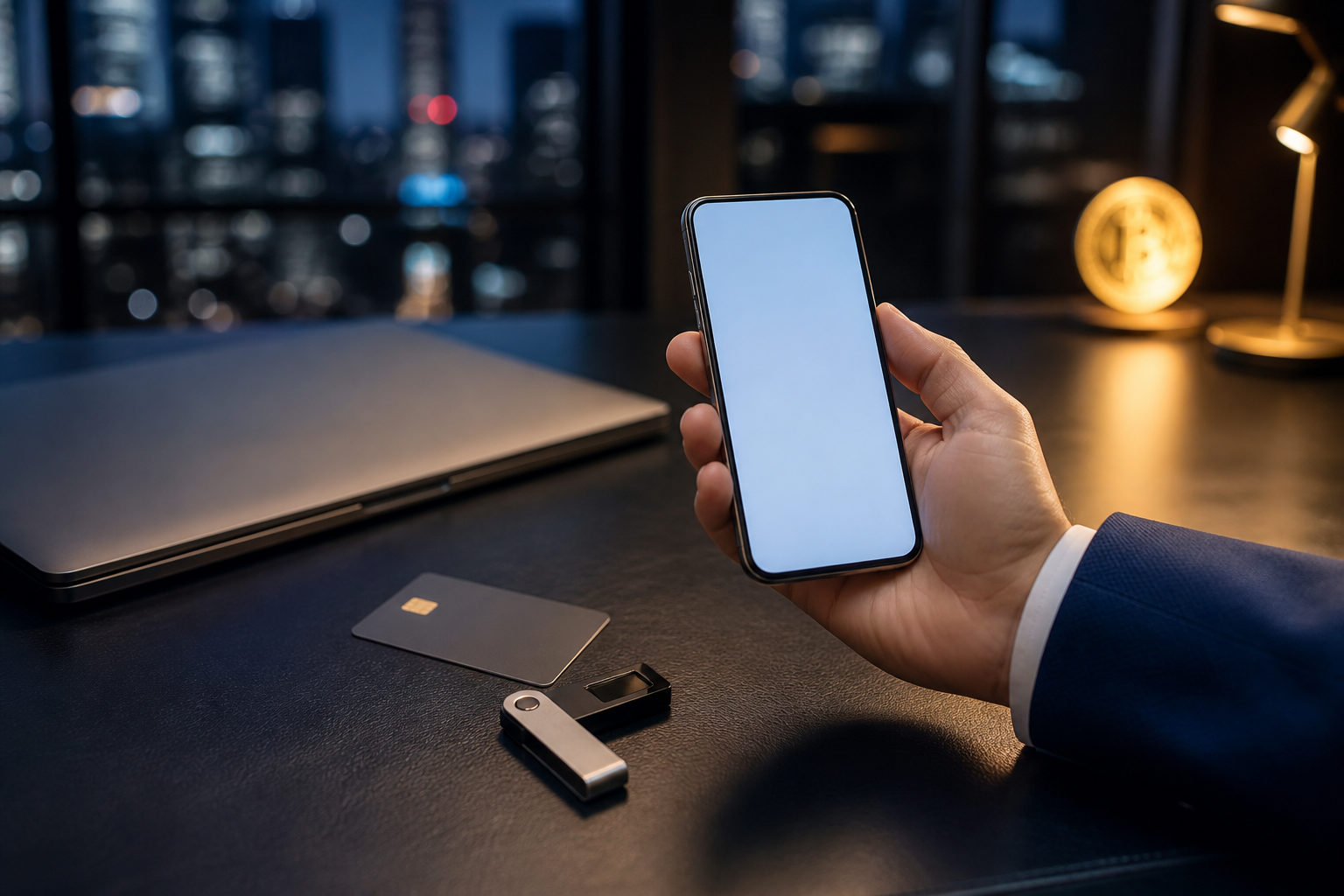
To invest in bitcoin in the UK, start by choosing a transparent route, define how much risk you can take, test the process with a small amount, and decide how you will store the asset before building a larger position.
Set your plan before you buy
Anyone looking up how to invest in bitcoin in the UK usually thinks about opening an account first. A better starting point is to decide what the investment is meant to do for you. Are you buying for long-term exposure, adding a small allocation over time, or trying to trade short swings? That single choice affects almost every step that follows.
You also need a clear funding rule. Bitcoin can move sharply in both directions, so money set aside for rent, bills, loan payments, or emergency reserves should stay out of the trade. The amount you commit should be an amount you can leave alone without forcing a sale at a bad moment.
The third question is what kind of exposure you actually want. Some people want to hold bitcoin itself. Others mainly want price exposure through a familiar investment route. Those are not identical choices, and mixing them up leads to avoidable mistakes.
| Question to answer first | What it changes | Why it matters |
|---|---|---|
| Your goal | Holding period and buying style | Long-term buyers need discipline; active traders need tighter execution |
| Your funding source | Position size | Only spare capital should be used for a volatile asset |
| Type of exposure | Platform and storage choice | Direct ownership and price-linked products carry different responsibilities |
| Risk tolerance | Whether you can stay in the position | Large drawdowns feel different when the position is too big |
Step 1: Choose a route that is easy to verify
The first practical step in investing in bitcoin in the UK is filtering routes by clarity, not by hype. A useful service should explain fees, identity checks, deposit methods, withdrawal rules, asset custody, and key risks in plain language. If the sales pitch is loud but the rules are hard to find, that is a warning sign.
Build a shortlist and compare it line by line. Ignore social posts showing quick profits, chat groups pushing “signals,” and anyone claiming access to special returns. New investors often lose money before they even buy because they hand over trust too quickly.
You also need to confirm what you are buying. One route may give direct bitcoin ownership. Another may give exposure to price moves without putting the asset under your control. Both can sit under the broad idea of bitcoin investing, but they do not behave the same from a custody and rights standpoint.
| Route type | Best for | Main advantage | Main check |
|---|---|---|---|
| Spot buying route | People who want to own bitcoin directly | The asset is clearer and may be moved to a personal wallet | Review withdrawal terms, fees, and custody arrangements |
| Broker-style access | People who want a simpler interface | Often easier to use at the start | Check spread, extra charges, and execution method |
| Bitcoin-related investment product | People who do not want to manage private keys | May feel more familiar inside a standard portfolio | Do not assume it gives direct control of bitcoin itself |
Step 2: Open the account, then test with a small amount
Once you have chosen a route, do not rush into a large transfer. Complete the required identity checks, link a payment method you control, and run a small test from start to finish. That means funding the account, placing a buy order, checking how holdings are shown, and where possible, testing a withdrawal or transfer.
This step matters because many problems only become visible during real use. Minimum trade sizes, funding delays, fee displays, security reviews, transfer waiting periods, and address whitelisting can all affect the experience. A small test keeps the cost of confusion low.
Security should be set up at the same time. Use a unique password, turn on two-factor authentication, and review login alerts or device management options. Anyone who asks for your code, recovery phrase, or remote access to your device should be treated as a direct threat.
| Action | What to do | Why do it | Watch for |
|---|---|---|---|
| Identity setup | Use your own details and complete verification properly | It reduces account friction later | Mismatch issues may restrict withdrawals |
| Funding method | Link only accounts you control | Keeps the money trail clear | Avoid third-party payment arrangements |
| Small live test | Buy a small amount first | Confirms you understand the process and charges | Do not skip this to save time |
| Security setup | Enable two-factor authentication and store recovery details safely | Reduces account takeover risk | Never share codes or recovery data |
Step 3: Pick a buying method you can stick to
New investors often put too much pressure on finding the perfect entry. With bitcoin, the bigger issue is usually whether your buying method matches your temperament. If your aim is long-term exposure, buying in stages can make the position easier to handle than committing everything at once.
Buying in stages spreads timing risk across multiple decisions. You do not need to call every short-term move correctly. What matters more is having a written rule for when you buy, when you pause, and how much of your total capital belongs in this idea. A plan that survives stress is better than one that looks smart on a calm day.
If you want to trade actively, treat that as a different activity with a higher execution burden. Frequent decisions can magnify spread costs, fees, and emotional errors. Many people enter bitcoin expecting an investment and end up taking on a trading routine they were never prepared for.
| Buying approach | When it fits | Benefit | Risk |
|---|---|---|---|
| Lump-sum buy | When your size and risk limit are already defined | Simple to execute | A poor entry can feel hard to hold through |
| Staggered buying | For newer or longer-term investors | Reduces dependence on one exact entry point | Needs consistency over time |
| Frequent trading | For experienced users with strict rules | More tactical flexibility | Costs and mistakes can build quickly |
Step 4: Decide where the bitcoin will live
Buying bitcoin is only half the job. Storage is the other half. If you leave the asset with a third-party service, convenience is usually better, but you are accepting counterparty risk, account risk, and the effect of policy changes outside your control. If you move the asset to a personal wallet, you gain more direct control and more responsibility.
There is no universal answer here. Someone making small, occasional purchases may prefer ease of use. Someone building a longer-term holding may care more about controlling access personally. The right choice depends on your ability to manage private keys or recovery phrases without making basic mistakes.
Fake wallet apps and fake support messages are common traps. Download wallet software only from a source you have checked carefully. Do not store a recovery phrase in screenshots, cloud notes, or chat apps. The person who controls the keys controls the asset, so this step should be handled slowly and without shortcuts.
| Storage method | What it offers | Best use case | Main concern |
|---|---|---|---|
| Keep it with the service | Fast access and simpler trading | Smaller balances or active use | Exposure to platform and account risk |
| Use a personal wallet | More direct control | Longer-term holding and stronger preference for self-custody | Losing key material may mean losing access |
Step 5: Learn the scam patterns before adding more money
A large share of beginner damage comes from fraud rather than market movement. Scams aimed at bitcoin buyers in the UK often look polished. They may appear as private investment groups, fake support staff, fake wallet apps, fake tax or release fees, or managed accounts that promise easy returns.
The common pattern is pressure plus loss of control. You are urged to act now, told a place is limited, shown fabricated gains, then pushed to send funds or transfer bitcoin to an address you do not control. Once the asset leaves your account voluntarily, recovering it can be difficult.
Be especially careful with offers to trade on your behalf. Handing over account access, verification codes, or recovery phrases is never a normal part of investing. If a person or service keeps trying to move the conversation away from a verifiable interface and into direct messages, stop there.
| Scam signal | Typical claim | What to do |
|---|---|---|
| Guaranteed returns | Low risk, fixed profit, capital protection | Walk away immediately |
| Urgent transfer pressure | Act now or lose the opportunity | Pause and verify independently |
| Requests for sensitive data | Send your code or recovery phrase so we can help | Stop contact and review security |
| Managed account pitch | We will trade for you to make it easier | Do not surrender account control |
| Fake withdrawal obstacle | Pay a fee first to release your funds | Do not send more money and keep records |
FAQ
What should I check before buying bitcoin in the UK for the first time?
Look for clear rules on fees, deposits, identity checks, withdrawals, and custody. If a service talks far more about profit than process, it is a poor starting point for a beginner.
Should I buy bitcoin directly or use a related investment product?
That depends on whether you want direct ownership and whether you are willing to deal with storage decisions. Direct ownership is easier to understand from a control perspective, while a related product may fit someone who prefers a more familiar investment setup.
Is it a bad idea to invest a large amount all at once?
For many beginners, a large single entry creates stress that leads to poor decisions during volatility. A staged approach is often easier to follow because it reduces the pressure of one exact entry point.
Do I need to move bitcoin to a personal wallet after buying?
Not always. The better question is whether you understand the trade-off between convenience and control. If you plan to hold for longer, learning self-custody basics can make sense before your position grows.
How can I tell whether I am dealing with support or a scammer?
Anyone asking for your verification code, recovery phrase, remote device access, or a transfer to a special address should be treated as suspicious. Legitimate investing does not require you to hand those things to a stranger.
If you are ready to start, the most useful order is simple: set a funding limit, compare transparent routes, run a small test, review custody and security, then add size only after the full process makes sense to you.
Disclaimer: This article is for informational and educational purposes only and is not investment, financial, or legal advice. Crypto assets are highly volatile and you could lose your entire investment. Do your own research and decide carefully.