
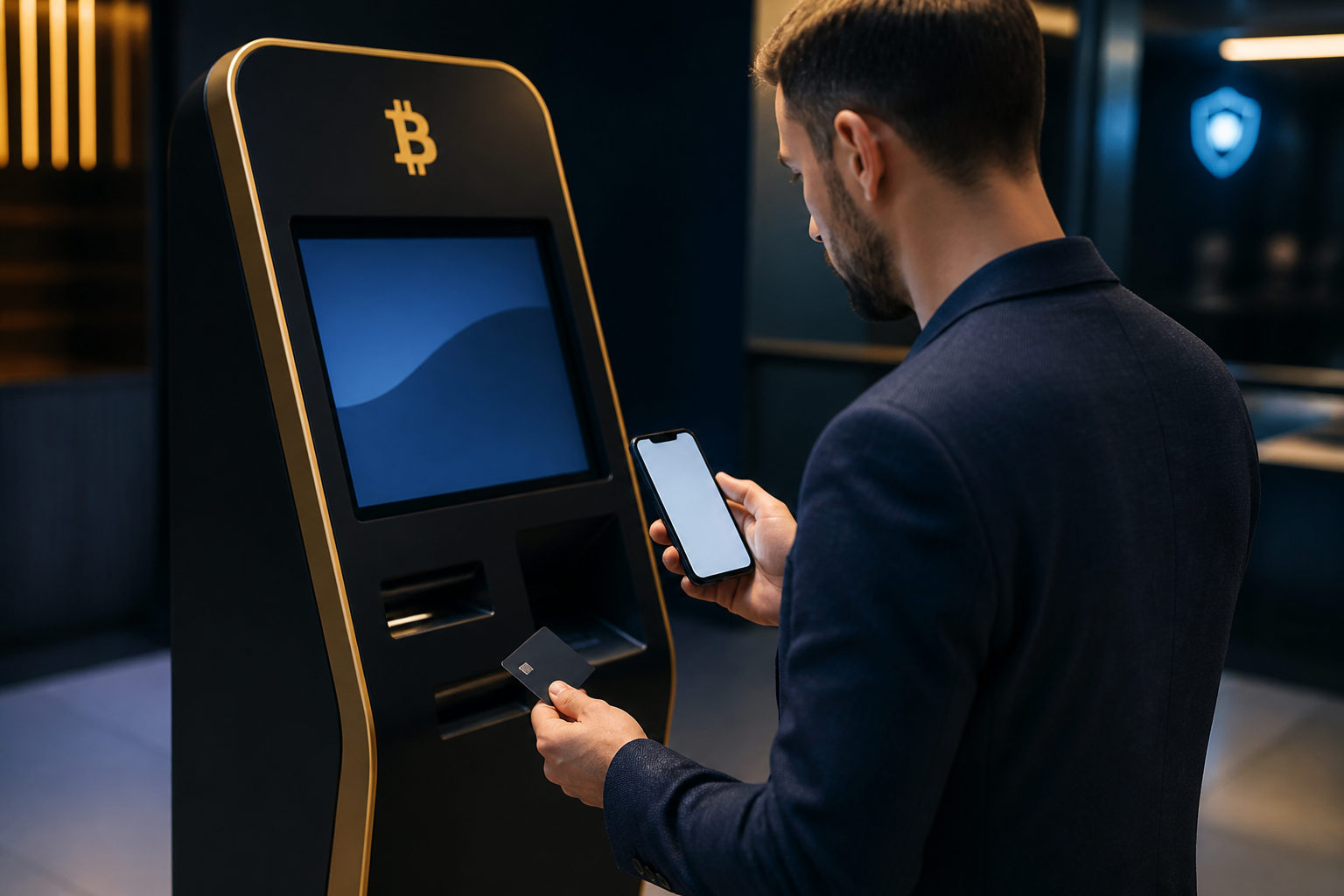
To use a Bitcoin ATM you need three things: a Bitcoin wallet ready before you arrive, a phone that can receive SMS codes, and cash or a debit card. Most machines will also require identity verification. This guide breaks the process into five steps and flags the specific pitfalls at each stage.
Step 1: Set up your own Bitcoin wallet first
The ATM only sends bitcoin to an address or receives bitcoin from one. It never holds your coins. So the wallet has to exist before you start. A mobile hot wallet is fine for small amounts and easy QR scanning; a hardware wallet adds protection and suits larger purchases.
A common misunderstanding is treating an exchange account like a wallet. The ATM reads blockchain addresses, not exchange usernames. Some machines will accept an exchange deposit address, but others refuse it or complicate the payout. Use a wallet where you control the private keys.
Step 2: Choose a legitimate machine and read the posted rates
Not every kiosk that looks like an ATM is trustworthy. Start with machines listed on an operator's official map. When you get there, check the machine for the operator's name, customer service phone number, and a fee disclosure. Reputable operators display fees, limits, and hours somewhere visible.
If a stranger offers to operate the machine for you, or the kiosk tells you to install an unknown app, walk away. A legitimate Bitcoin ATM is fully self-service.
Step 3: Complete identity verification (KYC)
Most licensed operators require KYC. The typical flow is entering your phone number for an SMS code, uploading an ID document, and sometimes taking a live photo. Very small transactions may skip some steps, but larger amounts almost always trigger full verification under anti-money laundering rules.
The biggest failure point here is mismatched information. The name and document you enter should be consistent with who controls the wallet. Using someone else’s ID can get funds frozen or create legal trouble. During facial recognition, remove hats and masks so the scan does not fail.
Step 4: Know that buying and selling are opposite flows
Buying is straightforward: tap “Buy,” enter the amount or scan your wallet QR code, insert cash or a card, review the fee summary, and wait for the deposit. Confirmation time depends on network congestion; you can track progress on a block explorer.
Selling works in reverse. You first send bitcoin to the address shown on the screen, wait for network confirmations, and then the machine dispenses cash. Two mistakes hurt people here. First, send slightly more than the cash amount you want, because the machine deducts fees from the payout. Second, complete the transfer before the session timer expires; a stale session makes disputes painful to resolve.
Step 5: Check the exact numbers before confirming, and keep the receipt
Bitcoin ATM fees are far from uniform. Before you finalize a transaction the screen shows the exchange rate and total fee. Study it. Some operators hide the markup inside the rate, some show a separate fee line, and some add a network fee on top. What matters is one number: the bitcoin amount or cash amount you actually receive must match what you approved.
After the transaction, take the printed receipt or photograph the transaction ID on the screen. That record is your only solid evidence for reconciliation or a refund claim.
FAQ
Can I use a Bitcoin ATM without a wallet?
No. The ATM needs an on-chain address to receive or send bitcoin. You can create a wallet on your phone in a few minutes, but doing it calmly at home beats doing it in front of the machine.
Does a Bitcoin ATM require an ID?
It depends on the machine and the amount. Very small purchases may pass with just SMS verification; once an amount crosses a certain threshold, full KYC is practically mandatory.
Can you get scammed at a Bitcoin ATM?
Yes, the risk is real. Common schemes include swapped QR codes, tampered kiosks, overly helpful strangers, and machines with predatory fees. Using a verified operator and performing every step yourself reduces the risk sharply.
Are Bitcoin ATM fees expensive?
Usually, compared with exchanges. ATMs carry higher operating costs, and you pay for the convenience of trading cash in person. If fee levels bother you, a regulated exchange is the cheaper route.
One practical rule for your first transaction
Start with a small amount, far below the daily limit, and walk through the full cycle: verification, transfer, and confirmation. Make sure you can read every line on the receipt. If anything on the screen does not match what you expected, cancel the operation and contact the operator’s official support number printed on the machine.