
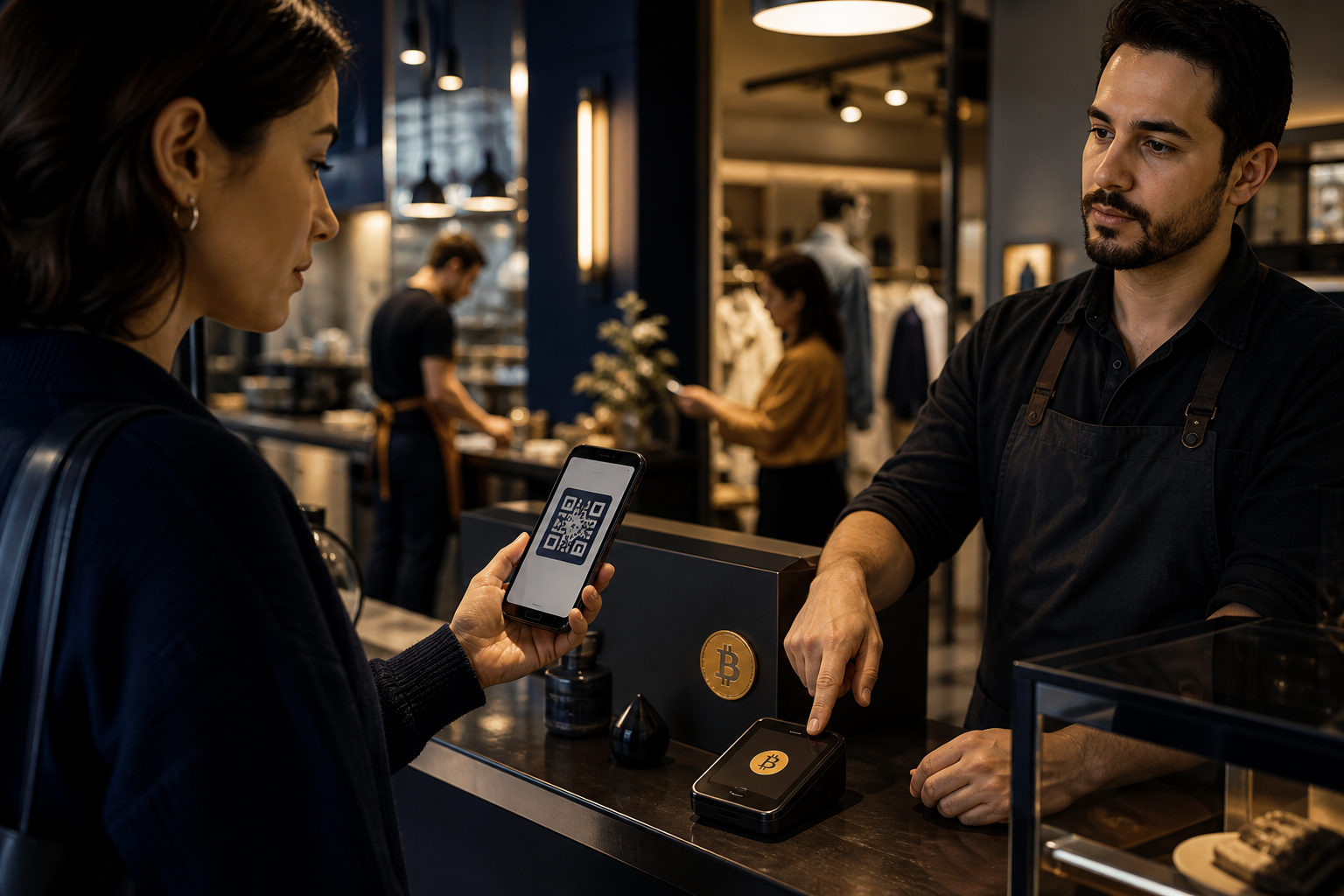
There is no single fixed number for how many merchants accept Bitcoin. The practical answer is to verify, step by step, whether a merchant really takes Bitcoin, how the payment works, and what happens if the order goes wrong.
Why there is no reliable universal count
People often ask how many merchants accept Bitcoin as if there should be one clean total. In practice, merchant acceptance changes all the time. A store may support Bitcoin on its website but not in physical locations. Another may allow it only in certain regions, only for selected products, or only through a payment processor rather than direct on-chain payment to the business.
That is why a headline number is less useful than it seems. For an actual buyer, the better question is whether a specific merchant accepts Bitcoin today, under what conditions, and with what customer protection. A large count does not help much if the merchant you want to use has unclear rules, hidden restrictions, or a risky payment flow.
Step 1: Define what “accepts Bitcoin” actually means
The phrase sounds simple, but it can describe very different setups. If you do not separate them first, you may think Bitcoin acceptance is broader and safer than it really is.
Action: identify the merchant’s payment model
- Direct Bitcoin payment: the merchant provides a Bitcoin address or payment request, and you send funds from your own wallet.
- Processor-based checkout: the checkout page offers Bitcoin, but a third-party payment service handles the invoice and settlement.
- Indirect spending through vouchers or gift balances: you are not paying the merchant with Bitcoin directly. You are first converting value into a spendable code or balance.
- Restricted acceptance: Bitcoin may be available only for online orders, only in certain places, or only for some items.
Why this matters: these models do not carry the same risk. With direct Bitcoin payment, the transfer is generally not something you can reverse like a card charge. With a processor-based flow, you also depend on the processor’s timing, invoice rules, and refund process.
What to watch: a homepage badge that says “BTC accepted” does not mean every product qualifies or that every checkout path supports it. Always judge by the actual payment screen, not by the marketing banner.
Step 2: Stop looking for a grand total and search by use case
If you focus only on a total count, you will find lists that conflict with each other. A better method is to start with what you want to buy and then verify whether Bitcoin is available in that exact context.
Action: check merchants by purchase scenario
- Start with the category: are you buying a physical item, a digital product, a subscription, or an in-person service?
- Move to the checkout page: put the item in the cart and go far enough to see the real payment options.
- Read restrictions carefully: look for region limits, product exclusions, account requirements, or other conditions.
- Check the refund terms before paying: find out whether refunds go back in Bitcoin, store credit, or another form.
Why this matters: merchant acceptance is often buried inside checkout logic rather than posted as a simple yes-or-no statement. You only know whether a store truly accepts Bitcoin when you can see a usable BTC payment option inside a normal order flow.
What to watch: third-party merchant directories can be a starting point, but they should not be treated as final proof. Listings go stale. Payment options can be turned on or off without much notice. What matters is the merchant’s current checkout process and official help pages.
Step 3: Separate real Bitcoin acceptance from marketing or scam bait
The main problem around this topic is not a lack of information. It is low-quality information. Some pages blur the line between “supports crypto,” “supports blockchain,” and “accepts Bitcoin payments.” Others use the topic to pull people into private chats, off-site payment requests, or fake support channels.
Action: use four checks before you trust a merchant claim
- Check whether the payment path is complete: you should be able to go from product selection to a proper Bitcoin payment request without being pushed into a messaging app.
- Check whether the instructions are complete: there should be clear notes about payment deadlines, order confirmation, expired invoices, and refunds.
- Check whether anyone asks for private transfer outside the order flow: that is a major warning sign.
- Check whether the payment request is tied to an order: if there is no order number, no invoice, and only a fixed personal wallet address, be careful.
Why this matters: Bitcoin transfers are attractive to scammers because they are usually hard to undo once sent. That is why pressure tactics are common. You may hear that you need to act fast, pay a deposit first, or send to a “verification address” before checkout is enabled.
What to watch: do not rely on random comments saying a payment worked before. Comments can be planted and screenshots can be edited. A safe payment flow is one that is structured, reviewable, and connected to a real merchant order system.
Step 4: Do risk control before you send any Bitcoin
Even after you confirm that a merchant accepts Bitcoin, do not rush the payment. The key question is not just whether Bitcoin is accepted. It is whether you can complete the transaction without exposing your funds to preventable mistakes.
Action 1: confirm the asset and the payment instructions
Some merchants say they accept crypto but do not present Bitcoin instructions clearly until late in the process. If the payment screen does not clearly identify Bitcoin and provide a proper invoice or address, stop there. Do not guess, and do not rely only on a chat message from support.
Why this matters: a payment sent under the wrong assumptions can leave you stuck between a completed blockchain transfer and an order the merchant never matched to your purchase.
What to watch: review the wallet address, the order reference, and the on-screen instructions carefully. Do not assume that a Bitcoin logo alone means everything is set up correctly.
Action 2: treat your first purchase as a test
If possible, use your first transaction to validate the process rather than to place your highest-stakes order. This is less about spending a tiny amount and more about proving that the merchant’s invoicing, confirmation, and support flow work as claimed.
Why this matters: payment acceptance is only one part of the process. Order matching, inventory handling, manual review, and customer support can all fail even when the blockchain payment itself is valid.
What to watch: if the merchant requires full payment in one go, save the checkout page, order terms, and support messages before sending anything. Those records matter if there is a dispute later.
Action 3: never let support staff control your wallet
One of the most common traps starts after a person asks how many merchants accept Bitcoin and then goes looking for help. A fake support agent may offer one-on-one payment guidance, ask you to install unknown software, request screen sharing, or tell you to send funds to a “temporary verification” wallet.
Why this matters: once wallet access is exposed, the damage can be much larger than a single purchase. Bitcoin payments do not require you to reveal your seed phrase, private keys, or one-time codes.
What to watch: any request for wallet recovery words, private keys, or security codes should be treated as a stop signal. A normal checkout flow does not need them.
Step 5: Review refunds, reconciliation, and after-sales support
Many buyers spend all their attention on whether the merchant accepts Bitcoin and almost none on what happens after payment. That is a mistake. The hardest part often begins after the transfer: delayed order matching, failed invoices, overpayment, underpayment, stock issues, or unclear refund handling.
Action: verify these points before you pay
- What happens if the invoice expires: does the order cancel automatically, or do you need support to review it?
- How payment mismatches are handled: what if the amount sent does not match the invoice exactly?
- Where refunds go: back to a Bitcoin address, to account balance, or to another format chosen by the merchant?
- What records you receive: order number, payment confirmation, transaction reference, email notice, or support ticket.
Why this matters: Bitcoin payments do not always fit the same customer-service pattern as card payments. You should not assume there is a chargeback process, and you should not assume a merchant can manually fix every mistake.
What to watch: if a merchant talks only about speed and convenience but says almost nothing about refunds or dispute handling, that is a sign to slow down. New users should prefer merchants with plain, detailed policies.
A practical way to answer the question for yourself
If you replace the question “how many merchants accept Bitcoin” with “how do I find a merchant that safely accepts Bitcoin for my purchase,” your search becomes much more productive. You stop chasing a number that may already be outdated and start building a repeatable method.
Action plan you can use every time
- Begin with merchants you already know: check their official checkout flow, help center, and payment FAQ.
- Prefer standardized order systems: clear invoices, clear policies, and clear support channels reduce confusion.
- Save your records: keep screenshots of the order page, payment request, and transaction details.
- Use caution on the first try: complete one normal, low-stress purchase before you trust the process with a larger order.
This approach gives you a more honest picture of Bitcoin acceptance. Yes, merchants that accept Bitcoin do exist, but availability is uneven and the user experience varies widely. Some businesses treat Bitcoin as a real payment method. Others use it as a marketing label, while the practical checkout process is weak or unclear.
FAQ
Is there a trustworthy total for the number of merchants that accept Bitcoin?
Not really. Merchant support changes often, and the meaning of “accepts Bitcoin” differs from one store to another. A current, store-specific check is more useful than any broad total.
Does “accepts crypto” automatically mean Bitcoin is supported?
No. Crypto is a broad category, and some merchants support only selected assets or only certain payment rails. Wait until you see a clear BTC option in the actual checkout flow.
Why would a merchant claim to accept Bitcoin but show no BTC option at checkout?
This can happen because of region rules, product exclusions, a disabled payment processor, or stale website copy. The real answer is whatever appears on the live checkout page for your order.
What should I do if I paid in Bitcoin and the merchant does not fulfill the order?
Collect the order number, transaction reference, payment time, and all support messages. If the merchant never had a proper order system and pushed you into a private transfer, recovery options are much weaker.
What is the biggest safety rule for a first Bitcoin purchase?
Do not leave the normal order flow, and do not give anyone your seed phrase, private keys, or security codes. Any request to move funds to a “verification wallet” should be treated as a scam warning.
In practice, the safe process is simple: confirm that the checkout page clearly supports BTC, verify the payment instructions and refund terms, keep your order records, and refuse any request to send Bitcoin outside the merchant’s standard payment flow.