
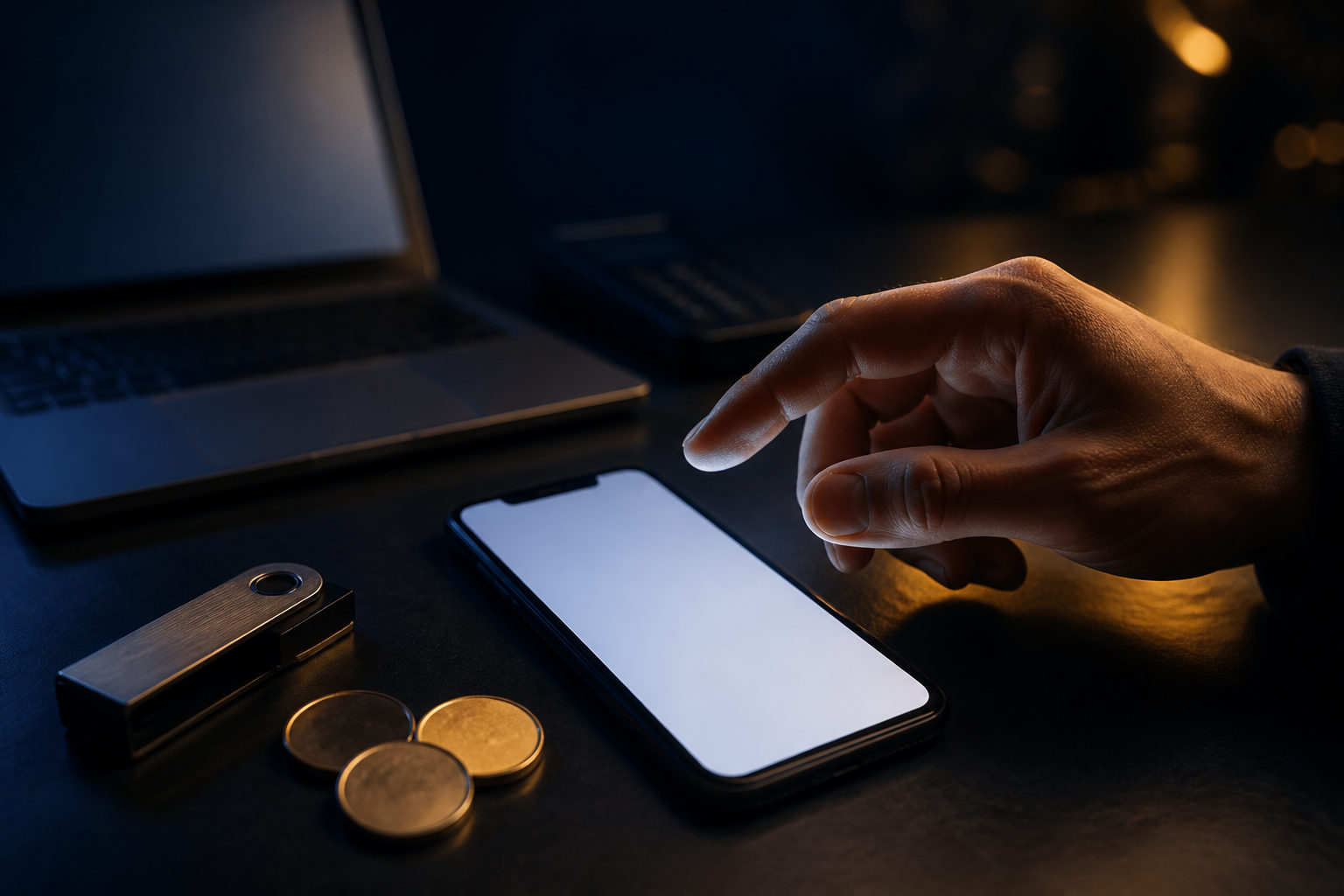
No, Zelle cannot buy bitcoin directly. Zelle is a bank-to-bank payment tool, not a crypto exchange, so any claim that you can buy bitcoin there usually means using Zelle to pay someone else rather than placing an order inside Zelle.
What Zelle can do, and what it cannot
Zelle moves U.S. dollars between bank accounts. Bitcoin is a digital asset that runs on a blockchain, with a supply cap of 21 million coins and a network that began with the genesis block in January 2009. Those are separate functions, and mixing them up is where many beginners get misled.
If a service says it “accepts Zelle,” that only describes the payment rail. It does not mean Zelle provides price charts, order matching, custody, or a wallet for bitcoin withdrawals. That distinction matters because the risk profile changes the moment payment and asset delivery happen in different places.
How people usually use Zelle when trying to buy bitcoin
In practice, the usual setup looks like this: you find a seller or service that accepts Zelle, you send dollars through Zelle, and then the other side is supposed to deliver bitcoin to your wallet or account. The steps may sound simple, but each one needs verification because once a Zelle payment is sent, fixing a bad transfer can be difficult.
Step 1: Confirm what you are actually receiving
Before paying, ask whether you will receive bitcoin in a wallet you control or only a balance shown inside someone else’s system. The reason is simple: if you cannot withdraw the asset to your own wallet, you may not really control it. Check the withdrawal rules, identity checks, and whether self-custody is allowed before any money moves.
Step 2: Verify the payee and the context of the deal
Match the recipient name, the conversation account, and the payment purpose. This helps you catch common red flags such as a last-minute switch in payment details, a “support agent” who appears only in chat, or a request to send funds to a different person. If someone pushes you to skip normal checks or change the memo to something unrelated, stop there.
Step 3: Set up your own bitcoin wallet first
Prepare a wallet that you control before you send payment. You need a place to receive the coins directly instead of trusting a stranger to hold them for you. Copy the address carefully and check the first and last characters again, because blockchain transfers are usually not reversible once sent.
Step 4: Start with a small test transaction
If the setup allows it, try a small test first. The purpose is not to delay the trade; it is to reduce the chance of a full loss in one move. Keep in mind that a scammer may allow a small first transaction to build trust, so a successful test is helpful but not a guarantee.
Step 5: Keep a full record of payment and delivery
Save payment confirmations, chat logs, timestamps, and the blockchain transaction record if coins are sent. If a dispute starts later, these details help you establish what was promised and what actually happened. They still do not guarantee recovery, which is why prevention matters more than cleanup.
Why buying bitcoin through Zelle can be risky
The biggest issue is the gap between payment and delivery. You send dollars first, then wait for someone else to send bitcoin. Without a trusted process around the trade, control sits mostly with the other side.
- Payment disputes can be hard: Zelle is commonly used for transfers between people who already know each other, so a mistaken or deceptive payment may be difficult to unwind.
- Impersonation is easy: A scammer can pretend to be a seller, customer support, or an escrow contact and present fake screenshots as proof.
- Account reviews may happen: Banks and payment services often watch for unusual activity, and a transaction linked to high-risk behavior can draw extra scrutiny.
- Intent can be difficult to prove: If you send funds to a personal account and the other person later denies that it was for bitcoin, the dispute can become messy fast.
There is also a basic misunderstanding that shows up often: people assume a familiar payment app makes the trade safe. It does not. A common transfer tool does not verify the seller, protect your wallet, or make delivery automatic.
A safer way to think about the process
If you are still researching this route, separate the transaction into three parts: payment, trading, and storage. Payment is how dollars move. Trading is how the buy and sell get matched. Storage is where the bitcoin ends up after the trade. When those parts are blurred together, marketing claims can sound better than they are.
This article does not recommend any specific platform, but you should still review a few basics before using any service or seller. Look for a clear statement of accepted payment methods, a visible explanation of fees and limits, a straightforward withdrawal policy, and a defined dispute process. If the entire deal happens in private chat with pressure to act fast, the risk is high.
| Checkpoint | Why it matters | What to watch for |
|---|---|---|
| Payment method disclosure | Shows whether Zelle is only a funding method | Vague wording is a red flag |
| Identity checks | Reduces impersonation and compliance risk | Urgent pressure is suspicious |
| Withdrawal rules | Shows whether you can control the bitcoin | Buy-only access deserves caution |
| Dispute process | Gives structure if something goes wrong | Private chat deals are riskier |
FAQ
Can I buy bitcoin directly inside Zelle?
Usually no. Zelle does not provide exchange functions such as order placement, custody, or on-chain bitcoin withdrawals. In most cases, it is only being used as a way to send payment to someone else.
If I send money with Zelle and the seller never sends bitcoin, what should I do?
Stop sending more funds and organize your payment records, chat history, and any identity details you have. Then follow the dispute path available through the service involved, while understanding that person-to-person crypto deals can be hard to resolve.
Is using Zelle a safer shortcut for buying bitcoin?
No. Zelle may be familiar, but it does not solve the hard parts of the trade: counterparty trust, fair delivery, and secure storage after purchase.
Where should I check the live bitcoin price if I am not using Zelle for that?
Use a major market data site or the real-time price page of a regulated trading service. Before you buy, check the full cost as well, including fees, spread, and withdrawal restrictions.
Where should I keep bitcoin after I receive it?
If you plan to hold it yourself, move it to a wallet you control and store your recovery phrase offline. Do not send that phrase to anyone, do not save it in a casual cloud note, and do not leave it in a screenshot folder.
Minimum checklist before you send any money
Start with the right frame: you are not buying bitcoin in Zelle, you may be using Zelle to pay a seller. Verify the recipient, prepare your own wallet, test with a small amount if possible, and save every record. If the other side avoids clear delivery terms, asks for a rushed private transfer, or keeps changing instructions, do not proceed.
Disclaimer: This article is for informational and educational purposes only and is not investment, financial, or legal advice. Crypto assets are highly volatile and you could lose your entire investment. Do your own research and decide carefully.