
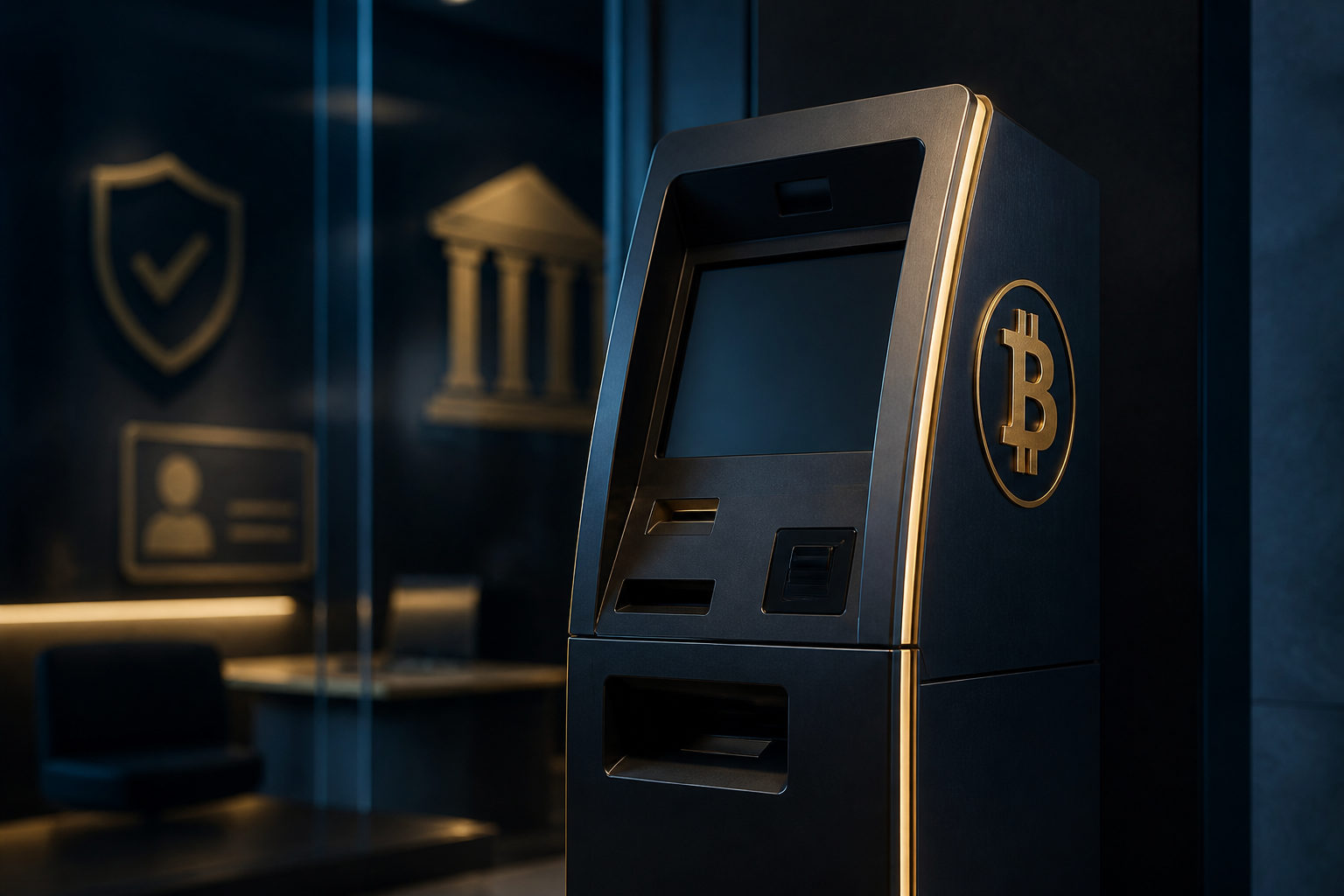
Bitcoin Depot is a Nasdaq-listed Bitcoin ATM operator based in the United States. As a company, it operates under regulated entities and faces disclosure requirements — but whether it's "legit" for you depends on local rules and how you use the machine. Let's break that down.
What Bitcoin Depot Actually Does
Bitcoin Depot runs a network of Bitcoin ATMs, also called BTMs. Customers insert cash to buy Bitcoin, or sell it back for cash. Every transaction goes through identity verification, typically an ID and a phone number, which is the same anti-money laundering standard applied to money service businesses in the U.S.
A Bitcoin ATM fills a different role from an online exchange. The choice comes down to your situation.
| Point | Bitcoin ATM | Crypto Exchange |
|---|---|---|
| Entry | Cash at a physical machine | Bank transfer or card payment, online |
| Identity check | Mandatory KYC before each session | KYC at registration, tiered for higher limits |
| Speed | Almost immediate after machine confirmation | Minutes to hours depending on network confirmation |
| Cost | Higher, covers machine and location costs | Lower percentage-based fees |
| Best for | Small amounts, cash users, offline needs | Larger amounts, frequent trading, advanced users |
Bitcoin Depot holds money transmitter licenses in many U.S. states and answers to state-level financial regulators. An operator without basic licensing isn't even in the same category — it's out of the discussion entirely.
Three Layers to the "Is It Legit" Question
The question is too broad for a single yes or no. Separate it into layers.
Layer one: is the company itself real and transparent?
Check registration, exchange listing, annual reports, and whether business disclosures are public. Bitcoin Depot is on the Nasdaq, so it has ongoing reporting and compliance obligations. That layer holds up under scrutiny.
Layer two: what does your local regulator say?
The legality of Bitcoin ATMs varies by jurisdiction. What matters is not where the company is based but where you are. In the U.S., operators need state money transmitter licenses. In other markets, these machines may sit in a regulatory gray area or face outright bans. Checking local rules before using one does more than asking whether the company looks trustworthy.
Layer three: is your transaction itself legal?
A licensed company does not automatically make your transaction clean. Buying Bitcoin with cash is normal on its own, but if the funds come from a questionable source or the purpose involves fraud or money laundering, the problem sits with the behavior, not the machine.
Red Flags vs. Legitimate Signs
Brand names are easy to fake. A side-by-side comparison gives you something more reliable to work with.
| Check | Legitimate Operator | Suspicious Operator |
|---|---|---|
| Identity verification | Mandatory KYC, complete process | No ID check, or hints at shortcuts |
| Company info | Physical address, customer support, license numbers on site | Only a chat widget, no address or phone |
| Fee transparency | Rates and limits shown before the transaction | You find out the cost only after coins arrive |
| Hardware | Physical machine with branding and operator info | Remote deals, "credit transfers," no machine at all |
| Receipts | Paper or digital receipt with transaction hash | No receipt, or a handwritten note |
The first two rows test basic regulatory hygiene. The last two verify whether real hardware and real records exist. If any row does not match, stop and dig deeper before you put cash in.
Practical Steps Before You Use a Bitcoin ATM
Identify the operator first. The machine should display a company name and a support number — write them down and check the official website and license records afterward.
Start small. Run a tiny transaction the first time and learn the flow before increasing the amount.
Watch the receiving address on screen. Verify it once, then verify it again, then confirm. An address error is one of the few ways to lose crypto that no customer service can fully reverse.
Keep the receipt and the transaction hash. Those two pieces of data are your primary evidence if something goes wrong.
Ask about the fee before you pay. Bitcoin ATM rates are higher than exchange rates across the industry — that is a normal cost of hardware and real estate. Not disclosing the fee in advance is not normal.
FAQ
How is Bitcoin Depot different from a scam platform?
The difference comes down to regulation and transparency. Bitcoin Depot is a public company with audited financials and license records, and its business conduct is subject to securities and financial regulation. Scam platforms hide their corporate identity, refuse to show license numbers, and attract users with exaggerated returns. The test is simple: check the license with the regulator, check the address on the company website, and treat anything that cannot be verified as high risk.
Can buying Bitcoin at an ATM be traced?
Yes. Bitcoin ATM use requires KYC, so your identity data stays on the operator's records, and blockchain transactions are public by design. Bitcoin's anonymity does not come from avoiding identification; it comes from the gap between addresses and real identities. An ATM with mandatory verification is precisely the entry point that closes that gap.
Why are Bitcoin ATM fees higher than exchange fees?
The cost structure is fundamentally different. ATMs carry hardware purchase, location rent, cash handling, and maintenance costs that must be baked into the rate. Exchanges have no physical machines and near-zero marginal cost, so their fees sit lower. This is a difference in business model, not a signal that a high fee means fraud.
What should I do if a transaction goes wrong?
Contact the operator's support team first. Licensed operators run formal complaint and dispute processes. If support does not respond or keeps stalling, the company's compliance posture is questionable, and you can file a complaint with a financial regulator or a consumer protection body, attaching the receipt and transaction hash you saved earlier.
Spend ten minutes on three checks before you use any Bitcoin ATM: the operator's license, the published fee schedule, and the machine's identity on site. That short checklist removes most of the risk before it starts.