
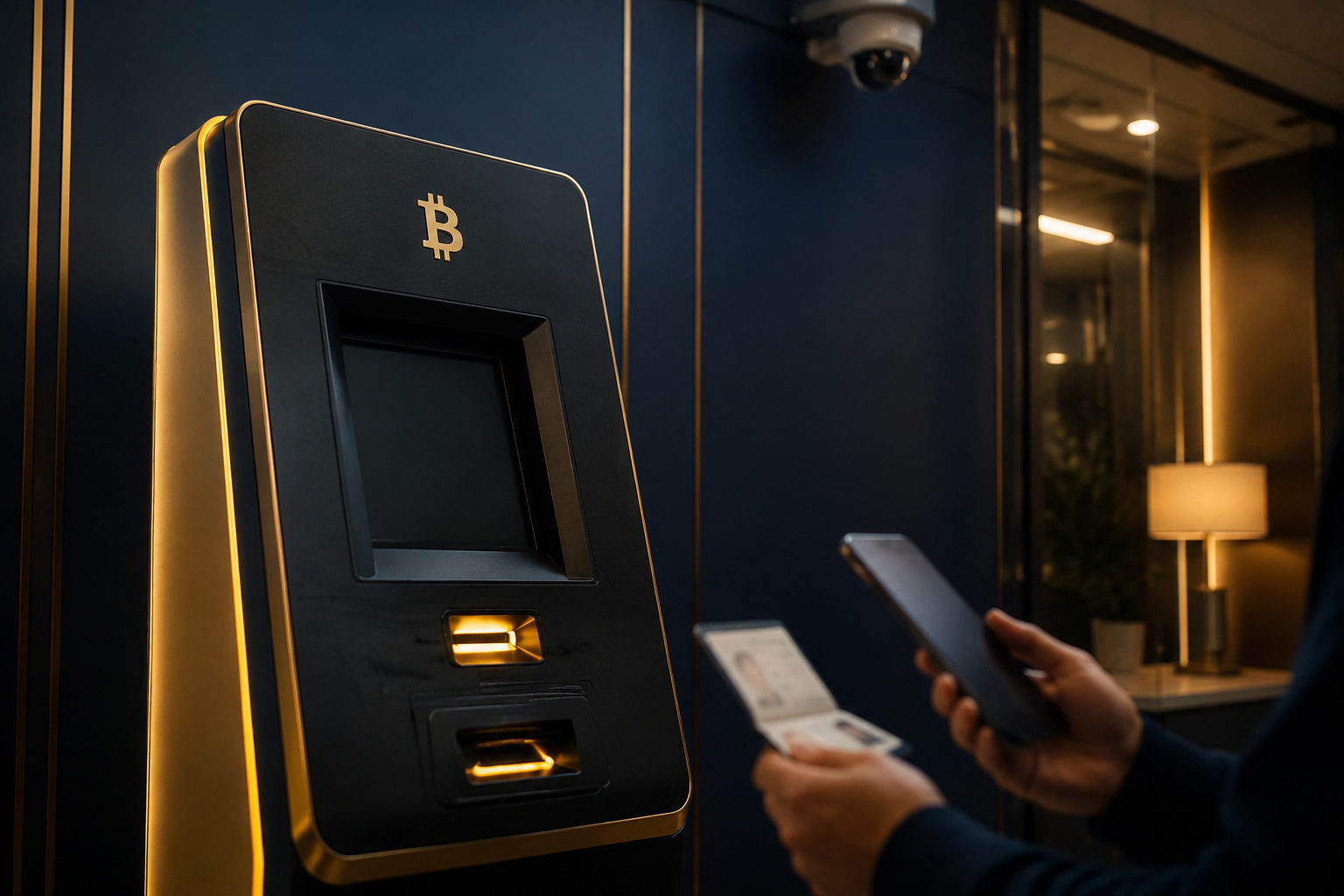
Bitcoin ATMs can be legitimate, but “legit” has two layers: whether the machine is allowed to operate where you are, and whether the transaction you make is safe and properly checked. Don’t rush to scan anything before you verify the operator, the machine, and the flow on screen.
Start with the machine itself
First, look for a named operator, a customer contact, clear service terms, and a fee notice on the machine. That matters because a legitimate setup usually leaves a paper trail and a clear point of responsibility; the less transparent the machine is, the easier it is for someone to change the rules on you.
If the unit looks patched together, has worn-out stickers, blurred instructions, or pushes you to “act now,” stop there. Bitcoin ATMs are sometimes used in scam setups, so a rough exterior or vague wording is not a small detail.
Separate buying from selling
Second, decide whether you are buying bitcoin or cashing it out. The steps, the payout method, and the identity checks can differ, and mixing them up often leads to a mismatch between the amount you expect and what the machine is actually set up to do.
Read every screen before you tap forward. Pay attention to the destination address, the network selection, and the fee display. Once a crypto transfer is sent, it is usually hard to reverse, and a wrong address can be impossible to recover from through the machine or the operator.
Check the full cost, not just the headline fee
Third, compare the final amount shown on the last confirmation page with the earlier prompts. A Bitcoin ATM may present a service fee, a spread, and network costs separately, or it may bundle them into one figure. If you only glance at the first number, you may approve a transaction without understanding the total cost.
The real question is not whether the transaction “feels cheap,” but whether you know what you are paying. Do not let the screen’s urgency push you into confirming too early. Once you accept the final step, the cost is locked in for practical purposes.
Verify the receiving address and any ID request
Fourth, before you scan or type anything, check that the receiving address is your own wallet address, or that the cash-out destination is an account you control. A lot of scams do not fake the machine itself; they trick people into sending funds to an address that looks fine at first glance but belongs to someone else.
If the machine asks for identity verification, make sure it is a normal compliance step and not a random page that appeared out of nowhere. Never hand over your seed phrase, verification codes, or identity documents to a stranger standing nearby. Anything sensitive should be entered only in a formal interface you understand.
What to do when something feels off
Fifth, stop immediately if you see lines like “finish now or lose the transfer,” “support can fix the address for you,” or any pressure to keep moving. Scams often rely on urgency. They want you to skip the checks that would expose the fraud.
Your best move is to step away, reopen your wallet on your own device, and verify the details again from scratch. Do not take phone calls from strangers at the machine, and do not let anyone else handle the screen for you. Once another person controls the process, it becomes much harder to tell who initiated the transfer.
FAQ
Are Bitcoin ATMs illegal by default?
No. The machine itself is not automatically illegal; the key questions are whether it is allowed to operate under local rules and whether your transaction follows the required checks. If the machine has no clear operator or seems to bypass normal verification, walk away.
Do Bitcoin ATMs make scams easier?
They can, especially when a stranger is coaching you through the process. In many cases the scam is not the machine; it is the pressure to send funds quickly before you notice the warning signs.
How can I tell if the fee is unreasonable?
Look at the final total, not just one fee line. If the cost breakdown is missing or the numbers change before you confirm, stop and reassess.
What if I enter the wrong address?
Recovery is often difficult, so address checking has to happen before you send anything. A small test amount can help, but only if the process gives you enough time to verify it calmly.
A Bitcoin ATM is safest when you treat it like a tool that needs inspection, not like a default-safe cash terminal. Check the operator, check the address, check the total cost, and treat any rush tactic as a warning sign.