
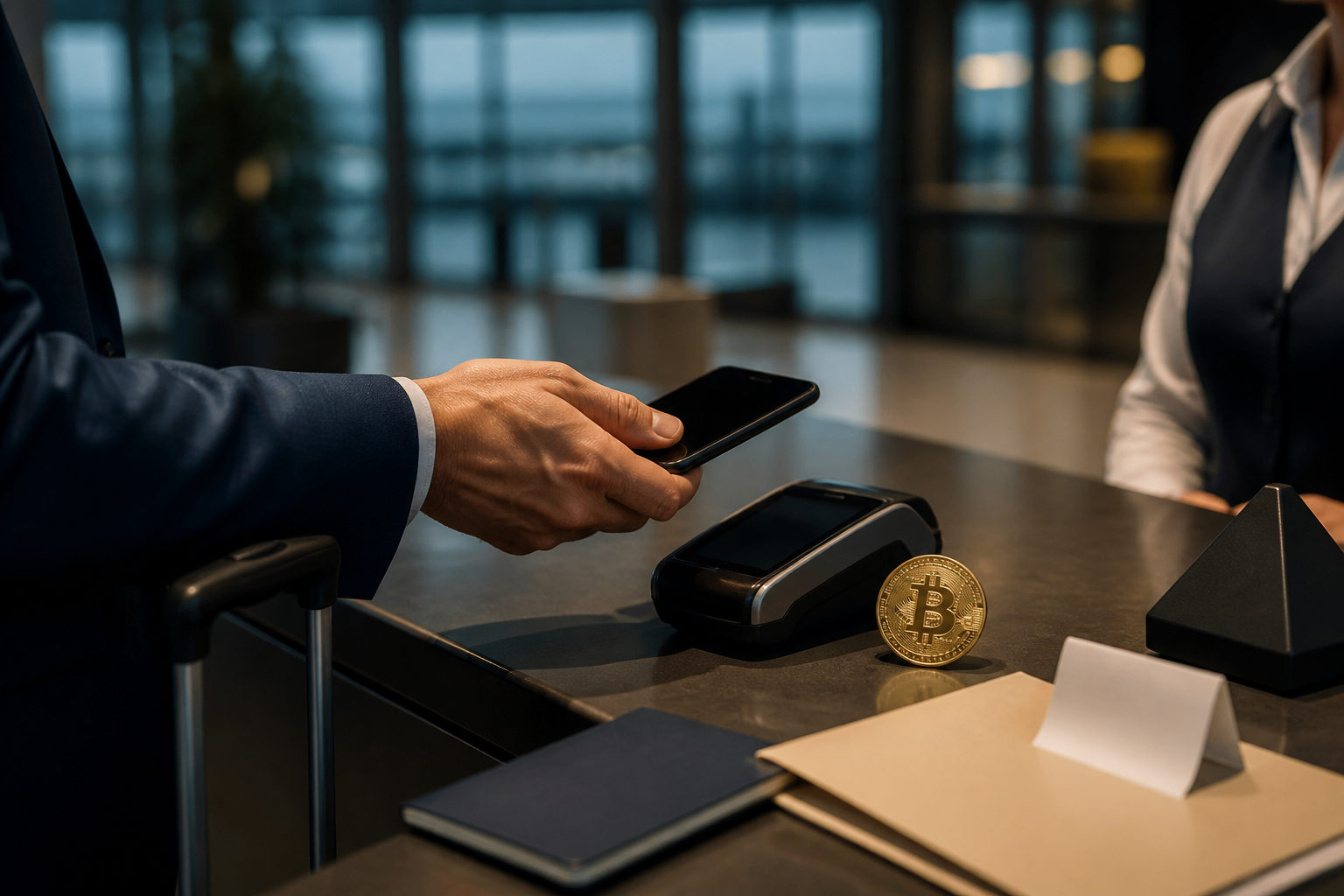
Yes, some countries have used Bitcoin in currency-related settings, but that headline alone does not tell you what daily use looks like. The practical question is whether you can legally spend it, whether merchants actually accept it, how you move funds in and out, and how you avoid getting trapped by scams.
Step 1: Separate legal status from real everyday use
People often read that a country is using Bitcoin as a currency and assume that Bitcoin works there like cash in ordinary life. That is too broad. A government statement, a payment rule, a merchant pilot, and broad public adoption are different things, and they can move at very different speeds.
Start by defining your exact question before you read anything else. You might be asking whether a visitor can pay for common goods, whether local residents use Bitcoin often, or whether businesses can settle payments with it. This matters because vague questions invite vague answers, and vague answers are where hype usually wins.
Then check the issue in layers. One layer is legal treatment: does the country allow Bitcoin for payments, recognize it in a formal framework, or leave it in a gray zone? Another layer is operational reality: can merchants process payments without confusion, failed checkouts, or manual workarounds? A third layer is user experience: are exchange access, confirmation delays, and refunds manageable enough for normal spending?
Scam promoters blur these layers on purpose. A common pitch is that if a country is using Bitcoin, buying it right now must be the smart move. That jump does not hold. A policy topic and your personal trade decision are separate judgments.
Step 2: Verify four signals that show whether Bitcoin is actually spendable
If you want to know whether a country is really using Bitcoin in a currency role, follow the payment chain instead of the headlines. If one link is weak, the whole claim may be thinner than it sounds.
Check whether merchants can accept it smoothly
The first signal is merchant readiness. Look for a clear payment flow, a reliable way to present the amount due, a visible confirmation step, and some fallback when a payment does not go through on time. If the merchant side is awkward, customer adoption usually stays shallow.
Be careful with labels such as “crypto accepted here.” They do not always mean direct Bitcoin acceptance at checkout. In some cases, staff only know how to process payments through a separate service, or only one employee can handle it, or the option appears more often in marketing than at the register.
Check whether it reaches ordinary spending categories
The second signal is where Bitcoin is actually used. If acceptance appears only in tourist zones, conference venues, or niche shops, that tells you something, but not enough. A stronger sign is repeat use in common spending categories such as food, transport, lodging, retail, and everyday services.
This step helps you avoid sample bias. Areas built around foreign visitors or crypto enthusiasts can create a distorted picture. They are useful to observe, but they do not automatically reflect how local people pay in normal routines.
Check whether funding and cash-out paths are clear
The third signal is access. A country can look friendly to Bitcoin payments on the surface while still making it difficult for users to buy Bitcoin, sell it, or move funds back to a bank account. Many beginners miss this part because they focus on the front end of the purchase and ignore the rest of the financial path.
This is where scam risk rises fast. Offers such as “fast cash swap,” “better rate with no checks,” or “instant local conversion through a private contact” can expose you to fake transfers, theft, or tainted funds. Convenience is not proof of safety.
Check whether mistakes and disputes can be handled
The fourth signal is what happens after something goes wrong. Can a merchant identify your payment if the network is busy? Is there a process for overpayment, underpayment, or accidental duplicate payment? If a refund is needed, does the merchant know how to handle it?
That matters because payment tools are judged partly by their error recovery. On-chain transfers can be hard to reverse once completed, so any place that claims Bitcoin works as everyday money should be checked for practical dispute handling, not just payment slogans.
Step 3: If you plan to use Bitcoin there, prepare in the right order
Many people hear that a country accepts Bitcoin and rush straight to buying coins or downloading random wallet apps. That is the wrong starting point. Build your safety setup first, then test the payment process, and only then decide how much value you are willing to carry for spending.
Begin with a wallet you control yourself and store its backup information offline. The reason is simple: when Bitcoin is used for payments, loss often comes from device compromise, poor backup habits, mixed permissions, or sending funds to the wrong address. Seed phrases and private keys should never be stored in chat apps, screenshots, or cloud notes.
Next, run a very small test payment. Use it to confirm that you recognize the wallet interface, know how to verify the recipient address, understand the payment request, and can read the transaction status after sending. A small test exposes your operational weak points while the cost of a mistake is still limited.
Watch for address replacement malware during this step. Some malicious software changes copied wallet addresses in your clipboard. If you paste an address and send without checking the first and last characters, you can lose funds in seconds and there may be no practical recovery path.
After that, separate spending funds from longer-term holdings. If you already own Bitcoin, do not treat your main stash as your travel wallet or day-to-day payment balance. A dedicated spending amount makes accounting easier and limits the damage from a single mistake, device loss, or rushed payment.
Before paying any merchant, ask how pricing works. Some merchants quote directly in Bitcoin, while others quote in local currency and convert at checkout. That difference affects what you are agreeing to pay, whether extra fees may appear, and whether a failed request can be regenerated cleanly. It also tells you how practiced the merchant really is.
Device hygiene matters more than many users expect. Public Wi-Fi, unknown charging stations, and wallet apps from unofficial sources all raise risk. Keep your phone updated, install software only from official channels, use a strong device passcode, and turn on transaction alerts where available.
One more practical safeguard: set a stop condition before you start. If anyone pressures you to act quickly, asks you to share your screen, requests remote-control software, or tells you to transfer Bitcoin to a so-called verification address, stop immediately. Bitcoin scams often rely less on technical brilliance than on pushing you past your own checking routine.
Step 4: Treat these claims as high-risk until proven otherwise
The topic of countries using Bitcoin as currency attracts a specific kind of fraud: a true headline wrapped around a false call to action. You need to spot the second part.
- “A country uses Bitcoin, so buying now is an easy win.” National policy discussion does not tell you whether your entry point fits your risk tolerance.
- “This is the official wallet for that market; deposit first to activate features.” Any setup that starts with sending funds before full verification deserves suspicion.
- “I can help open the right account or verify your identity faster.” Giving documents, selfies, or one-time login codes to a stranger can create deeper damage than a bad trade.
- “Shops all accept it there; I can exchange your cash privately.” Informal swaps create exposure to fake payment proofs, theft, and unclear fund origin.
- “Use this special app build for local Bitcoin payments.” Unofficial software can read your messages, capture your screen, or steal wallet credentials.
A better response is to turn every broad promise into a narrow, testable question. If someone says Bitcoin works everywhere, ask how the checkout flow works. If they say the process is protected, ask who handles disputes. If they claim an app is official, verify the publication source across channels. Evasion is a warning sign on its own.
Step 5: Read Bitcoin adoption claims with the right mindset
Stories about a country using Bitcoin often mix policy, technology, identity, and investment into one package. That can make the subject feel larger and more urgent than your actual use case. Slow it down. Ask what you want to do, where you want to do it, and what would count as proof.
If your goal is travel spending, focus on merchant acceptance, wallet safety, and backup payment options. If your goal is understanding public adoption, focus on whether Bitcoin appears in repeated ordinary transactions rather than isolated publicity moments. If your goal is investment, treat country-level news as one input among many, not a shortcut to action.
The safest readers are usually the ones who can hold two facts at once: a country may have meaningful Bitcoin payment activity, and you can still lose money quickly if your process is weak. That mindset keeps you from confusing public headlines with private readiness.
FAQ
What would count as a country really using Bitcoin as currency?
You would want to see more than a headline or a government announcement. A stronger case includes legal treatment, working merchant acceptance, repeated public use, and clear paths for moving funds in and out of the system.
If I visit such a country, can I assume most stores take Bitcoin?
No. Even in places with visible Bitcoin activity, acceptance can vary sharply by district, industry, and merchant size. It is better to confirm the places you expect to use most often before relying on it.
What is the most common risk when paying with Bitcoin abroad?
User error and scam pressure are both common. Sending to the wrong address, trusting an unofficial app, or rushing through a payment because someone is pushing you are more realistic dangers than many beginners expect.
Why are adoption stories so often tied to investment sales pitches?
Because they create urgency. Marketers use country-level news to make personal action feel time-sensitive, even when the two are only loosely connected. Payment utility and investment suitability should be judged separately.
If I only want to track real adoption, what should I check first?
Start with merchant-side consistency. Then look at whether Bitcoin appears in ordinary spending categories and whether users have practical funding and cash-out options. Those points reveal more than promotional language does.
If you plan to act on this topic, do not start with a purchase. Start with a checklist: the country, the payment setting, your wallet control, your backup method, and a small test transaction. That sequence reduces the chance that a broad Bitcoin headline turns into a personal mistake.
Disclaimer: This article is for informational and educational purposes only and is not investment, financial, or legal advice. Crypto assets are highly volatile and you could lose your entire investment. Do your own research and decide carefully.