
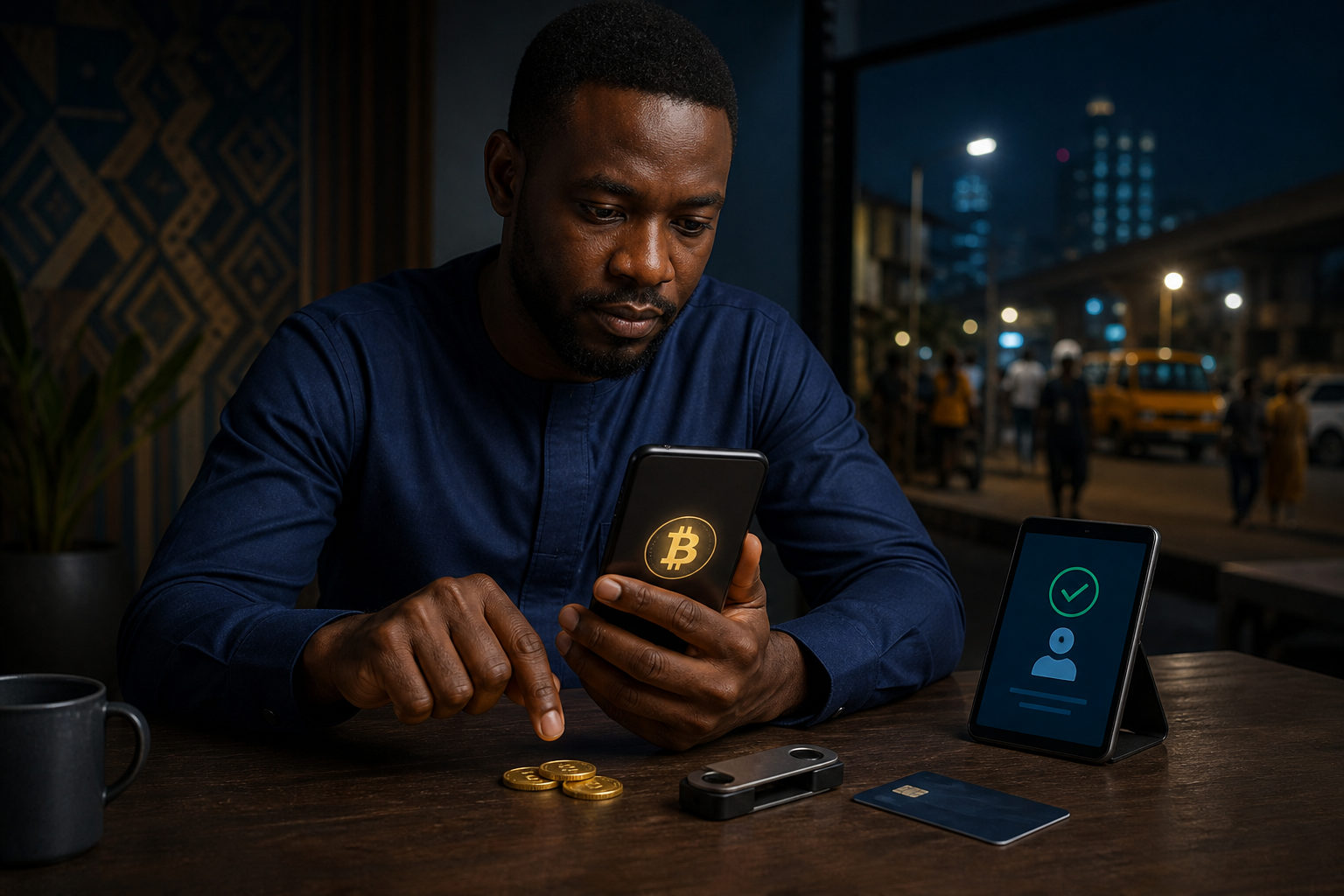
Short answer up front: there's no single playbook for "buying bitcoin in Africa," because the rules, the platforms that are actually licensed, and even which payment methods work at all change from country to country — and several of the continent's biggest crypto markets rewrote their laws in 2025 alone. The safer approach is to check what applies specifically where you live, pick a platform that is legal to use in your own country, run the whole process once with a small test purchase, and then move any meaningful holdings into a wallet only you control.
Africa is not one market
Searches for "how to buy bitcoin in Africa" tend to assume there's a single continental rulebook. There isn't. Africa has 54 countries, and their approaches to crypto are wildly different: Nigeria has just folded digital assets into securities law, South Africa already runs a full licensing regime, Kenya only passed its first dedicated crypto law in late 2025, Ghana's licensing framework is still being rolled out through 2026, and many other countries have no clear rules at all yet. A generic "Africa guide" you find online is usually describing one specific country's setup, and applying it somewhere else can get you in trouble.
What follows uses Nigeria, South Africa, Kenya, and Ghana as examples, since these are among the most active crypto markets on the continent and the ones with the most recent regulatory activity. If you're in a different country, the reasoning still applies — you just need to swap in your own regulator, licensing list, and tax rules, which change often enough that they're worth checking fresh rather than trusting an article.
Step 1: Get clear on why you're buying bitcoin
A lot of people search for how to buy bitcoin in Africa without having actually settled why they want it. That question matters more here than in many other regions, because in several African countries the first reason people buy bitcoin or stablecoins isn't speculation — it's protecting savings from a falling local currency. Nigeria's naira dropped from roughly 460 to around 1,500 per US dollar between 2023 and 2025, a loss of more than 60% of its value. Ethiopia's birr fell by roughly 30% in 2024. Currency swings like these are a large part of why stablecoin transfer volumes across the region have climbed so quickly in recent years.
If your goal is preserving value or moving money across borders, a dollar-pegged stablecoin (USDT or USDC, for example) is usually the more relevant tool, and what matters most is whether your on-ramp and off-ramp are reliable and their fees are clear upfront. If your goal is holding bitcoin itself for the long run, withdrawal permissions and wallet security matter more. If you just want to understand the process before committing real money, start small and focus on getting registration, verification, buying, and withdrawal working smoothly. Not knowing your own goal is exactly what makes people vulnerable to "guaranteed returns" pitches and "let our expert trade for you" offers — more on a real case of that below.
Step 2: Confirm which payment methods actually work where you live
The practical bottleneck in buying bitcoin in Africa is rarely "does a platform exist" — it's whether you can reliably and legally convert local currency into crypto. Common funding methods differ a lot by country.
- Mobile money. This is one of the dominant on-ramp methods across much of the continent. M-Pesa is the standard in Kenya, and a number of exchanges support it directly for peer-to-peer trades. Across West and Central Africa, MTN Mobile Money, Orange Money, Moov Money, and Tigo Money show up as dedicated payment options on major P2P marketplaces.
- Bank transfers and cards. In markets with more developed banking, like South Africa and Nigeria, bank transfer remains common — but check the fine print. Naira debit and credit cards issued by Nigerian banks had international spending switched off almost entirely for roughly three years, and only started being restored through 2025 — and even after that, caps vary hugely by bank and have been revised, up or down, more than once within the same year: some banks cap card spending at just a few tens of dollars a month, while others that have loosened restrictions more have allowed tens of thousands of dollars per quarter. Call your own bank to confirm your current limit before you plan around a card, rather than guessing based on something you read.
- Cash agent networks. Some regional on-ramp platforms — Yellow Card is one, operating across 20-plus African countries including Nigeria, Ghana, Kenya, Tanzania, Uganda, Rwanda, and South Africa — combine mobile money, bank transfer, and physical cash agent locations, which matters if you're underbanked or don't have a bank account at all.
You don't need the platform with the most payment options; you need a payment method that is genuinely yours, traceable, and in your own name. Using a friend's card, a borrowed mobile money account, or funds you can't clearly explain tends to trigger extra compliance checks, and in the worst case gets your account frozen or your order delayed.
Step 3: Choose a platform based on its legal standing in your country, not its marketing
"Which exchange is best" isn't a question you can answer without naming a country first. Regulatory frameworks across Africa's major markets moved fast through 2025 and 2026, and that directly determines which platforms are actually operating legally.
- Nigeria. The Investments and Securities Act 2025 formally classified digital assets as securities and put them under the Securities and Exchange Commission (SEC). The SEC has been issuing approvals through its Accelerated Regulatory Incubation Program (ARIP); Quidax and Busha received "Approval-in-Principle" in August 2024, making them among the first locally licensed exchanges under this framework. Separately, the Central Bank of Nigeria lifted its earlier ban on banks servicing crypto businesses in December 2023, though transactions run through licensed VASPs must be denominated in naira. Worth noting: even a global platform's local availability can change overnight for regulatory reasons — Binance suspended naira peer-to-peer trading in March 2024 amid a dispute with Nigerian authorities. Whatever platform you're considering, confirm its current status in your country before you fund an account.
- South Africa. The Financial Sector Conduct Authority (FSCA) declared crypto assets a "financial product" under the Financial Advisory and Intermediary Services Act back in 2022 and built a licensing regime around that. Luno became the first crypto asset service provider to receive a full FSCA license in April 2024, and several other platforms, including VALR, have since been approved. On the tax side, the South African Revenue Service (SARS) is rolling out the OECD's Crypto-Asset Reporting Framework (CARF), which requires licensed platforms to automatically report customer transaction data to tax authorities.
- Kenya. The Virtual Asset Service Providers Act, 2025 was signed by President Ruto in October 2025 and took effect in November 2025. It splits oversight between two regulators — the Central Bank of Kenya handles stablecoins, wallets, and payment-related activity, while the Capital Markets Authority oversees exchanges, custody, and tokenization platforms. M-Pesa is widely supported as a payment rail for peer-to-peer bitcoin trades in the Kenyan market.
- Ghana. Parliament passed the Virtual Asset Service Providers Act on December 19, 2025, putting joint oversight in the hands of Ghana's Securities and Exchange Commission and the Bank of Ghana, which set up a dedicated Virtual Assets Regulatory Office (VARO). Phased licensing is expected to begin in the first quarter of 2026. As of March 2026, the Bank of Ghana had required all VASPs serving Ghanaian residents to register — but it was explicit that registration alone does not amount to a license.
If you're in a country not covered above, the same logic still holds: find out whether a dedicated crypto regulator exists in your country and whether there's a public list of licensed or registered providers, before you decide where to sign up. Check the boring but important things — is identity verification required, is two-factor authentication supported, can you see order status, is there a clear dispute process, can you withdraw bitcoin to an external wallet. A platform that only advertises "instant deposits," "anonymous large transactions," or "a personal agent to handle everything for you," without being able to explain its own regulatory status or trading rules, is usually the riskier choice — no matter how convincing the screenshots or "success stories" shared on social media look, since those are trivially easy to fake or cherry-pick.
| Market | Main regulator(s) | Key 2025-2026 development | Reference licensed/known platforms | Common payment methods |
|---|---|---|---|---|
| Nigeria | SEC, Central Bank of Nigeria (CBN) | Investments and Securities Act 2025 brings digital assets under securities law; SEC licensing via ARIP; CBN lifted the bank-account ban for licensed VASPs in Dec 2023 | Quidax, Busha (Approval-in-Principle, Aug 2024) | Naira bank transfer, bank cards (limits vary by issuer), P2P trading |
| South Africa | FSCA, South African Revenue Service (SARS) | Crypto assets classified as a financial product under FAIS since 2022; licensing continues to expand; SARS rolling out CARF reporting | Luno (first full FSCA license, Apr 2024), VALR | Bank transfer (EFT), bank cards |
| Kenya | Central Bank of Kenya (CBK), Capital Markets Authority (CMA) | Virtual Asset Service Providers Act, 2025 in force; dual regulator model; 10% excise duty on platform fees (not the trade itself) from Jul 2025 | Check CBK/CMA's current registered list | M-Pesa and other mobile money, bank transfer |
| Ghana | SEC, Bank of Ghana (via VARO) | VASP Act passed Dec 2025; phased licensing from Q1 2026; mandatory registration from Mar 2026 | Licensed list expected to be published through 2026 | Mobile money (MTN Mobile Money, etc.), bank transfer |
| Other African countries | Varies; many have no dedicated crypto regulator yet | Often limited to central bank warnings, forex controls, or an absence of clear rules; changes frequently | Verify independently whether a licensed or registered platform exists locally | Depends on local financial infrastructure; mobile money is widely available |
Step 4: Registration and verification — expect more reporting than before, not less
Before you can buy, you'll normally need to register and complete identity verification (KYC). The point here isn't finding a shortcut around it — it's understanding that regulation across Africa's major crypto markets is moving toward more reporting, not less. Nigeria's new tax framework requires licensed platforms to report customers' names, contact details, and Tax Identification Numbers to the tax authority. South Africa's SARS is building out CARF-based automatic reporting as well. Registering with fake information or someone else's ID doesn't just risk a frozen account — it's increasingly unlikely to actually shield you from tax or regulatory scrutiny down the line.
Use an email address and phone number you control long-term, set a password you don't reuse elsewhere, and turn on two-factor authentication. When verifying identity, submit accurate documents — don't alter, splice, or borrow someone else's. Device hygiene matters too: avoid completing registration or payment on a cybercafé computer, a shared device, or through an app from an unverified source, and never send your verification codes, passwords, or ID photos to anyone claiming to be "support staff" or a "mentor."
Step 5: Make a small test purchase and add up the real cost
The part people usually get wrong isn't how much they buy the first time — it's skipping a full run-through of the process and not checking the actual cost structure. Take Yellow Card as an example: according to its own published fee information, buying or selling bitcoin on the platform carries no trading fee, but transfer and cash-out costs still vary by country. That's a useful reminder that "zero fees" advertising doesn't automatically mean zero cost — look at the whole fee stack before you commit: whether the payment method itself charges anything, whether the quoted price already includes a spread or service fee, and whether withdrawal is billed separately.
During a test purchase, check the details one by one: is the price shown an estimate or the final execution price, how long do you have to pay, what triggers order cancellation, and can you withdraw immediately after the trade settles. Don't confirm before you understand the rules, and don't skip verification steps just because a counterparty is rushing you.
Step 6: Learn to use your own wallet — don't leave everything on the exchange
Real control over bitcoin comes from your private key or seed phrase, not from a balance displayed inside an app. If a platform pauses withdrawals, a regulator freezes accounts, or something like the 2024 standoff between Nigerian authorities and Binance happens again, funds sitting on an exchange can become temporarily inaccessible. Before your holdings grow large, it's worth setting up a wallet you control, confirming it supports bitcoin, understanding how backups and recovery work, and running a small test — receive a tiny amount, then withdraw it — before trusting it with anything meaningful.
Backups deserve the most care. If your seed phrase or private key leaks, funds can be moved out immediately; if you lose it, recovery may be impossible. Store backups offline, not as a screenshot in your photo library, not in a chat app, not in cloud storage, and never handed over to anyone offering to "safekeep" it for you.
Step 7: Know what a scam actually looks like — a real African case
Buying bitcoin in Africa isn't inherently difficult; avoiding scams dressed up as investment opportunities is the harder part. In April 2025, a platform called CBEX — which marketed itself as using "AI-powered" trading and promised to double deposits within 30 days — collapsed in Nigeria. Nigeria's Securities and Exchange Commission publicly warned the public to stop engaging with it. According to multiple reports, the scheme affected tens of thousands of investors across Nigeria and Kenya, with losses estimated at several hundred million dollars; after the collapse, the platform first restricted withdrawals, then started demanding additional "verification fees" from victims trying to get their money out. Nigeria's Economic and Financial Crimes Commission subsequently issued arrest warrants for people connected to the scheme.
The common thread in scams like this isn't technical sophistication — it's pressure. They push you to move fast, pay someone directly instead of through an official order, and skip the platform's normal process, while dangling "guaranteed returns" or "AI trading" claims to lower your guard. A few simple rules cover most of it: stop immediately if anyone asks you to send money to a personal account, bypass an official order flow, or share your screen or verification code; a promise of fixed, risk-free, or unusually high returns is never a reason to send more money. If you're trading peer-to-peer, keep communication limited to the order itself — don't add the other party on a separate chat app, and don't agree to "release the coins first, pay later" or similar off-platform arrangements.
A note on taxes: don't assume another country's rules apply to you
Crypto tax treatment varies by country across Africa just as much as licensing does, and it's changed quickly over the last two years. The examples below illustrate that rules shift — they are not a description of what applies to you specifically.
- Nigeria: new tax legislation passed in 2025 and effective from January 1, 2026, folds gains from digital asset disposals into ordinary taxable income, taxed at whatever rate already applies to that individual or company, and requires licensed platforms to report customers' Tax Identification Numbers. This replaces the flat 10% capital gains tax that had applied since the 2023 Finance Act.
- Kenya: the 2025 Finance Act repealed the earlier Digital Asset Tax, which had been charged on transaction value, and replaced it from July 2025 with a 10% excise duty charged on the fee or commission a platform charges you — meaning the tax now falls on the service charge, not on the underlying trade amount.
- South Africa: SARS treats crypto assets as intangible assets, and gains may be taxed as income or as a capital gain depending on how you trade, while CARF-based automatic cross-border reporting is being phased in.
The same action — selling bitcoin — can be taxed completely differently depending on the country and even the year. Check your own country's tax authority for its current guidance before you sell, rather than relying on another country's rate or a rumor that crypto gains are "tax-free."
Frequently asked questions
Which African country has the clearest regulatory environment for buying bitcoin?
Based on publicly available information, South Africa and Nigeria are further along on licensing and legislation, and Kenya and Ghana both passed dedicated crypto laws around late 2025. "Clearer" doesn't mean risk-free, though, and these frameworks are still being implemented — check the current published list from your local regulator (FSCA in South Africa, SEC in Nigeria, CMA/CBK in Kenya, SEC/Bank of Ghana in Ghana) rather than relying on a snapshot from an article.
Can I just use a bank card to buy bitcoin in Africa?
It depends heavily on your bank and your country. In Nigeria, for instance, many banks switched off international spending on naira cards almost entirely for roughly three years and only began restoring it through 2025 — and even now, limits vary hugely by bank (from just a few tens of dollars a month at some, up to tens of thousands per quarter at others that have loosened restrictions more) and have been revised more than once within the same year. Call your card issuer directly to confirm your current limit and whether crypto-related purchases are even permitted, rather than assuming based on something you read online.
Is it safe to buy bitcoin using M-Pesa or MTN Mobile Money?
Mobile money itself is one of the most common and widely supported on-ramp methods across much of Africa. The risk isn't the payment tool — it's whether the platform you're using is legitimate and whether the trade goes through an official order process. Don't send mobile money directly to a stranger outside a platform's order system.
Do I have to pay tax on bitcoin bought in Africa?
In most cases, probably yes, but exactly how depends entirely on your country, and the rules have shifted noticeably in the last year or two — Nigeria's new tax framework starting in 2026 and Kenya's 2025 excise-duty change are two examples. Check your own tax authority's current guidance rather than assuming another country's rate applies to you.
How do I tell if a platform is a scam?
Look for the same pattern seen in real cases like CBEX: promises of fixed, unusually high returns; pressure to deposit more quickly; repeated demands for "verification" or "unlocking" fees; and restricted or delayed withdrawals. Any one of these is reason enough to stop and independently verify the platform's regulatory status before sending anything further.
What's the first thing to do after buying bitcoin?
Lock down account security first — a strong, unique password and two-factor authentication — and make sure your identity and payment information on file is accurate and something you can verify later if asked. Then, if you plan to hold long-term, run a small test withdrawal to a wallet you control sooner rather than later.
Final checklist
Before you place an order, go through this once more: what is the current regulatory status in your country, is the platform you're about to use actually operating legally there, is your payment method in your own name with enough available limit, have you turned on two-factor authentication, do you have your own wallet ready, have you run a small test transaction first, do you understand how gains are taxed where you live, and have you ruled out any request for a private payment or a "guaranteed return." Get through that list honestly, and you've actually worked out how to buy bitcoin in Africa for your own situation — not just copied a generic guide that may not even apply to the country you're in.
Disclaimer: This article is for general informational and educational purposes only and does not constitute investment, financial, legal, or tax advice. Regulatory policies, tax rates, and platform licensing status referenced here reflect information available at the time of research and may have changed; always confirm current rules with your own country's regulators and tax authority. Cryptocurrency prices are highly volatile and you could lose your entire investment — do your own research and decide carefully.