
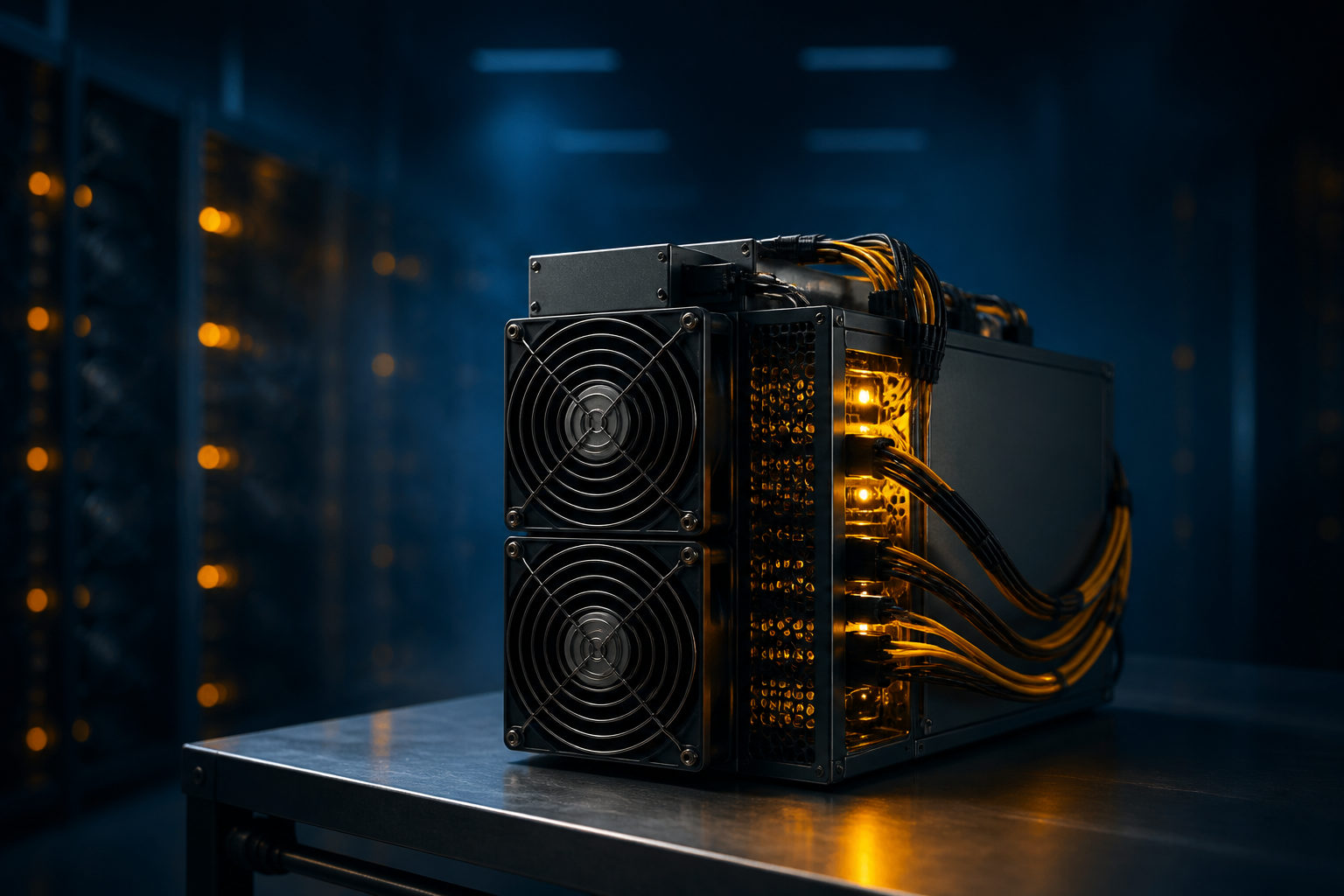
Bitcoin mining is a record-keeping competition: the first miner to find a valid result gets the chance to add a new block to the Bitcoin blockchain. For a beginner, the key is to understand that this is not a one-click way to create coins; it is a process that consumes hardware, electricity, and maintenance capacity over time.
What mining actually does
Bitcoin does not rely on a single bookkeeper. Transactions are verified by many distributed nodes, while miners gather pending transactions into a block and keep trying to find an answer that meets the network’s difficulty target. That is why mining is usually described as a race in computing power.
A better mental model is not “solving a puzzle by being smarter,” but “making fast, consistent calculations until the network accepts one result.” Once that result is accepted, the block is attached to the chain, and the miner receives the block reward and transaction fees defined by the protocol.
What you need before you start
If you only want to learn the concept, an ordinary computer is enough. If you want to participate for real, the barrier is much higher. Today, specialized mining machines dominate the competition, and home devices usually cannot keep up on efficiency.
Hardware is only part of the picture. Electricity, heat, noise, and physical space matter just as much. A mining machine runs under heavy load for long periods, so poor cooling or a weak setup can shorten hardware life and raise the chance of downtime.
- Mining hardware: this decides whether you can compete at all; a regular PC is mostly for learning.
- Electricity access: power cost shapes the whole setup, and the result varies a lot by location.
- Cooling and noise: these are not extras; they are basic conditions for sustained operation.
- Wallet: coins you mine need a place to go, and an address is not the same thing as an exchange account.
Ways to get involved
The most direct route is to buy your own equipment and run it independently. That means handling purchase decisions, setup, maintenance, and payout tracking at the same time. For most newcomers, a mining pool is easier to understand: many miners combine their computing power, compete together for blocks, and then split results according to contribution.
If your goal is learning rather than committing capital, you can begin by studying the machine dashboard, payout rules, and electricity calculations. Many beginners do not fail at turning the machine on; they fail at not pricing in operating costs and downtime.
Why cost matters more than people expect
The main variables in Bitcoin mining are not limited to hardware price. Electricity, depreciation, repairs, network stability, and site conditions all affect the outcome. Two miners can follow the same basic process and still end up with very different experiences.
Difficulty is another part beginners often overlook. The network adjusts mining difficulty as total network computing power changes, so the conditions you see today may not stay the same. That matters more than short-term excitement.
If your main goal is simply to own Bitcoin, buying and holding it is often far easier than setting up a mining system. Mining fits people who are willing to deal with hardware, power, maintenance, and ongoing monitoring; it is not a simple passive-income shortcut.
FAQ
Does mining Bitcoin mean “digging up” new coins?
Not exactly. Miners maintain the network and compete for the right to record blocks, and the system sends the block reward to the winner under the protocol rules. Beginners often mix up coin creation with block production, but those are not the same thing.
Can a normal computer still mine Bitcoin?
For learning, yes. For real competition, usually no. It is more practical to understand mining machines, pools, and electricity costs than to treat a home PC as a serious setup.
Is a mining pool always better than solo mining?
For most beginners, a pool makes results easier to understand because payouts are less erratic. Solo mining keeps more independence, but you also have to accept a much longer wait before seeing any output.
What should I calculate first?
Start with electricity and cooling, then check whether the hardware fits your environment. Machine specs alone are not enough, because long-term operation is usually decided by power access and maintenance ability.
If you want to study Bitcoin mining seriously, sort out hardware, electricity, cooling, and the wallet you will use to receive coins before spending money. That order helps you avoid the most common mistakes.
Disclaimer: This article is for informational and educational purposes only and is not investment, financial, or legal advice. Crypto assets are highly volatile and you could lose your entire investment. Do your own research and decide carefully.