
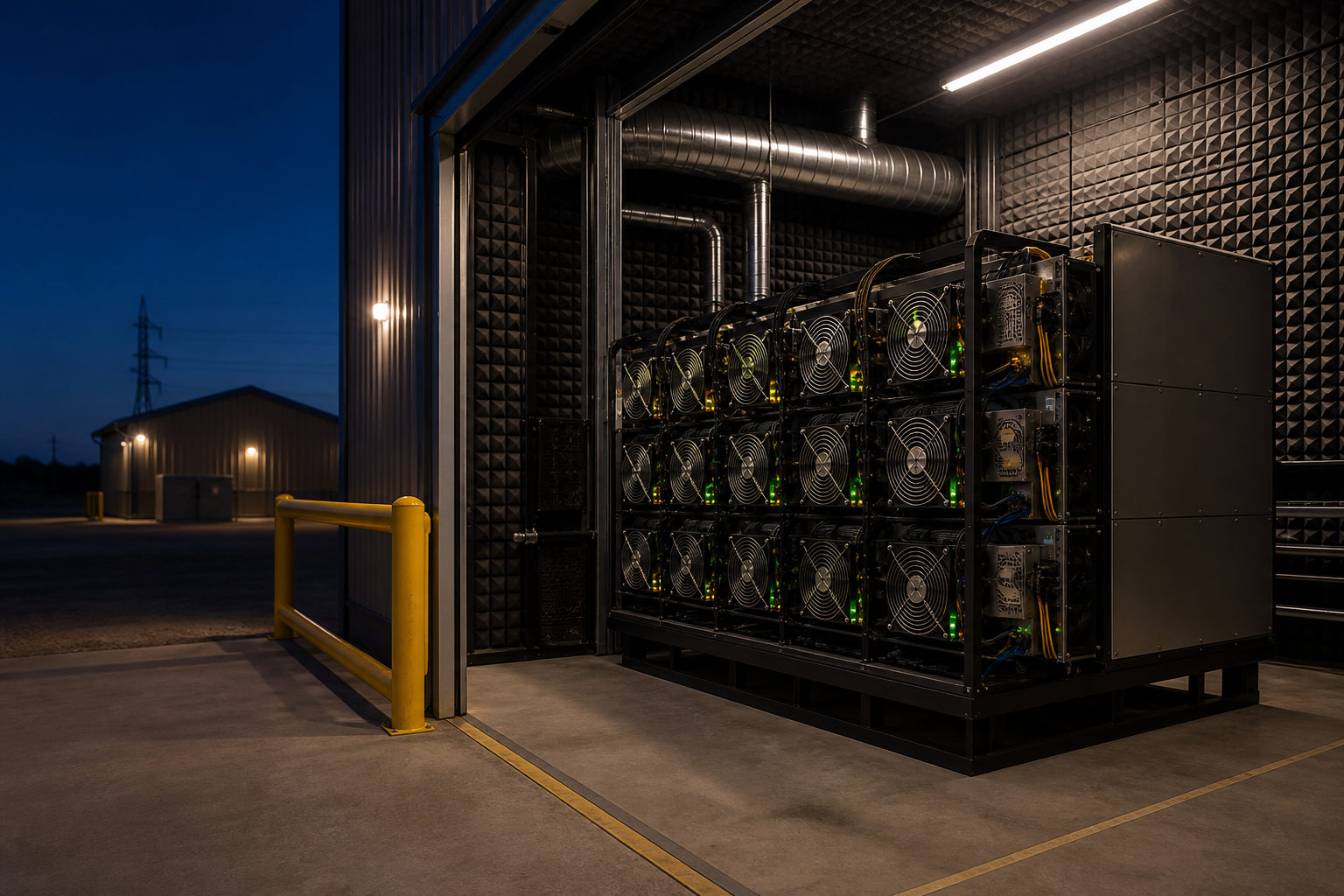
Bitcoin mining is generally legal in Texas, but that answer is only the starting point. The real question is whether you can run it lawfully, practically, and at a cost structure you can live with.
Short answer: yes, but legality is not the whole decision
A simple way to understand bitcoin mining is to picture a nonstop competition for bookkeeping rights. Miners around the world use machines to compete for the chance to add the next block to the chain. When a miner finds a valid block, the network can accept it and the miner may receive the block reward plus transaction fees.
Right now, the block reward is 3.125 BTC. That became effective after the halving on 2024-04-19, and the next halving is expected around 2028. Bitcoin targets a new block about every 10 minutes, and the network issues about 450 BTC per day in total. That daily figure is for the whole network, not for any one miner, company, or site.
In Texas, mining itself is generally treated as a lawful business or personal activity in many situations. That does not mean every setup is automatically fine. Your power arrangement, lease terms, zoning issues, noise, heat, business registration, bookkeeping, and tax handling can all matter. Many beginners ask whether mining is legal in Texas, when the better follow-up is whether their specific plan can operate without running into local or contractual problems.
This distinction matters because Bitcoin has its own protocol rules, while miners still have to obey real-world rules where the machines are installed. The protocol decides how blocks are found. Your site, contracts, and utility arrangements decide whether you can keep the hardware running.
What bitcoin mining actually does
Bitcoin began with the genesis block on 2009-01-03. Its white paper, Bitcoin: A Peer-to-Peer Electronic Cash System, was published by Satoshi Nakamoto on 2008-10-31. Mining is part of the system that makes rewriting the ledger expensive, which is why the chain can function without a central bookkeeper.
At a practical level, mining machines perform repeated computations in search of a valid result under the network's rules. A miner that finds one first can propose the next block. Other nodes verify it, and if the block is valid, it joins the chain. No one hands rewards out based on sign-up order. Success depends on hardware performance, uptime, connectivity, and how much competition exists across the network.
Bitcoin's supply schedule is fixed. The total cap is 21,000,000 BTC, and all coins are expected to be issued by about 2140. The block subsidy halves every 210,000 blocks, roughly every 4 years. Those halvings took place on 2012-11-28, 2016-07-09, 2020-05-11, and 2024-04-19. If you are evaluating whether bitcoin mining is legal in Texas for your own operation, these facts matter because they show the reward side of the system is public and predictable, while your cost side is where most uncertainty lives.
| Core Bitcoin rule | What it means for miners |
|---|---|
| About 10 minutes per block | Results are uneven over short periods, especially for small operators |
| Current block reward: 3.125 BTC | Every miner works under the same issuance rule |
| Halving every 210,000 blocks | New supply drops on a fixed schedule |
| About 450 BTC issued per day | That is network-wide issuance, not an estimate for your machine |
| Total cap: 21,000,000 BTC | Supply cannot be expanded at will |
What to check in Texas before you do anything
If your question is purely legal, the answer can be brief. If your question is operational, you need a checklist. Texas is often discussed in mining circles, yet the factors that decide whether a project works are usually mundane: power, space, cooling, maintenance, and paperwork.
| Item | What to verify | Why it matters |
|---|---|---|
| Power source | Residential, commercial, or hosted facility | Mining runs continuously, so power terms shape the whole model |
| Site rules | Lease terms, landlord permission, building restrictions | Many disputes come from property rules, not crypto law |
| Cooling plan | Ventilation, heat removal, dust control | Excess heat can reduce stability and hardware life |
| Noise tolerance | Whether neighbors or site managers can accept fan noise | Complaints can end an otherwise workable setup |
| Business compliance | Whether you need a business entity and proper records | Larger operations quickly outgrow informal arrangements |
| Maintenance ability | Who handles resets, network outages, and repairs | Buying a machine is easy; keeping it online is harder |
One common mistake is to hear that bitcoin mining is legal in Texas and assume a home setup is automatically suitable. A residential property may not be built for nonstop heat output, high electrical load, or sustained machine noise. Even if the activity itself is lawful, the environment may be the wrong fit.
Another mistake is to focus only on the miner and ignore everything around it. Circuit capacity, airflow, internet reliability, cleaning, replacement parts, and shutdown procedures all affect outcomes. If you cannot handle those tasks yourself, hosting may be the better route, but then you are taking on counterparty and contract risk instead of do-it-yourself site risk.
How people participate: home mining, hosting, and pools
There is more than one way to take part. Some people run hardware at their own site. Others place miners with a hosting provider. In both cases, many end up joining a mining pool because solo mining creates a very uneven result pattern for smaller operators.
| Approach | Best for | Main advantage | Main challenge |
|---|---|---|---|
| Home or self-managed mining | People comfortable with power and hardware issues | High control over the machines | You handle noise, heat, repairs, and uptime yourself |
| Hosted mining | People who do not want onsite operations | Less day-to-day facility work | You depend on the host's execution and contract terms |
| Mining pool participation | Most practical miners | Smoother reward distribution over time | You need to understand pool fees and payout rules |
A pool is worth understanding early. With solo mining, a small operator could wait a long time for a block, even if the machines are working correctly. A pool spreads block rewards among participants according to contribution, which usually makes payouts less erratic. It does not create profit by itself; it mainly changes how variance is distributed.
You also need a wallet setup that fits mining payouts. Bitcoin can be divided into very small units: 1 satoshi equals 0.00000001 BTC. Payout thresholds, withdrawal rules, and address support vary by provider, so wallet preparation should come before you switch on hardware. Many newcomers spend all their time comparing machines and almost none on payout handling, backup practices, or access control.
The cost reality: legal does not mean sensible for everyone
Mining is a cost-heavy hardware activity. You are dealing with machine purchases, power bills, cooling, cleaning, downtime, repairs, and possibly hosting fees. Since this article does not use revenue figures, the right way to frame the decision is simple: do you have a power setup, operating plan, and risk tolerance that give you a reasonable path to stay online without losing control of the process?
The reward side of Bitcoin is transparent. The current subsidy is 3.125 BTC, and the issuance schedule is public. Your personal outcome, though, has no fixed answer. It changes with network competition, machine efficiency, pool policies, uptime, and operating discipline. That is why the question “is bitcoin mining legal in Texas” is only one part of the picture. The harder question is whether your setup can survive ordinary operational stress.
If your only goal is getting bitcoin exposure, mining is not the only route. Mining is closer to running a piece of industrial equipment than buying an asset and leaving it alone. People who underestimate that difference often discover the challenge too late, after they have already committed money and time.
Before you buy anything, write down where the power will come from, where the machines will sit, who will maintain them, how payouts will be stored, what happens during outages, and how you would exit the setup. If those answers are still fuzzy, wait.
FAQ
Can I mine bitcoin at home in Texas?
In many cases, yes, but that does not settle whether your property is suitable. You still need to check electrical capacity, lease terms, noise tolerance, and whether your cooling plan is realistic for continuous operation.
Does legal mining in Texas mean mining is profitable there?
No. Legality and economics are separate issues. A lawful setup can still be a poor one if your power terms, uptime, hardware efficiency, or maintenance plan are weak.
Is solo mining realistic for a small operator?
It is possible, but results can be highly uneven because finding a block is probabilistic. Many smaller miners use pools so rewards arrive in a more regular pattern.
What changed after the 2024 halving?
The block reward dropped to 3.125 BTC on 2024-04-19. That means operating efficiency matters even more, because fewer new coins are issued per block than before.
Can I mine without being good at hardware?
You can look at hosted options, but you still need to read contracts carefully. Once someone else runs the site, your main risk moves from hands-on maintenance to provider performance and accountability.
If you are trying to act on this topic, start with a plain checklist rather than a price calculator: power, site permission, heat, noise, maintenance, wallet control, and exit options. After that, the question of whether bitcoin mining is legal in Texas becomes much easier to apply to your own case.
Disclaimer: This article is for informational and educational purposes only and is not investment, financial, or legal advice. Crypto assets are highly volatile and you could lose your entire investment. Do your own research and decide carefully.