
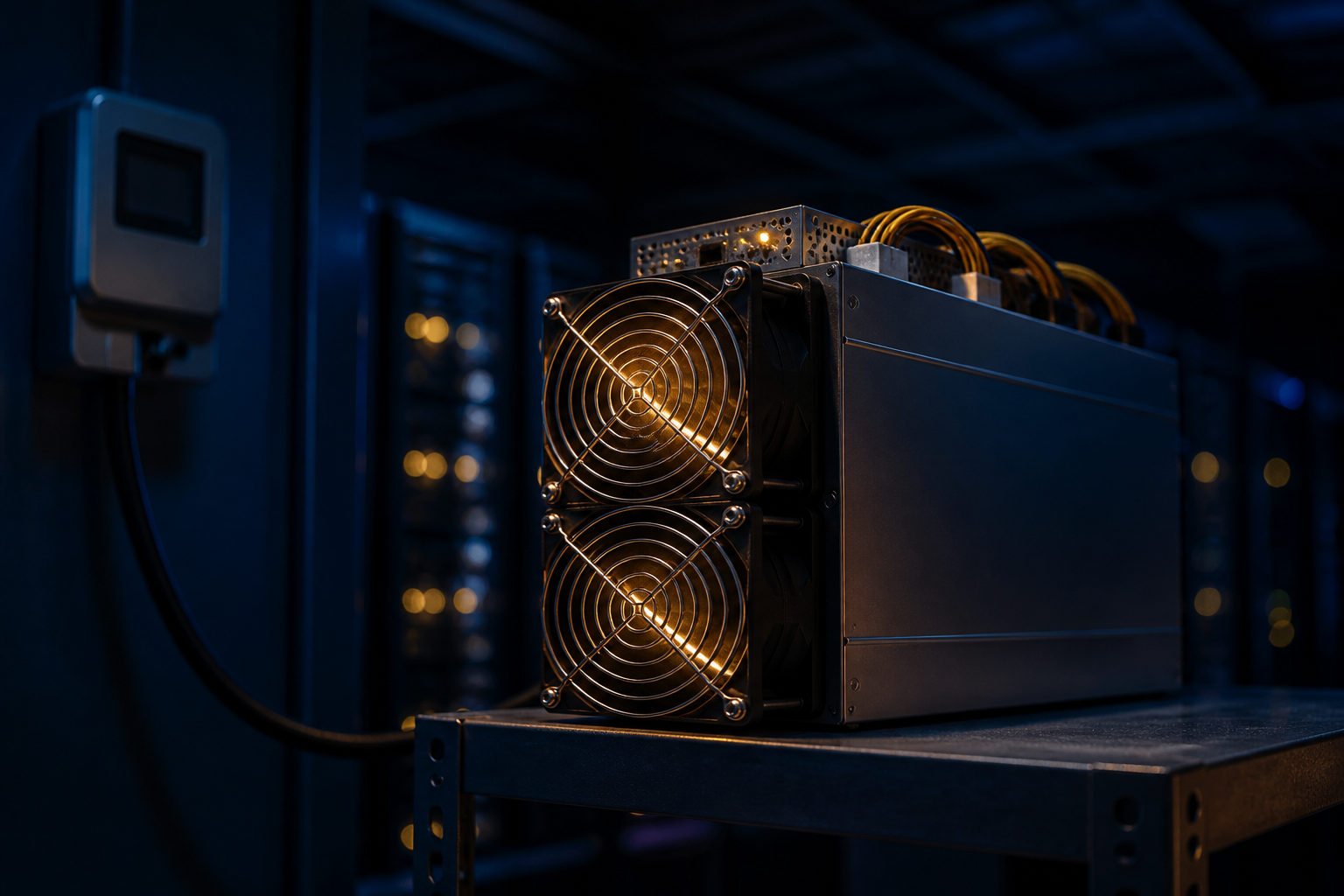
Yes, bitcoin is still mineable, and it should remain so until roughly 2140. The real issue today is not access in theory; it is whether your setup can survive the economics.
Why bitcoin is still being mined
Bitcoin did not release its full supply at launch. New coins enter circulation through block rewards, and that process is still active. The supply cap is fixed at 21,000,000 BTC. The genesis block was mined on 2009-01-03, and the network has kept producing blocks ever since, with a target of about one block every 10 minutes.
Miners compete to add the next block of transactions. The winner gets the block reward plus the transaction fees inside that block. After the halving on 2024-04-19, the current block reward is 3.125 BTC. At the network's target pace, that works out to about 450 BTC issued per day across the entire network. So the short answer is simple: yes, mining is still happening every day.
The catch sits inside Bitcoin's monetary design. Every 210,000 blocks, roughly every 4 years, the block reward gets cut in half. That has already happened on 2012-11-28, 2016-07-09, 2020-05-11, and 2024-04-19. The next halving is expected around 2028. Mining does not stop after a halving. It just gets tougher to cover costs with the same hardware and the same power bill.
| Rule | Confirmed fact | Why it matters here |
|---|---|---|
| Supply cap | 21,000,000 BTC, issued until roughly 2140 | New bitcoin has not run out, so mining continues |
| Block timing target | About 10 minutes per block | New blocks are still produced on an ongoing basis |
| Current block reward | 3.125 BTC | There is still a direct issuance reward for miners |
| Daily new issuance | About 450 BTC network-wide | Fresh BTC still enters circulation every day |
| Halving cycle | Every 210,000 blocks, roughly every 4 years | Each cycle puts more pressure on margins |
Still mineable does not mean easy for individuals
This is where many people get tripped up. They hear that bitcoin can still be mined and imagine firing up a home PC, leaving it on overnight, and watching BTC trickle in. That picture belongs to a much earlier period. Current bitcoin mining is dominated by specialized ASIC hardware, not general-purpose consumer machines.
That changes the whole question. You are no longer asking, “Can a computer perform hashing?” Of course it can. You are asking whether your hardware can produce competitive hashpower at a power cost that does not bury you. Those are very different things.
Mining today is an operational business, even at small scale. You need stable electricity. Constant cooling. Reliable internet. A wallet set up correctly. Pool settings that actually point your machine where you think they do. If any of those pieces fail, the spreadsheet version of your plan can fall apart in a hurry.
One more point matters a lot: the roughly 450 BTC issued per day is a network-wide figure. It is not what a person, a machine, or a company will mine in a day. Your share depends on the efficiency of your hardware, your uptime, the way your pool pays out, and your power cost. There is no honest fixed number without those inputs.
| Participation route | Who it fits | Main upside | Main problem |
|---|---|---|---|
| Solo mining | People with significant resources and technical confidence | If you find a block, you keep the full block reward | Results are extremely uneven; long dry spells are normal |
| Pool mining | Most realistic individual participants | Combines hashpower and smooths payouts according to pool rules | You depend on the pool's fees, trustworthiness, and payout model |
| Hosted mining | People without a suitable location at home or work | Outsources part of the physical setup and maintenance | You take on hosting risk, downtime risk, and contract risk |
What you need to check before you even think about mining
Start with electricity. That sounds obvious, but people still underestimate it. Bitcoin mining turns power and hardware wear into a chance at earning BTC. If your electricity cost is too high, everything else can look fine on paper and still fail in practice.
Then look at hardware lifespan. The block reward is 3.125 BTC after the 2024 halving and stays there until the next halving around 2028, but your machine's competitiveness does not stand still. Older machines can fall behind as the network keeps competing for the same block rewards. A cheap machine is not automatically a cheap way to mine.
Environment matters more than newcomers expect. ASIC miners run hot. They are loud. Dust is bad. Weak ventilation is bad. Unstable internet is bad. If a machine keeps disconnecting or throttling because of heat, your actual output can drift far from what you thought you were buying.
Security belongs on the list too. Your mining rewards, whether they arrive from a pool or another setup, need a valid receiving address. Bitcoin's smallest unit is 1 satoshi, equal to 0.00000001 BTC, so the system can account for tiny amounts precisely. That precision does not help if you send rewards to the wrong address or fail to protect your wallet backup.
| Pre-mining check | Why it matters | Common mistake |
|---|---|---|
| Electricity cost | It determines whether long-term operation is even possible | Looking only at output and ignoring full-time power usage |
| Hardware efficiency | Better efficiency means more competitive hashing per unit of power | Buying old machines just because the upfront price looks low |
| Pool rules | Payout timing and fee structure affect real returns | Joining first and reading the payout method later |
| Location and cooling | Heat, noise, and uptime affect actual performance | Running miners in a place not built for constant heavy load |
| Wallet setup | Rewards are only useful if they reach a secure address you control | Bad backups or a misconfigured payout address |
Common misunderstandings about bitcoin mining today
The first mistake is treating “still mineable” as if it means “easy for anyone.” It does not. Bitcoin mining still exists because the issuance schedule still exists. Whether it makes sense for you is a separate question, and usually a harder one.
The second mistake is focusing only on the block reward. Miners also receive transaction fees from the blocks they produce, and many individuals participate through pools, where payout rules shape what actually lands in their wallet. The headline reward number is real, but it is not the whole operating picture.
Another common mix-up: buying bitcoin and mining bitcoin are not the same decision. Mining is an equipment-and-operations choice. Buying BTC is market exposure. Both can lead to holding bitcoin, but the risks arrive from different directions.
And yes, the network has a long future ahead of it. Since the cap is 21,000,000 BTC and issuance continues until roughly 2140, there will still be blocks to mine for a very long time. That fact alone, though, does not tell you whether a specific machine in a specific room on a specific power rate is a smart move.
FAQ
Can an ordinary person still mine bitcoin today?
Yes, but the form matters. Joining a mining pool and receiving a share of pooled rewards is still a realistic path for some people. Mining solo and expecting to find blocks on your own is a much steeper challenge.
Will bitcoin eventually be fully mined?
Yes. Bitcoin has a hard cap of 21,000,000 BTC, and the issuance schedule is expected to run until roughly 2140. That means mining does not end soon, even though the new supply gets smaller over time.
Does the 2024 halving make mining pointless?
No, but it makes weak setups easier to squeeze out. After 2024-04-19, the block reward became 3.125 BTC, so efficiency and power cost matter even more than before. Some miners can still operate; others may find the economics too tight.
What is the difference between solo mining and pool mining?
Solo mining means you compete alone for full blocks, which can produce very uneven results. Pool mining combines many miners' hashpower and distributes rewards by the pool's rules. For most individuals, pool mining is the more practical route.
Can I mine BTC with a laptop or desktop computer?
In a literal sense, a computer can perform hashing. In an economic sense, consumer machines are usually not competitive against ASIC miners. The problem is not whether the software runs; it is whether the hardware can compete without turning power into a bad trade.
If you want a serious answer for your own case, do the boring work first. Check your electricity cost, your location, your cooling plan, your wallet setup, and the pool's payout rules. If those pieces are still fuzzy, buying hardware is early; learning more is the better next move.
Disclaimer: This article is for informational and educational purposes only and is not investment, financial, or legal advice. Crypto assets are highly volatile and you could lose your entire investment. Do your own research and decide carefully.