
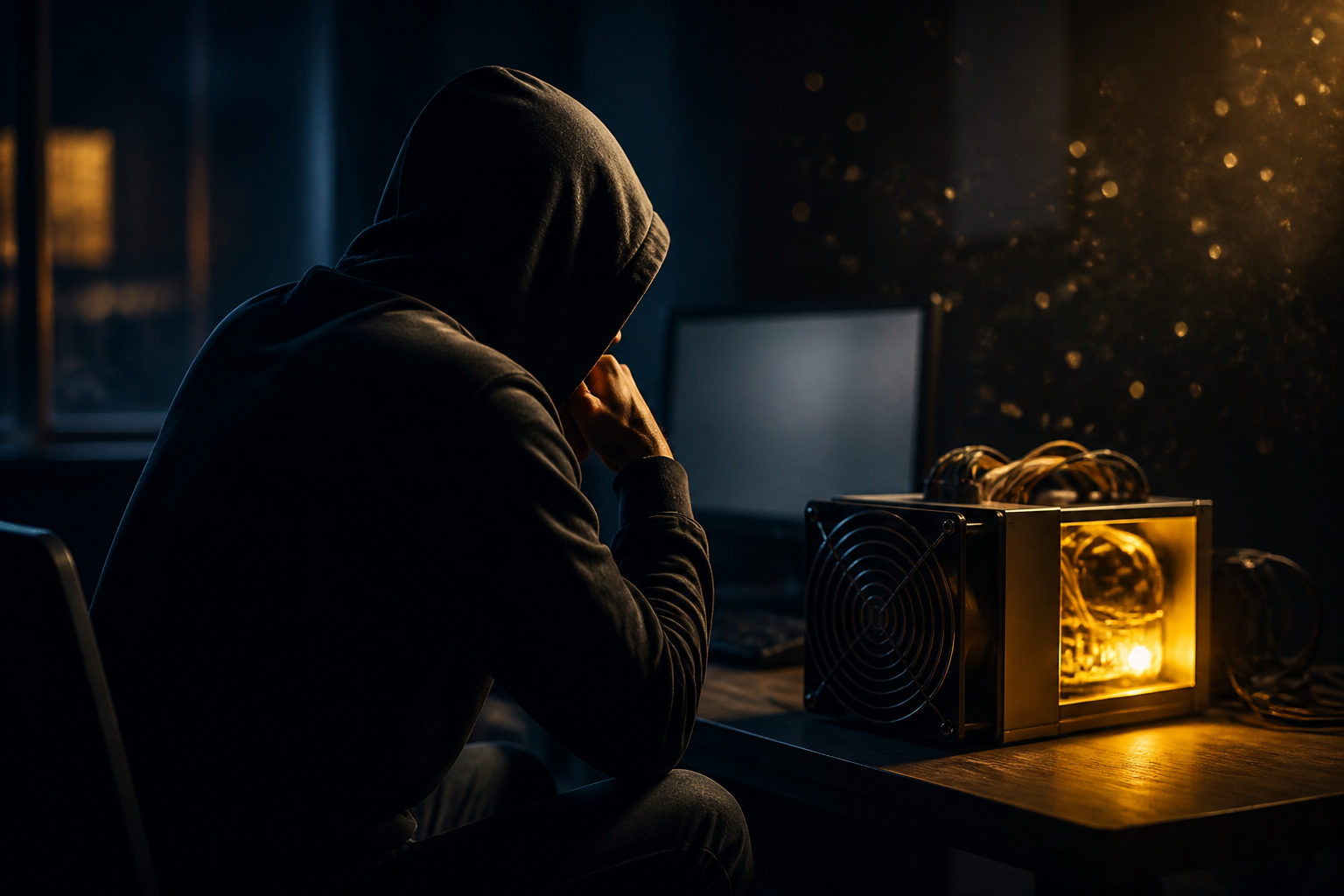
A bitcoin lottery miner usually means a solo miner: someone who enters Bitcoin’s block-finding race alone, keeps the full block reward if successful, and often sees no payout for long periods in between.
Why people call it a “lottery” miner
Bitcoin mining is a competition to add the next block to the chain. Miners keep running calculations, and the miner that finds a valid result first gets the right to publish a block that the network can accept. Because only one block wins each round, and because the outcome depends on probability, a solo miner’s experience can feel a lot like waiting for a rare winning ticket.
The phrase is informal, but it captures the payout pattern well. A miner in a pool usually receives smaller, more regular distributions based on contributed hash power. A lottery miner accepts the opposite profile: very uneven results, a long dry spell, and then the possibility of one full block reward if luck and hash power line up at the right moment.
How the process actually works
To understand a bitcoin lottery miner, start with the basic mining model. Since the genesis block on 2009-01-03, Bitcoin has used proof of work to decide who earns the right to append the next block. Miners are not typing transactions into a spreadsheet by hand. They are searching for a valid hash that satisfies the network’s current difficulty target.
Bitcoin aims to produce a block about every 10 minutes. After the 2024-04-19 halving, the current block subsidy is 3.125 BTC. With roughly 144 blocks per day, the network creates about 450 BTC per day in new issuance. That figure matters because it describes the whole network, not the expected daily output of any one person or company.
The schedule is fixed. The subsidy halves every 210,000 blocks, roughly every 4 years. The halving dates so far were 2012-11-28, 2016-07-09, 2020-05-11, and 2024-04-19, with the next one expected around 2028. Bitcoin also has a hard cap of 21,000,000 BTC, with issuance stretching to about 2140. For a lottery miner, those rules mean the prize exists within a known schedule, while the chance of personally winning a block remains uncertain.
| Network rule | Stable fact | What it means for a lottery miner |
|---|---|---|
| Block interval | About 10 minutes per block | New opportunities keep arriving, but only one block wins each round |
| Current block subsidy | 3.125 BTC | A solo miner that finds a block can claim the current subsidy |
| Halving cycle | Every 210,000 blocks | The base reward declines over time |
| New daily issuance | About 450 BTC across the network | This is a network total, not a personal production rate |
| Total supply cap | 21,000,000 BTC | Issuance is limited and scheduled |
What a lottery miner does in practice
In the strict sense, a lottery miner is running solo. That can mean operating mining hardware, connecting it to a Bitcoin node or a solo setup, configuring payout addresses, and leaving the machine running continuously in hopes of finding a valid block before everyone else does. If that happens, the miner gets the block reward for that block instead of sharing it with a pool.
There is also a looser market use of the term. Some services advertise solo-style products where users chase a full block reward outcome without joining a traditional payout pool. Those products may resemble solo mining at a glance, but the technical setup, custody model, and settlement rules can differ. A reader should treat them as separate arrangements until the exact rules are clear.
The practical workflow usually includes several parts: choosing a wallet for payout, preparing the mining setup, connecting the hardware properly, checking that the software is from a trusted source, and keeping the machine online. None of those steps guarantees a block. They only make participation possible.
| Approach | Payout style | Main trade-off |
|---|---|---|
| Solo mining | Nothing for long stretches, then a full block if successful | Maximum variance |
| Pool mining | Smaller, more regular shares based on contribution | Less upside per hit, less variance |
| Solo-style hosted product | Depends on provider rules | Convenience may come with custody and rule risk |
The real issue is cost, not the dream of one lucky block
Many beginners hear “lottery miner” and imagine a cheap shot at a large reward. That misses how professional Bitcoin mining has become. A solo participant is competing against the entire network for each block, and the network continues moving whether that participant wins or not.
The cost side is easier to understand than the reward side. Hardware has to be bought and maintained. Power keeps getting consumed. Heat has to be handled. Noise can be a serious issue. Downtime matters. Software and system maintenance take time. Those costs can continue while your payout remains at zero for a long period.
This is why network-wide issuance numbers can mislead newcomers. About 450 BTC per day sounds large until you remember that it describes all miners combined. A pool member may see that network total translated into frequent partial payouts. A lottery miner lives on a much choppier path, where the same network total does not turn into a smooth personal revenue line.
That distinction matters more than the label. If your goal is to learn how mining, nodes, and block construction work, solo mining can be a useful hands-on route. If your goal is steadier cash flow, the pool model is built for that purpose.
How to decide whether this approach fits you
Start with your reason for mining. Some people want the educational value of running their own setup and seeing how Bitcoin’s block race works at a low level. Others care mainly about a payout pattern they can plan around. Those are different goals, and they point to different choices.
Then look at your tolerance for waiting. The hardest part of lottery mining is often psychological. The machine may be running correctly, the wallet may be ready, and the network connection may be fine, yet there may still be no payout. That is normal for solo mining. It is not proof that the process is broken.
Security also belongs in the decision. The reward, if it ever arrives, has to land in a wallet you control safely. Seed phrase handling, wallet backups, address checks, and software hygiene all matter. A person can spend a lot of effort chasing a block and still lose funds later through poor wallet practice.
One more point helps frame expectations: Bitcoin’s smallest unit is 1 satoshi, equal to 0.00000001 BTC. That fact does not change the odds of solo mining, but it does explain how Bitcoin can be measured and paid in tiny units once funds do arrive.
FAQ
Does a bitcoin lottery miner simply mean a solo miner?
Most of the time, yes. It is an informal label for a miner who keeps the full upside of a found block and accepts long periods with no payout.
Can one person still find a Bitcoin block alone?
Yes, it is possible. The key point is that possible does not mean predictable, because block discovery depends on probability, your setup, and the level of competition across the network.
Why does pool mining feel so different from lottery mining?
A pool combines the work of many miners and spreads the result according to pool rules. That turns a jagged reward pattern into smaller and more frequent payments, which is why it feels less like waiting for one rare win.
Is the current solo mining reward 3.125 BTC every time?
The current block subsidy is 3.125 BTC after the 2024-04-19 halving, and that subsidy is expected to remain in place until around 2028. A mined block can also include transaction fees, but fees are not fixed in advance.
Do I need my own Bitcoin node to try solo mining?
Running your own node is closer to the native Bitcoin model and gives you more direct control over verification and setup. Some hosted products simplify this, but convenience can reduce your visibility into what is happening under the hood.
What should a beginner learn before trying it?
Learn three things first: how block discovery is probabilistic, why solo mining has extreme variance, and how wallet security works. Those points will shape your decision more than any marketing pitch about hitting a lucky block.
If you want to try it, check wallet backups, power and cooling conditions, software sources, and whether you can accept a long period with no payout before you spend money on a solo setup.
Disclaimer: This article is for informational and educational purposes only and is not investment, financial, or legal advice. Crypto assets are highly volatile and you could lose your entire investment. Do your own research and decide carefully.