
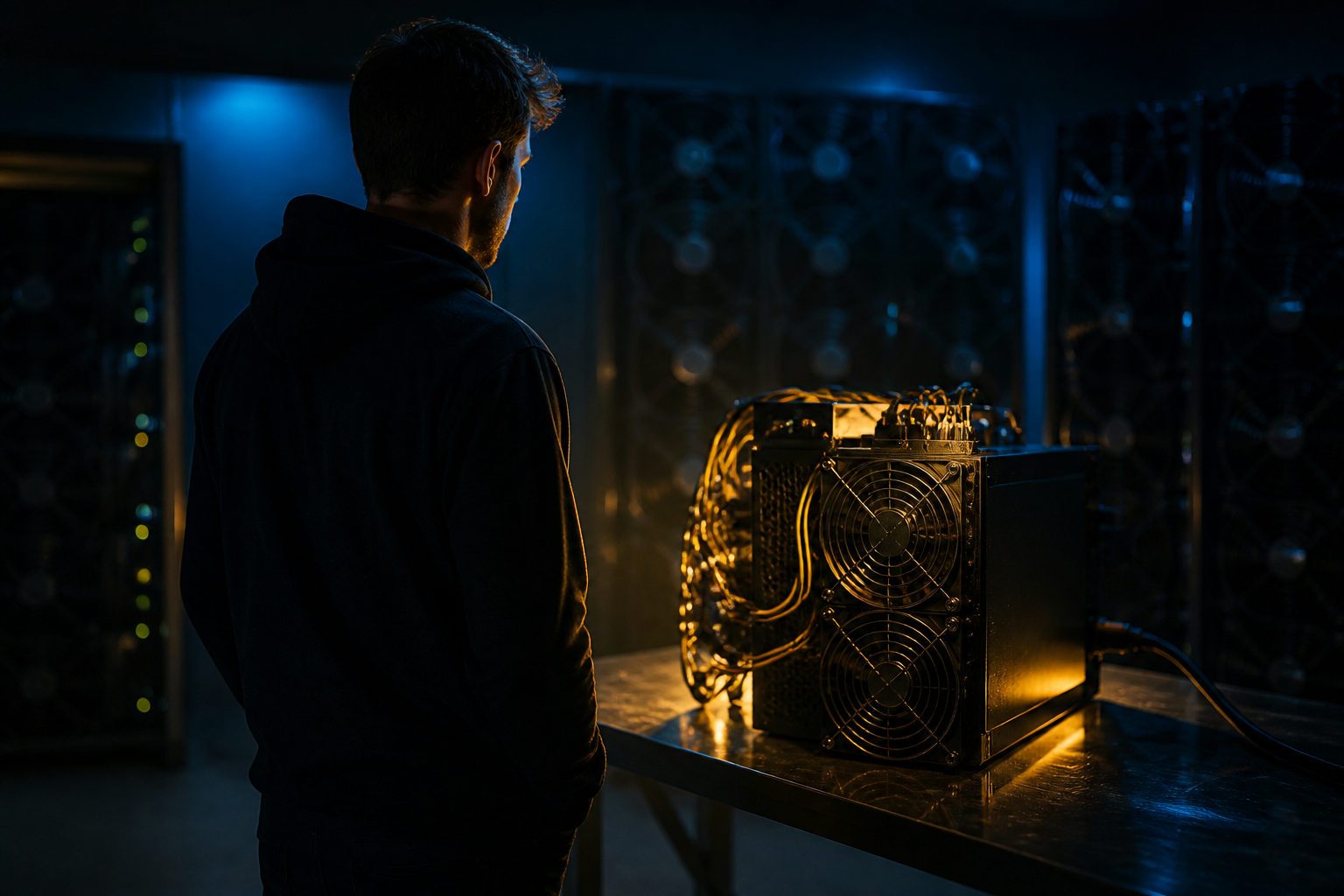
A solo Bitcoin miner can still win a full block reward, but that does not mean the process is random luck. It means one participant solved the block puzzle before everyone else in that round and had the result accepted by the network.
Think of mining as a public bookkeeping contest
Bitcoin mining is easier to understand if you picture the network as a shared ledger that needs a new page added. Miners compete to write that page. The protocol does not pick a winner by status or size; it accepts the first valid block that meets the rules.
That is why mining is tied to proof of work. Miners keep changing block data and hashing it again and again until they find a result that satisfies the current difficulty target. The more participants are competing, the harder it is for any single miner to guess when success will arrive.
How a solo miner can get the whole reward
“Solo” does not mean “disqualified.” A miner who runs their own node, builds their own block template, and submits a valid block can receive the full block reward if their block is the one the network accepts. Bitcoin does not require a miner to belong to a pool before earning the reward.
The reward itself is made up of the block subsidy plus transaction fees included in that block. The network only checks whether the block is valid. It does not give a separate advantage to large farms, even though large farms usually have a better chance of finding blocks more often.
That is also why the news sounds surprising. A solo miner is facing a field dominated by large farms and mining pools, so the odds are usually thin. The possibility is real, but the event is rare enough to stand out when it happens.
Solo mining vs pool mining
Solo mining gives you full upside on the rare block you find, but it also leaves you with long stretches of no payout at all. You are responsible for node uptime, block template updates, hardware stability, and the simple fact that most hashing attempts will not turn into a reward.
Pool mining trades that uncertainty for smoother payouts. Instead of waiting for one complete block reward, participants receive a share of the pool’s earnings. For many miners, that makes budgeting easier and the business side less volatile.
What the cost side looks like in real life
The biggest mistake beginners make is treating mining like a machine that prints money once it is switched on. Electricity, cooling, noise, space, maintenance, and hardware wear all matter. If any of those inputs are too expensive, a theoretical reward can disappear into operating costs.
There is also the issue of network difficulty changing over time. Even if your setup is working, the chances of a solo miner finding a block are hard to predict because competition shifts constantly. That uncertainty is part of the business, not a temporary glitch.
If you want to understand mining before spending anything, start with the basics: a node, a block, proof of work, and difficulty. Once those parts make sense, it becomes clear that miners are competing for the right to record the next page of the ledger, not simply creating coins out of thin air.
FAQ
Can a solo miner really get the entire block reward?
Yes. If a solo miner finds a valid block and the network accepts it, that miner gets the full reward attached to that block.
The catch is probability. In a crowded mining environment, solo success is possible but uncommon.
Why do many miners join pools instead?
Because pools reduce payout volatility. That makes cash flow easier to plan, especially when electricity and hardware costs continue every day.
Pool participation usually means giving up the chance to keep an entire block reward yourself, but many miners prefer the steadier income profile.
What should a beginner learn first?
Start with proof of work, blocks, nodes, and difficulty. Those four ideas explain most of what is happening when miners compete.
Then look at your cost structure before you think about rewards. Mining is a capital-and-energy business first, and a reward event second.
If you are considering participation, decide first whether you want to mine solo or join a pool, then compare that choice against your electricity price, hardware budget, and tolerance for long stretches without payout.
Disclaimer: This article is for informational and educational purposes only and is not investment, financial, or legal advice. Crypto assets are highly volatile and you could lose your entire investment. Do your own research and decide carefully.