
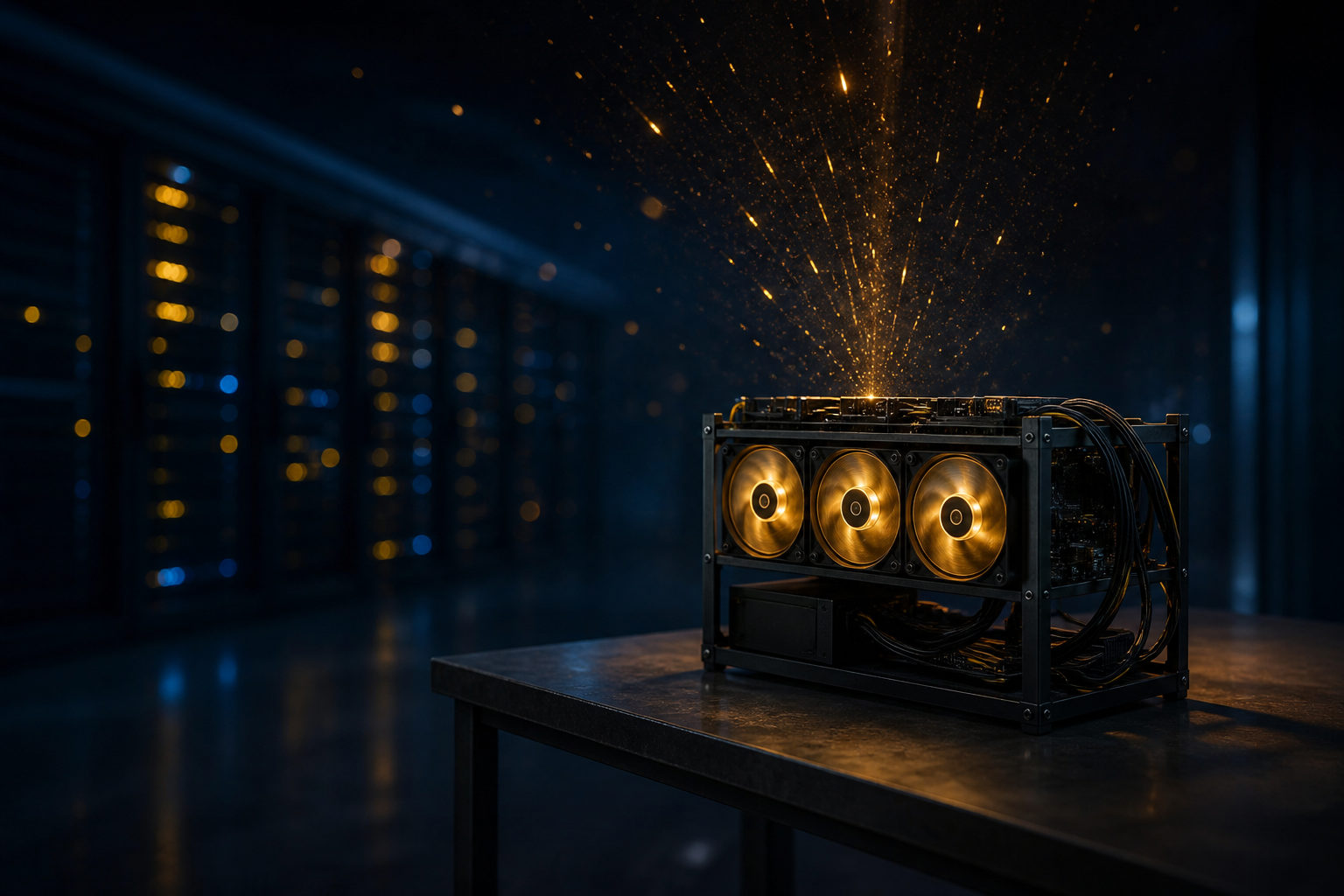
A small Bitcoin miner can win a large block reward, but that does not mean mining is easy. Bitcoin mining is a bookkeeping race: miners repeatedly test solutions, and the first valid one gets the right to add a new block and claim the reward.
What the race actually measures
The simplest way to picture Bitcoin mining is as a nonstop contest to find a valid answer. Every miner is running equipment that keeps trying combinations until one meets the network’s rule set; when that happens first, that miner wins the round.
This is not a popularity contest and it is not a manual approval process. The protocol checks the result automatically, so the outcome depends on computational power, machine efficiency, and chance working together.
Why small miners still have a shot
Mining is not a pure size contest. Even a small setup can win if it finds the correct result before everyone else in that round. The catch is that the chance is random, so over time larger and more efficient setups tend to have the advantage.
That is why “a small miner wins once” is realistic, while “a small miner wins steadily” is a very different claim. A single success can look dramatic from the outside, but the real challenge is covering electricity, hardware, and maintenance over time.
Where the reward comes from
A block reward has two parts: newly issued bitcoin and transaction fees. The first part is built into the protocol, and the second comes from users who want their transactions confirmed.
Bitcoin has a hard cap of 21 million coins, so issuance does not continue forever. As time goes on, the newly issued portion shrinks, which makes fee revenue more important for miners.
| Item | Meaning |
|---|---|
| Block reward | The payout a miner receives for successfully adding a block |
| Transaction fees | Payments attached to transactions waiting for confirmation |
| Supply cap | 21 million coins |
How people usually take part
If you want to understand the mechanics, start with the two main paths: mine on your own or join a pool. Solo mining gives you full independence, but it also demands far more hardware and capital. Pool mining combines many miners’ computing power and then distributes the results by contribution.
For most people, a pool is closer to reality. It smooths out the swings, but the trade-off is that you receive smaller, steadier payouts instead of waiting for a rare windfall.
What to think through before you start
Electricity comes first. Mining runs nonstop, so power costs can erase margins quickly if the rate is high.
Hardware is next. A miner is not a buy-it-once-and-forget-it machine; it heats up, wears down, and needs upkeep.
Then there is the physical setup. Noise, cooling, and space all matter, and mining at home is often more troublesome than people expect.
Why returns look erratic
Bitcoin mining has randomness built into it. A small miner may hit the right answer first in a given round and look very lucky from the outside, but over longer periods the outcome is better explained by the balance between hash power and operating cost.
Halvings also change the business model. They happened in 2012, 2016, 2020, and 2024, and each one reduced the newly issued portion of the reward. That shift puts more pressure on efficiency and fees, especially for older equipment.
FAQ
Can a small miner really win?
Yes. If a small miner finds a valid block first in a given round, it receives the reward. The important caveat is that this is random, so one win does not prove a stable strategy.
Is a mining pool better for beginners?
Usually, yes. A pool combines scattered hash power and gives you smoother results, which is easier to handle if you do not want extreme swings. The trade-off is that payouts are split more finely, and you do not keep the full block reward yourself.
Does mining always make money?
No. Electricity, hardware depreciation, space, and maintenance can all eat into profit, especially when the equipment is not very efficient. Cost comes before revenue if you want a realistic view.
Where should I check the live price?
If you care about payback speed, check a major market page for the live price and then factor in electricity and hardware costs. Without a live price, any return estimate is just a static guess.
If you want to understand Bitcoin mining, treat it as a bookkeeping race first, then evaluate the costs, equipment, and ways to participate. Once the rules are clear, it becomes obvious that a small miner can win, but chance is not the same thing as easy profit.
Disclaimer: This article is for informational and educational purposes only and is not investment, financial, or legal advice. Crypto assets are highly volatile and you could lose your entire investment. Do your own research and decide carefully.