
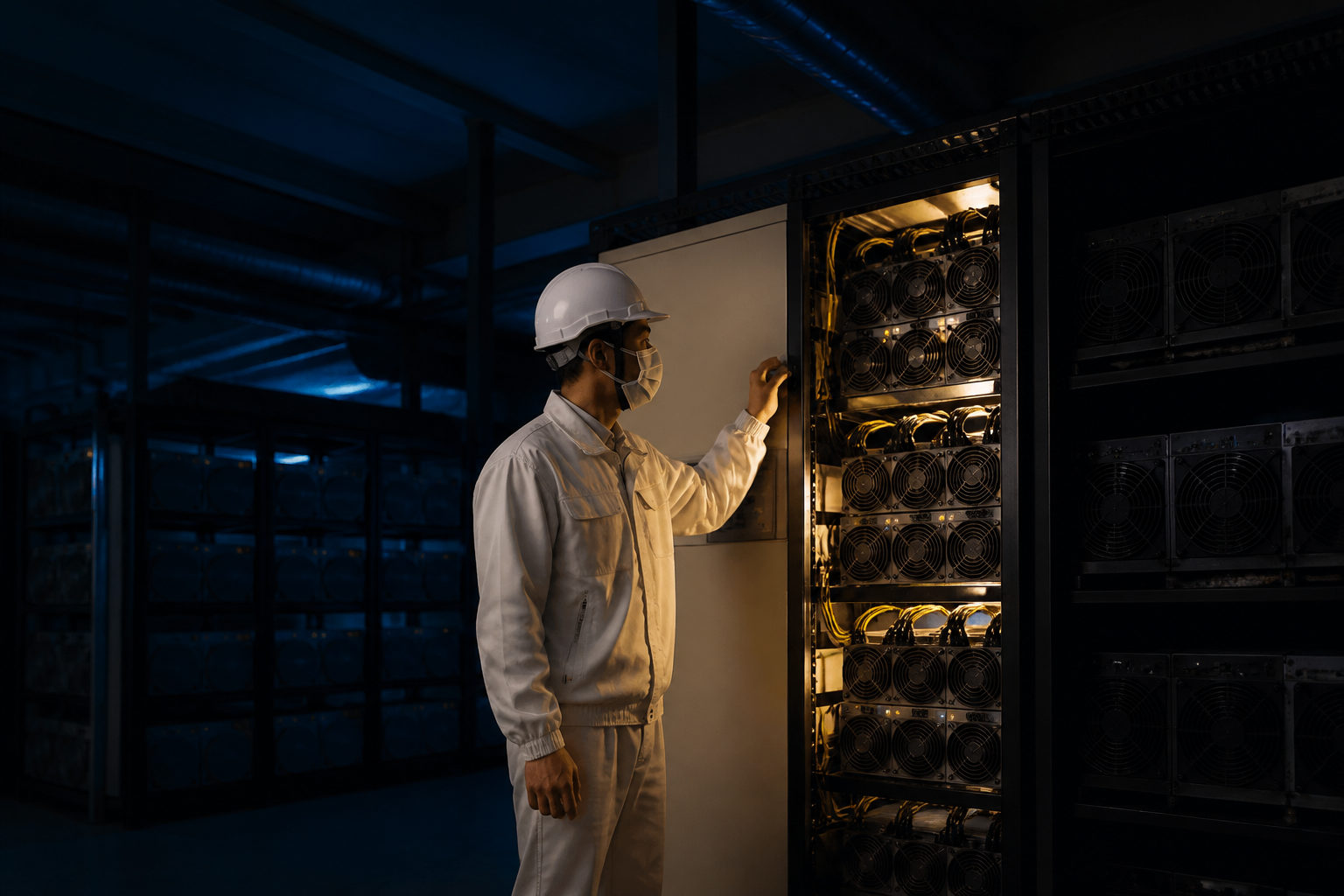
Bitcoin miners increase ROI with energy strategy by treating power as an operating system, not just a utility bill. Better electricity pricing, steadier uptime, and smarter curtailment can matter as much as the mining hardware itself.
Why energy strategy matters so much in Bitcoin mining
A simple way to picture Bitcoin mining is as a nonstop race to win the right to add the next block. Machines do the hashing, but electricity keeps those machines in the race. Once hardware is purchased, the long-term gap between one operator and another often comes from power cost, power quality, and the discipline to shut down when conditions turn bad.
Miners cannot control the broader rules of Bitcoin. The network began with the genesis block in 2009, new blocks arrive about every 10 minutes, and the subsidy halves about every 4 years, or every 210,000 blocks. Those are fixed rules. Energy planning is one of the few areas where an operator can still make active decisions.
That is why ROI in mining is tied to more than the machine's nameplate specs. A miner with stable, well-managed power may keep equipment productive for longer stretches and reduce avoidable failures. A miner with unreliable power may lose time to restarts, overheating, or maintenance, even if the headline electricity rate looked attractive at first.
Energy strategy affects three things at once: operating cost, uptime, and hardware stress. If any one of those gets worse, the economic picture can weaken quickly. Looking only at advertised power price misses the real operating picture.
Main energy strategies miners use
Not all cheap power is good mining power. Miners usually compare energy options by asking four questions: Is the price acceptable, is the supply steady, can the load be adjusted, and does the site support reliable operation?
| Energy approach | Best fit | Main advantage | Main trade-off |
|---|---|---|---|
| Fixed-rate power agreement | Operators who want predictable expenses | Easier budgeting and planning | Less flexibility if conditions improve elsewhere |
| Variable pricing with load scheduling | Teams able to manage runtime by time period | Can avoid expensive power windows | Needs tighter monitoring and execution |
| Interruptible load arrangement | Sites that can ramp down quickly | May lower effective energy cost | Frequent shutdowns can reduce productive time |
| Using stranded or surplus power | Projects near underused energy supply | Can improve power utilization | Connection and operations can be harder |
| On-site generation paired with mining | Operators with strong control over energy assets | More control over power source | Added buildout and maintenance complexity |
Many new miners make the same mistake: they chase the lowest quoted power rate and stop there. That misses the full cost stack. A site with weak ventilation, unstable wiring, poor dust control, or frequent outages may be more expensive in practice than a site with a slightly higher rate and cleaner operations.
Load flexibility is another major piece. Bitcoin mining can be powered down and brought back online more easily than many industrial processes. That feature gives miners room to make timing decisions. If energy becomes expensive during certain periods, or if site temperature rises enough to raise failure risk, reducing load may protect ROI better than forcing every machine to stay online.
How miners can turn energy planning into operating discipline
An energy strategy only helps if it survives contact with the real site. Before a miner commits to a location, hosting provider, or mining project, it helps to review each part of the chain from power source to remote monitoring.
| Step | What to check | Why it matters |
|---|---|---|
| Verify the power source | Continuity of supply and exposure to restrictions | Reduces the chance of repeated forced downtime |
| Review electrical infrastructure | Transformers, wiring, panels, and load matching | Machines need the site to support sustained operation |
| Inspect cooling conditions | Airflow, dust, heat removal, and ambient conditions | Poor cooling raises failures and cleaning needs |
| Set monitoring standards | Offline alerts, power anomalies, remote restart tools | Faster response cuts wasted runtime |
| Define curtailment rules | Who decides when to reduce load or shut down | Prevents confusion during stress events |
| Track operating patterns | Uptime, common faults, maintenance frequency | Shows where ROI is being eroded over time |
For self-operated sites, the first question is not whether the power offer sounds cheap. It is whether the site can run steadily with manageable thermal conditions and fast fault response. For hosted mining, the more useful questions are about billing method, uptime transparency, outage handling, and who has authority to act when machines start failing in batches.
Participation can take several forms. Some miners build and manage their own setup. Some place machines with a hosting provider. Others join a mining project that already has an energy arrangement. Each path changes where the energy strategy lives. Self-operation depends on direct control. Hosting depends on contract clarity and site execution. Project participation depends on whether the operator clearly explains the power source, downtime procedures, and fee structure.
Energy problems that quietly damage mining ROI
The biggest threats are not always dramatic failures. Small operating weaknesses can drain results over time. They show up as lost runtime, more maintenance, and extra uncertainty around planning.
| Problem | Typical sign | Effect on ROI |
|---|---|---|
| Unstable electricity supply | Trips, disconnects, repeated restarts | Lower uptime and more hardware stress |
| Heat and dust buildup | Fan strain and rising error frequency | More maintenance and faster wear |
| Opaque contracts | Unexpected add-on charges or vague responsibility | Actual operating cost becomes harder to manage |
| Poor curtailment discipline | Machines kept on during bad power conditions | Avoidable costs remain in the operation |
| Weak monitoring | Faults discovered late | Minor issues turn into longer downtime |
Power quality also deserves attention. Miners sometimes talk about electricity as if it were only a price input. In practice, consistency matters as well. Hardware running under poor electrical and thermal conditions can fail in clusters, which makes the operation harder to stabilize.
For beginners, a basic but steady setup is often better than a complicated optimization plan that nobody can execute well. Start with transparent terms, workable shutdown rules, and a site that can actually support the machines. Sophisticated energy scheduling only adds value when the team can monitor and act on it consistently.
FAQ
Should miners focus on hardware first or power first?
In many cases, power comes first. Hardware sets the starting point, but electricity cost, uptime, and site conditions decide whether that hardware can perform well over time.
Does the cheapest electricity always produce the best mining ROI?
No. Cheap quoted power can hide downtime, thermal issues, or unclear extra fees. A slightly higher rate at a stable site may lead to a better operating result.
What should I review in a hosting contract from an energy perspective?
Look at pricing method, outage handling, shutdown authority, and visibility into real operating conditions. If those terms are vague, it becomes hard to judge actual performance.
When does curtailment make sense for Bitcoin miners?
It can make sense when electricity becomes too expensive for the period, when temperatures push machines into risky conditions, or when unstable supply may damage equipment. Controlled downtime can be part of protecting ROI.
Can individuals still participate in Bitcoin mining?
Yes, but success depends on more than buying a machine. An individual should assess power availability, heat, noise, maintenance ability, and whether hosting is a better fit than running hardware directly.
If you are comparing Bitcoin mining options, make a checklist before you compare machine models: power source, pricing structure, curtailment rules, cooling conditions, monitoring tools, and fault response. That checklist will usually tell you more about likely ROI than marketing claims about the equipment alone.
Disclaimer: This article is for informational and educational purposes only and is not investment, financial, or legal advice. Crypto assets are highly volatile and you could lose your entire investment. Do your own research and decide carefully.