
For most beginners in 2026, bitcoin mining is only profitable if hardware efficiency, electricity costs, uptime, and hosting terms line up well enough to cover ongoing expenses.
A lot of new users picture bitcoin mining as a simple process where a machine runs and coins appear over time. A better way to think about it is a nonstop bookkeeping contest. Miners compete to help confirm transactions and add the next block to the chain. The rules are public, the competition is open, and the result depends less on wishful thinking than on whether your setup can survive that contest day after day.
Bitcoin mining is a race to write the next block
The Bitcoin network produces a new block about every 10 minutes. Miners do not create bitcoin out of thin air by pressing a button. They perform computations under the proof-of-work system, and the miner that finds a valid block first gets the right to add it to the blockchain and receive the block reward plus transaction fees.
This system has been running since the genesis block in January 2009. Bitcoin itself was introduced in the 2008 white paper, Bitcoin: A Peer-to-Peer Electronic Cash System, published under the name Satoshi Nakamoto, whose identity remains unknown. That background matters because it explains what miners are really paid for: not for owning a machine, but for contributing security and block production to the network.
For a beginner, this means mining is not just a technical hobby. It is closer to a capital-intensive operating activity. If your machine is inefficient, your power is expensive, your cooling is weak, or your unit goes offline too often, the economics can fail even if your dashboard says the miner is still running.
Why beginners face a tough reality in 2026
The basic idea of mining is easy to explain. The practical side is much harsher. Bitcoin mining has matured into a highly competitive field, and that changes the answer to the question of beginner profitability. The issue is not whether mining works. It does. The issue is whether a new entrant can compete under real-world conditions.
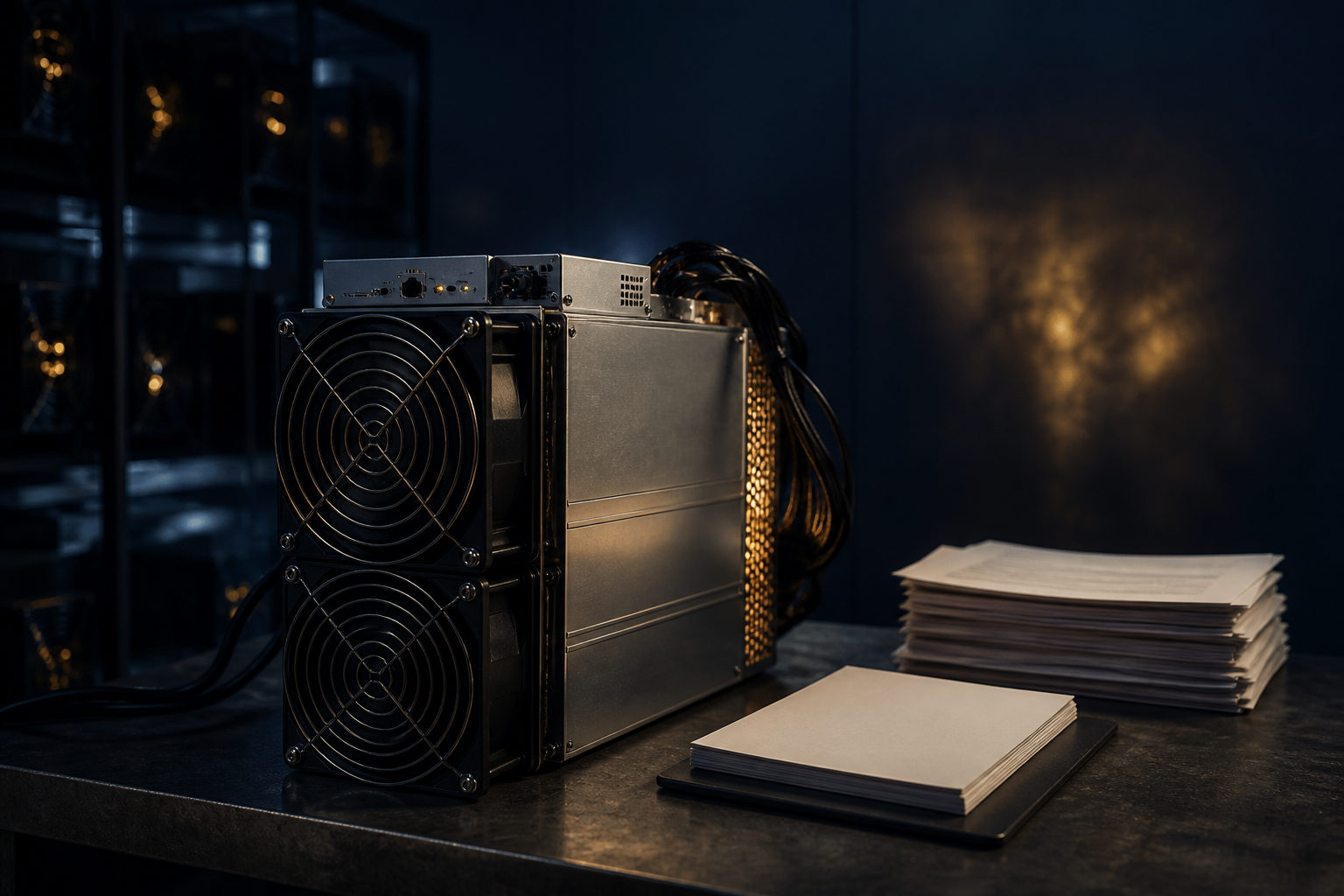
The first obstacle is hardware. Bitcoin mining today is centered on specialized ASIC miners, not ordinary home computers and not general-purpose gaming machines. A beginner who enters with the wrong equipment is not just slightly behind. That person starts from a weak position and stays there.
The second obstacle is electricity. Power cost is usually one of the most important recurring expenses in bitcoin mining. Even without using any revenue figures, one point is clear: the same miner can make sense in one electricity environment and fail in another. Heat management, ventilation, circuit limits, and power stability all shape the real cost of operation.
The third obstacle is uptime. A miner that looks good on paper can still underperform badly if it suffers frequent outages, overheating, fan issues, networking problems, or delayed maintenance. Mining economics are sensitive to downtime because the machine only earns while it is hashing. A beginner often underestimates that. Buying hardware is easy. Keeping it running well is not.
The fourth obstacle is the payback cycle. New miners often focus on output and forget that costs begin before the machine produces anything useful. You may have equipment costs, shipping, setup work, hosting deposits, repairs, and replacement parts. Profitability depends on whether future mining can cover those expenses, and that is never guaranteed.
Common ways beginners participate in bitcoin mining
Not every beginner enters mining the same way. Some buy hardware. Some use hosting. Some join pools. Some look at cloud mining offers. These options can sound similar from the outside, but they carry very different risks and levels of control.
Running your own miner at home
This is the most direct path. You buy the machine, connect it to a mining pool, configure your wallet, and manage the setup yourself. The advantage is visibility and control. The downside is practical: noise, heat, power requirements, and space constraints can make home mining uncomfortable or unrealistic for long periods.
Many home environments are simply not built for a machine that runs continuously under heavy load. So the real question is not whether a unit can be powered on. It is whether your location can support stable operation over time.
Using a hosting facility
Hosting means placing your miner in a site that is designed for mining, with power, cooling, network access, and routine support handled by the operator. For beginners, that can reduce the burden of day-to-day maintenance. At the same time, it creates a trust problem.
You need clear terms around billing, downtime, repairs, machine access, and withdrawal of equipment. If those terms are vague, the beginner may discover too late that the service looked simple only because the difficult parts were hidden inside the contract.
Joining a mining pool
Most individual miners join a pool because solo mining has very uneven outcomes. In a pool, many miners combine their hash power and receive payouts based on contribution. That does not change the total economics of mining, but it can smooth out the timing of rewards.
For a beginner, a pool is not a magic profit tool. It is an organizational method that reduces variance. Pool fees, payout rules, dashboard clarity, and support quality still matter.
Buying cloud mining or managed hash power
This option often attracts beginners because it looks hands-off. No hardware at home, no heat, no repairs. That convenience is exactly why caution matters. If you do not control the machine, it is harder to verify that the promised hash power is real, that costs are presented clearly, or that the business model makes sense.
Some services may be legitimate. Others may rely on aggressive marketing, confusing fee structures, or unrealistic expectations. If a service presents bitcoin mining as easy, steady, and almost passive, that is a reason to slow down, not speed up.
What actually determines profitability
If you strip away hype, beginner profitability in bitcoin mining comes down to a short list of variables. A new miner should review each one before spending money.
- Hardware efficiency: Better machines are positioned more strongly in the block-finding competition.
- Electricity cost: Mining economics are heavily shaped by the price and stability of power.
- Cooling and physical environment: Heat, dust, airflow, and circuit capacity affect both uptime and equipment health.
- Operations and maintenance: A miner that is often offline can fail economically even if the machine itself is capable.
- Pool or hosting terms: Fees, payout methods, transparency, and support quality change the real user outcome.
- Bitcoin market price: Without a live market price, you cannot estimate the fiat value of mined bitcoin at any given moment.
- Network competition: If more efficient miners join the network, your share of the reward pool can shrink.
- Capital discipline: Mining is poorly suited to someone who needs fast, predictable payback.
There is another structural factor beginners should understand: the halving. Bitcoin’s block subsidy is reduced about every 4 years, or every 210,000 blocks. Halving years have included 2012, 2016, 2020, and 2024. That does not tell you whether mining will be profitable for you, but it does explain why cost control and machine efficiency matter so much over time.
Beginners should also understand units. Bitcoin can be divided into very small amounts, and the smallest unit is 1 satoshi, equal to one hundred millionth of 1 BTC. That matters because mining payouts, especially through pools, are often credited in small fractions rather than whole coins.
What a beginner should check before getting started
If you are seriously considering bitcoin mining, do not start with the question of how much money you might make. Start with the question of whether your setup is even viable. That approach filters out a lot of bad decisions early.
- Confirm the hardware type: Make sure you are looking at actual bitcoin mining equipment rather than general-purpose hardware that cannot compete effectively.
- Check your power situation: Review not only electricity pricing but also circuit support, airflow, noise tolerance, and cooling capacity.
- Read hosting terms carefully: If a third party will run the machine, check billing items, downtime handling, repair responsibility, and equipment return procedures.
- Set up wallet security first: Know where mining payouts go and how you will protect access. Wallet mistakes can erase the value of good operations.
- Plan your exit: If mining stops making sense, how easily can you remove, resell, or repurpose the machine? Exit costs are part of mining economics too.
That last point is easy to ignore. Many beginners think only about getting in. The harder question is how to get out if conditions change. A machine may lose resale appeal, a hosting relationship can turn sour, and operating stress can become more annoying than expected. Profitability is not just about entry. It is also about having a realistic off-ramp.
FAQ
Can a complete beginner still start bitcoin mining in 2026?
Yes, a beginner can still start, but that does not mean it will be financially sensible. The better first step is to learn how miners, pools, wallets, and operating costs fit together before buying equipment.
Is home bitcoin mining realistic for beginners?
It can be, but only in the right environment. Power limits, heat, noise, ventilation, and stable internet access all matter, and many homes are not ideal for continuous mining use.
Does buying a miner mean you will make money?
No. A miner is only one part of the equation. Electricity, downtime, maintenance, fees, and market conditions all shape whether the operation has any chance of making economic sense.
Is cloud mining a good beginner option?
It may look simpler, but it often requires more skepticism, not less. Since you do not control the hardware directly, it is harder to verify what you are really paying for.
Where should I check the live bitcoin price before evaluating mining?
You can check major market data platforms or large trading services that publish real-time spot prices. Price is only one input, though, so it should be reviewed alongside power costs, downtime risk, and service fees.
If you want exposure to the Bitcoin ecosystem, it often makes more sense to first learn wallet security, pool payouts, and cost accounting than to rush into buying mining hardware. Only after your power setup, machine source, hosting terms, and exit plan are clear should you decide whether mining is worth attempting.
Disclaimer: This article is for informational and educational purposes only and is not investment, financial, or legal advice. Crypto assets are highly volatile and you could lose your entire investment. Do your own research and decide carefully.