
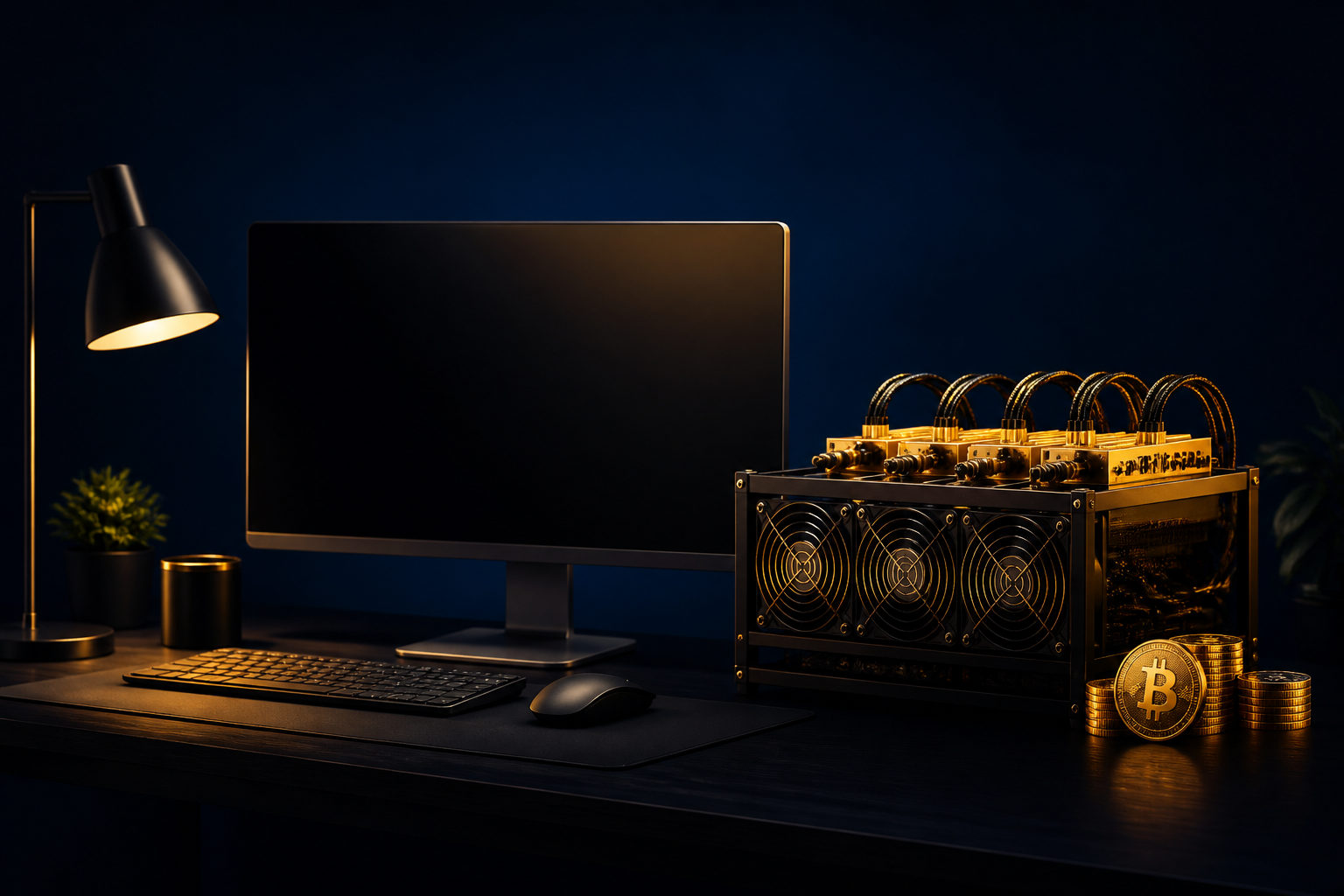
How to set up a computer to mine bitcoins starts with a simple truth: you do not begin with software. You begin by understanding the mining process, then set up a wallet, hardware, pool access, and system settings in that order.
What your computer is actually doing
A useful way to picture Bitcoin mining is a nonstop bookkeeping race. Many machines try to verify transactions and package a new block, and the one that finds a valid result first gets the chance to add that block to the chain.
Mining is not about creating coins by magic. It is a competitive computing process tied to network security. Bitcoin began with the genesis block in January 2009, has a maximum supply of 21 million coins, produces a block about every 10 minutes, and goes through a halving about every 4 years, or every 210,000 blocks. Halving years include 2012, 2016, 2020, and 2024.
That is why the question of how to set up a computer to mine bitcoins has changed over time. For most people today, the real issue is less about whether a computer can run mining software and more about whether that setup makes practical sense.
What you need before setup
Decide why you want to do it
If your goal is to learn how Bitcoin mining works, an existing computer can be enough for a basic test. If your goal is long-term participation, you need to accept that a regular home computer and specialized mining hardware do not compete on equal terms.
Prepare a Bitcoin wallet
You need a wallet address before you point any machine toward mining activity. That address is where payouts from a pool, or any mining-related proceeds, would be sent. A software wallet may be enough for learning, while some people prefer a hardware wallet for storage. In either case, backup comes first.
Check hardware, cooling, and power
New miners often focus on software and ignore the physical side. A computer under sustained load creates heat, noise, and power strain. Cooling, airflow, fan condition, and power supply stability all matter. A machine that stays cool and stable is easier to manage than one that keeps throttling or crashing.
Use a stable internet connection
Mining is not a one-time offline task. Your system needs to stay in contact with a pool or node, send work, and receive updates. Poor connectivity can reduce the value of your participation even if the computer itself is running fine.
How to set up a computer to mine bitcoins step by step
If you want a practical answer to how to set up a computer to mine bitcoins, keep the sequence simple. Do one layer at a time so problems are easier to spot.
- Choose a mining approach. Most beginners look at mining pools first. Solo mining depends much more on your own computing power, while a pool combines the work of many participants and distributes results according to its rules.
- Create and test your wallet. Make sure you can access it, back it up, and store important recovery information safely before moving on.
- Install compatible mining software. Not every mining program works with every system. Check support for your operating system and hardware before installation.
- Enter pool or node settings. This usually includes a server address, worker name or account details, and your wallet address. Small errors here can lead to wasted time.
- Start with conservative performance settings. Fan behavior, power limits, and frequency adjustments should be handled carefully. Stability matters more than pushing the system hard on day one.
- Monitor the first runs closely. Watch for disconnects, heat buildup, error messages, and system lag. Do not assume a launch without an error box means the setup is healthy.
Many guides make the software step sound like the whole job. It is not. Ongoing maintenance is where many beginners get frustrated: driver conflicts, security tools blocking mining software, rising temperatures, or a machine becoming annoying to use for anything else.
Why a normal computer is often a poor fit for Bitcoin mining
In theory, if a machine can run the required program, it can take part in the process. In practice, Bitcoin mining is now highly specialized. A standard desktop or laptop may help you understand the workflow, but that does not mean it is well suited for sustained mining on the main network.
- The competition is intense. You are not just up against casual users. You are competing with purpose-built systems that run continuously.
- Heat and wear add up. Long periods of heavy load can stress fans, power delivery, and internal components.
- There is an opportunity cost. A computer tied up with mining is less pleasant to use for work, gaming, editing, or routine tasks.
- Maintenance is ongoing. Dust, thermal issues, unstable drivers, and network interruptions all affect the experience.
So when people ask how to set up a computer to mine bitcoins, the better version of the question is this: am I learning the process, or am I trying to run a realistic long-term setup? Those are very different goals.
Costs matter more than the install screen
A setup can be technically correct and still make little sense. Mining-related costs usually come from electricity, hardware wear, cooling needs, network reliability, and the time you spend managing the system.
Electricity is often the first reality check, but not the only one. Constant operation can increase room heat, fan noise, and hardware aging. A successful test run only shows that the software started. It does not prove the setup is efficient, comfortable, or worth keeping online.
That is why a cautious first test is better than a rushed full-time launch. It gives you a chance to see whether the machine stays stable and whether the trade-offs are acceptable in your own situation.
FAQ
Can I mine Bitcoin with a home desktop computer?
You can use a home desktop to learn the setup process and see how wallets, pools, and mining software fit together. For long-term Bitcoin mining on the main network, though, a typical desktop usually lacks a real efficiency edge.
Is a laptop a good choice for mining?
Usually no. Laptops have tighter cooling limits, and sustained heavy workloads can lead to heat, throttling, noise, and faster component wear.
What is the difference between pool mining and solo mining?
A mining pool combines the work of many participants and shares results based on its own rules. Solo mining depends far more on your own machine, which makes it harder for a typical user to treat it as a practical route.
Do I need to watch the computer all the time after setup?
Not all the time, but you should watch it closely at the beginning. Early checks should focus on temperature, connection stability, system errors, and wallet address accuracy.
Can I try mining software before upgrading hardware?
Yes, and that is often the safest way to learn. Just treat it as a controlled test, not proof that your current computer is a good long-term Bitcoin mining machine.
If you want to try this yourself, the safest next move is to back up your wallet first, run a short test on your existing computer, and judge the setup by stability, heat, noise, and power demands before you commit more time or money.
Disclaimer: This article is for informational and educational purposes only and is not investment, financial, or legal advice. Crypto assets are highly volatile and you could lose your entire investment. Do your own research and decide carefully.