
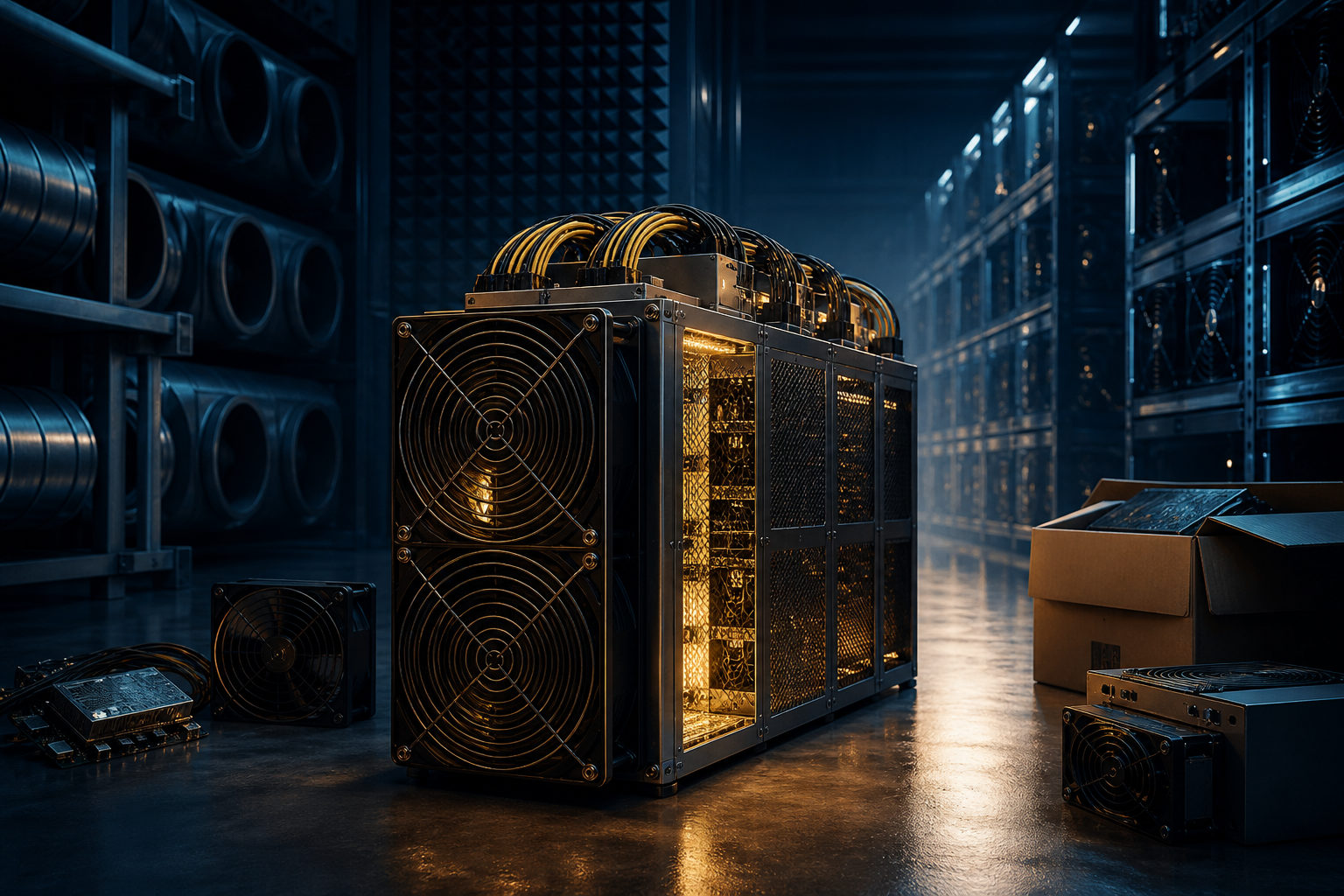
In 2026, bitcoin mining with free electricity may still fail to make money. Free power removes one major expense, but hardware cost, machine efficiency, cooling, noise, repairs, downtime, and mining difficulty still decide whether any profit is left.
Think of mining as a nonstop race to write the next page of a public ledger
A simple way to understand bitcoin mining is to picture a global bookkeeping contest. The Bitcoin network is a public ledger, and miners compete to package transactions into a new block by following the network rules. The winner gets the right to add that block and may receive the block reward plus transaction fees.
Everyone else still spent resources trying. That is why mining is not a basic production business where you turn on a machine and get a fixed output every day. Bitcoin produces a new block about every 10 minutes, and the issuance schedule is set by code rather than by a company or government. The block subsidy also gets cut in half about every 4 years, or every 210,000 blocks, which means miners operate in a business where revenue conditions change over time even when their own setup stays the same.
So when people ask whether bitcoin mining is profitable with free electricity in 2026, the real question is narrower and more useful: if one operating cost drops to zero, do the other costs and risks still leave room for profit?
Why free electricity does not guarantee profit
Hardware still has to be paid for
The first mistake many newcomers make is treating electricity as the whole story. It is a big part of the mining equation, but the mining machine itself is often the largest upfront commitment. A newer machine, an older model, and a heavily used secondhand unit can all mine bitcoin, but they do not perform the same way. Efficiency, reliability, remaining lifespan, and maintenance needs can differ a lot.
If you overpay for hardware, free electricity will not fix that mistake. It may reduce the damage, but it cannot turn a weak buying decision into a strong mining business. In practice, many miners lose their edge because they entered at the wrong hardware cycle, not because they paid too much for power alone.
Competition does not stop just because your power is free
Bitcoin mining income depends on how much effective hashpower you contribute relative to the rest of the network. If stronger machines keep coming online elsewhere, your share of the opportunity can shrink even if your own rig runs all day without interruption.
This is one of the biggest reality checks for people attracted by free electricity. You may have an advantage on one line of the cost sheet, but the network rules are the same for everyone. If your machine is less efficient than what serious operators are using, your free electricity can be offset by weak competitiveness.
Cooling, airflow, and noise are business issues, not side notes
Mining hardware runs under heavy load for long periods. That means heat, fan noise, dust buildup, and a constant need for decent airflow. A place with free electricity is not automatically a good mining location. If the room traps heat, if ventilation is poor, or if the noise creates conflict with neighbors, landlords, family members, or facility managers, operations can become unstable very quickly.
Even without an electricity bill, poor environmental conditions can force machines to throttle, shut down, or fail earlier than expected. In that case, the hidden cost is not power. It is lost uptime and a shorter useful life for the hardware.
Maintenance and downtime can erase the power advantage
Mining is partly a hardware maintenance business. Fans wear down. Power supplies fail. Control boards can develop issues. Dust can clog airflow paths. Network interruptions can knock machines offline. Each problem may look small on its own, but together they decide whether your setup runs smoothly or turns into a chain of service interruptions.
That matters because a machine that is down is not competing. It does not matter that the electricity would have been free during the downtime. The opportunity was still lost. Small operators often underestimate this point because they focus on the headline cost they saved, not the operational discipline they still need.
Free electricity may not stay free in practice
The phrase “free electricity” covers many different situations. Maybe you have access to a workplace, a dorm, a warehouse, a family property, or a special arrangement with a site owner. Those conditions are not equal. Some are stable. Some can disappear without warning. Some allow only light use, not continuous heavy industrial-style operation.
If the power source is informal, temporary, or dependent on someone else’s tolerance, then the mining plan may be fragile from the start. A setup that must be moved on short notice or switched off whenever complaints appear is not operating from a strong foundation.
How to judge whether mining is worth it in 2026
If you want a useful answer, do not ask whether bitcoin mining with free electricity is profitable in general. Ask whether your exact setup can stay competitive, stay online, and stay manageable. That framing is much closer to how mining works in the real world.
Start with the source of the free electricity
You need to know whether the power access is stable, permitted, and suitable for round-the-clock hardware use. Many people treat free electricity as a permanent edge when it is really a temporary convenience. If the arrangement can end at any time, then your mining plan has a built-in expiration risk.
It is also worth checking the physical side of the setup. Can the wiring handle sustained load? Is ventilation available? Will noise become a problem? Is internet access reliable enough to keep machines connected? A weak answer to any of these can be more damaging than a standard electricity bill.
Then evaluate whether your hardware can still compete
The question is not simply whether a machine can mine. The question is whether it can mine efficiently enough to justify its purchase price, upkeep, and the hassle of operating it. An older machine may still run with free electricity, but that does not mean it deserves more time, more repairs, or more space.
A stronger model may cost more upfront yet hold up better when network competition tightens. That does not mean everyone should buy the newest unit available. It means the hardware decision should be based on total operating quality, not just on the idea that free power makes every machine worthwhile.
Write out the exit plan before you begin
Many people calculate possible coin output and stop there. A better approach is to ask what happens if the site stops allowing mining, if the machine starts failing, or if you simply decide the effort is not worth it. Can you resell the hardware? Can you move it somewhere else? Can you handle repair logistics? Do you know how you will secure any bitcoin you mine?
If those questions do not have clear answers, then the business model is not complete yet. Mining is not just about starting. It is also about what happens when conditions change.
Different ways to participate come with very different risks
Running your own machine on site
This gives you the most direct control. You can see the machine, monitor its condition, and respond quickly when something goes wrong. But it also means the heat, noise, wiring, and maintenance are your responsibility. If the location is not suited for high-load equipment, free electricity will not make it suitable.
Hosting with a third party
Hosting can reduce day-to-day maintenance on your side, but it adds dependence on the host. You need clarity on machine deployment, repair response, uptime handling, fee structure, and coin withdrawal procedures. A host with poor execution can wipe out the benefit of low-cost or free power through delays and service issues.
Cloud mining or contract-based products
These options look easy because you do not have to deal with physical machines. They also create the biggest transparency problem. You usually cannot inspect the hardware, verify operating conditions, or confirm how the provider measures output. If terms are vague, settlement rules are hard to follow, or early termination conditions are one-sided, caution is justified.
For most beginners, learning how real mining hardware behaves is more useful than chasing the easiest-looking product. If you do not understand the machine, the site conditions, and the maintenance demands, it is hard to judge whether any offer is fair.
FAQ
Does free electricity mean bitcoin mining will be profitable?
No. Free electricity improves one part of the cost structure, but it does not remove hardware costs, repairs, cooling needs, hosting charges, or downtime risk. A weak machine can still underperform even when power costs nothing.
Can I mine bitcoin at home if I do not pay for electricity?
Only if the location can handle the load, airflow, heat, and noise. Mining machines are not like ordinary home electronics, and a home setup can become impractical very quickly even before profit is considered.
Is bitcoin mining still worth considering for beginners in 2026?
It can be worth studying, but free electricity alone is not a strong enough reason to start. A beginner should first understand hardware quality, maintenance demands, site limits, and how to exit if the setup stops making sense.
Should mined bitcoin be sold right away?
That depends on your cash flow needs and your tolerance for price swings. Selling sooner can help cover operating expenses, while holding exposes you to market risk after the coins are mined.
Where should I check the bitcoin price before deciding whether to keep mining?
You can track the live bitcoin price on major market data platforms or large exchanges. Price matters, but it should be reviewed together with machine uptime, repair frequency, and your full operating costs rather than in isolation.
If you are seriously evaluating bitcoin mining with free electricity in 2026, make a plain checklist before spending anything: hardware condition, cooling plan, noise tolerance, uptime risk, maintenance responsibility, power stability, and how you would stop or exit the setup. If those answers are weak, free electricity by itself is not enough.
Disclaimer: This article is for informational and educational purposes only and is not investment, financial, or legal advice. Crypto assets are highly volatile and you could lose your entire investment. Do your own research and decide carefully.