
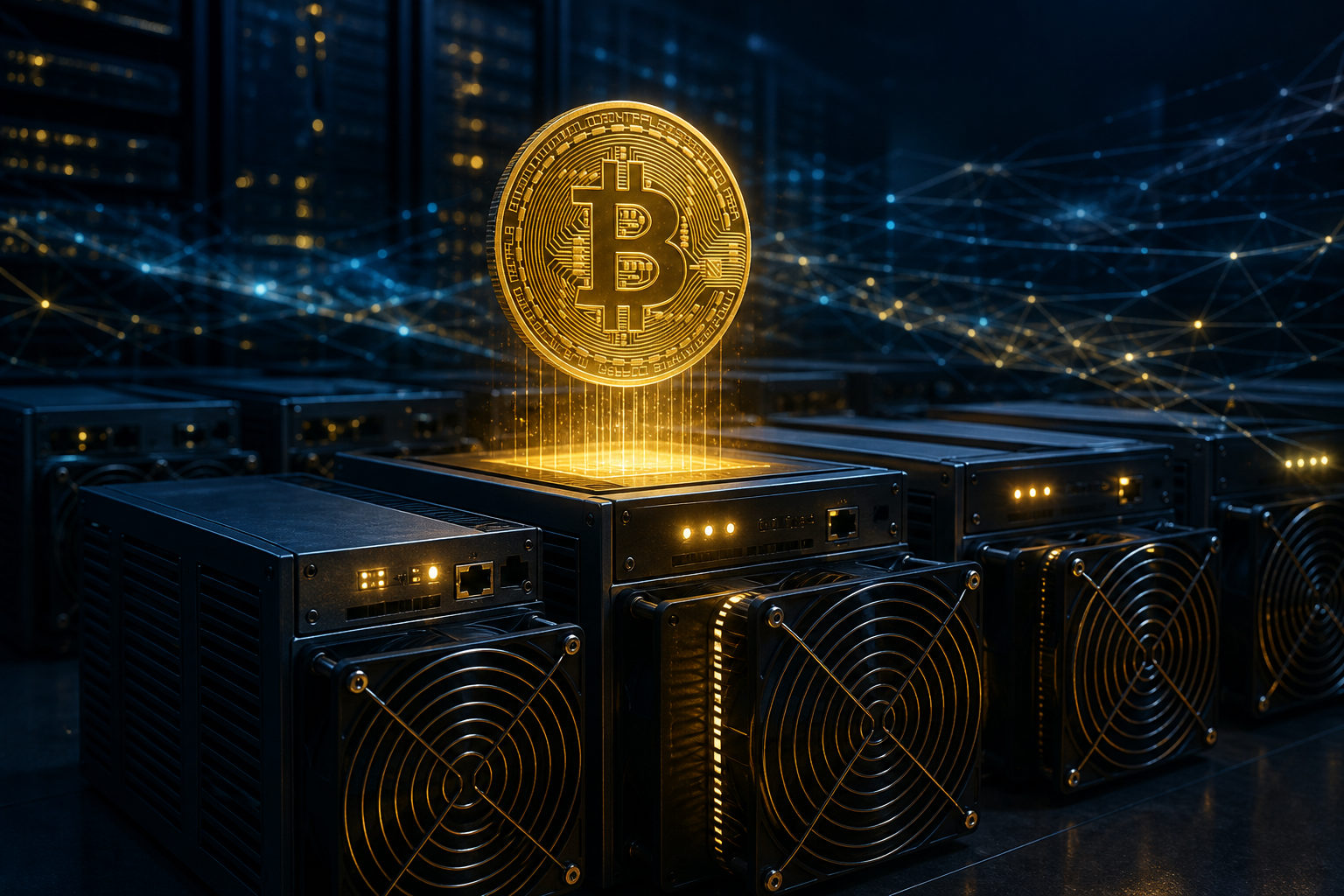
Yes, bitcoins are mined, but the phrase is metaphorical. Bitcoin mining means computers compete to add new blocks to the blockchain, and the winner earns newly issued bitcoin plus transaction fees.
Why people say bitcoins are mined
The term “mining” sounds physical, which is why it confuses many beginners. In the real world, mining gold takes equipment, energy, time, and money. Bitcoin mining also demands hardware, electricity, setup, and ongoing maintenance, so the comparison stuck.
Still, bitcoin is not hidden somewhere waiting to be dug up. New BTC enters circulation through the rules of the network when a valid block is created. That distinction matters. Gold is extracted from nature; bitcoin is issued by protocol.
Bitcoin mining is really a bookkeeping contest
A simple way to picture the system is to think of Bitcoin as a public ledger with no central manager. People broadcast transactions across the network, and those transactions need to be checked, grouped, and added to the chain in the right order. Since no single bank or company gets to decide who writes the next page, Bitcoin uses open competition.
Miners collect pending transactions and build a candidate block. They then run repeated hash calculations under the proof-of-work system, trying to find a result that meets the network’s current difficulty requirement. The first miner to produce a valid result wins the right to add that block.
The network produces a block about every 10 minutes. If more computing power joins the system, Bitcoin adjusts the difficulty so blocks do not appear too quickly. That is a core part of the design because it keeps issuance more predictable and makes the network harder to manipulate.
After a miner finds a valid block, other nodes verify it. They check whether the transactions follow the rules and whether the block fits the chain correctly. If the block passes validation, it is accepted, and the miner receives the block reward and the fees included in that block.
Where new bitcoin comes from
When people ask whether bitcoin can be mined, they are often really asking where new coins come from. The answer is the block reward. Bitcoin has a built-in supply schedule, and newly issued BTC is released to miners when they add valid blocks.
That does not mean the supply grows without limit. Bitcoin has a hard cap of 21 million coins. The reward for each new block also falls over time through an event known as the halving. Roughly every 4 years, or every 210,000 blocks, the block subsidy is cut in half. The halving years so far are 2012, 2016, 2020, and 2024.
This is why the answer to “are bitcoins mined” is yes, but only with context. Bitcoin is mined in the sense that new BTC is issued through mining. It is not mined in the sense of pulling pre-existing coins out of a physical deposit.
Can ordinary people mine bitcoin today?
In principle, anyone can try. In practice, bitcoin mining has become highly specialized. Early in Bitcoin’s history, people could experiment with general-purpose computers. That is no longer how serious mining is done. Today, miners usually rely on dedicated ASIC hardware, stable power, cooling, and constant monitoring.
This is where many beginners get the topic wrong. They focus on whether mining is possible, not whether it is practical. Hardware costs are only one part of the picture. Electricity, heat, noise, downtime, repairs, hosting, security, and configuration all affect the real experience.
Mining is also competitive by design. A single operator mining alone may wait a long time for a successful block, which is why many participants join mining pools. In a pool, miners combine computing power and share rewards according to the pool’s rules. That does not change Bitcoin’s total supply or issuance schedule, but it does change how rewards are received.
For many people, buying bitcoin is simpler than mining it. Mining is closer to running equipment than clicking a button in an app. If your goal is just to gain exposure to bitcoin, learning about wallets, private keys, and self-custody may be more useful than starting with machines.
What you need before considering mining
If you are thinking about mining, it helps to treat it as an operating setup rather than a casual side activity. Several factors matter at the same time.
- Hardware: Bitcoin mining usually requires specialized ASIC miners rather than standard consumer computers.
- Electricity: Power cost and reliability shape the economics and day-to-day stability of a mining setup.
- Cooling and space: Mining equipment produces heat and noise, so location matters.
- Technical management: You need to handle configuration, network connectivity, monitoring, and troubleshooting.
- Security: Wallet setup, payout controls, and account protection are basic requirements.
- Local rules: Electricity use, taxation, and hosting conditions vary by jurisdiction, so miners need to check what applies to them.
Ignoring any one of these can turn a simple idea into a difficult project. Mining is not just about finding a machine. It is about keeping a system running under real-world constraints.
Mining bitcoin vs buying bitcoin
Both paths can result in owning BTC, but they involve very different risks. Buying bitcoin means getting coins already in circulation through a market. The main concerns are purchase method, storage, custody, and execution. Mining means funding infrastructure to compete for newly issued bitcoin and transaction fees.
That difference is easy to miss. Buying is mostly an asset decision. Mining is partly a business and operations decision. One path asks how you will store bitcoin safely. The other asks whether you can manage hardware, power, uptime, and cost pressure over time.
That is why the question should not only be “can bitcoin be mined.” A better question is whether mining fits your resources, technical comfort, and goals. For many readers, understanding mining is valuable even if they never do it themselves, because mining explains how Bitcoin secures the ledger and how new supply enters the market.
FAQ
Is bitcoin mining the same as solving random math problems?
Not exactly. Miners perform repeated hash calculations under strict rules, and the goal is to produce a valid block, not to solve a general scientific problem.
Can you still mine bitcoin at home?
You can try, but whether it makes sense is another matter. Home mining depends on hardware, power cost, cooling, noise tolerance, and your ability to manage the setup safely.
Do all bitcoins come from mining?
New bitcoin enters circulation through mining rewards. Once those coins are in circulation, people can buy, sell, hold, or transfer them without mining themselves.
Do I need to mine bitcoin if I only want to own BTC?
No. Many people gain exposure by buying bitcoin rather than mining it. Even so, learning how mining works helps you understand issuance, transaction confirmation, and network security.
Where should I check the live bitcoin price?
Use major market data platforms or large trading venues that show real-time quotes. Since prices can differ slightly between venues, it helps to compare more than one source and look at liquidity as well as the displayed quote.
Learn the process before spending on equipment
If you are curious about mining, start with the basics: blocks, proof of work, wallets, private keys, pools, and fees. After that, evaluate hardware needs, power conditions, operating effort, and security steps before deciding whether mining is actually the right way for you to participate in Bitcoin.
Disclaimer: This article is for informational and educational purposes only and is not investment, financial, or legal advice. Crypto assets are highly volatile and you could lose your entire investment. Do your own research and decide carefully.