
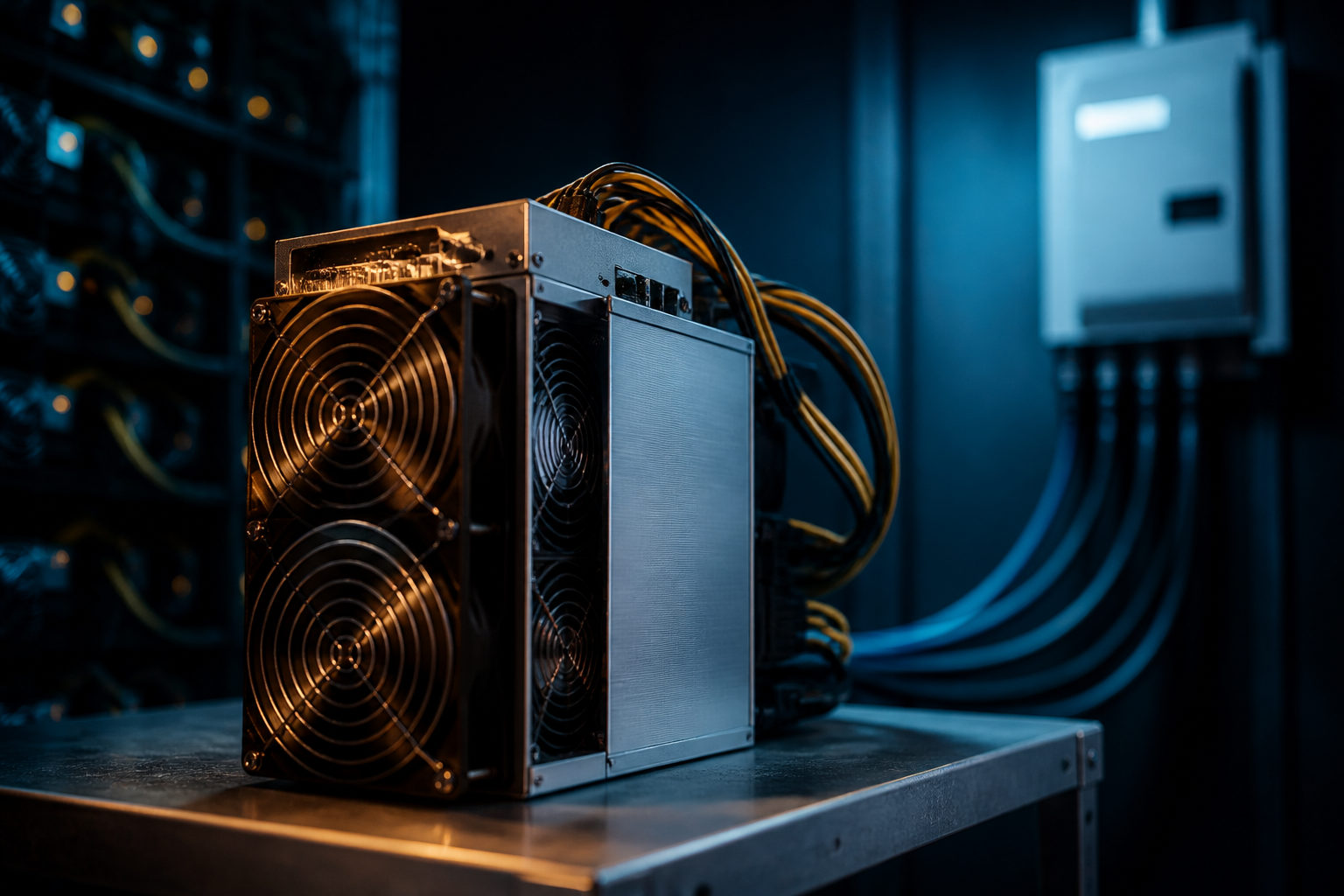
If you are searching “how do you mine bitcoins reddit,” the practical answer is simple: Bitcoin mining today means using specialized machines to compete for block production, usually through a mining pool, with costs that matter as much as the hardware.
What Bitcoin mining actually does
A useful way to picture Bitcoin mining is to think of it as a nonstop bookkeeping contest. The network collects pending transactions, and miners keep performing computations to find a valid result that lets them package those transactions into a new block.
Bitcoin uses proof of work for this process. Roughly every 10 minutes, the network adds a block, and miners race to produce the winning hash under the current rules; that competition is part of what makes the ledger hard to rewrite and hard for a single party to control.
Many beginners arrive from forum threads expecting mining to work like installing an app and letting a laptop earn coins in the background. That picture no longer fits reality. Modern Bitcoin mining is much closer to hardware operation, cooling management, uptime monitoring, and cost control.
How people participate in mining today
People use the same word, mining, for several different setups. The difference matters because ownership, transparency, and operational risk change a lot from one model to another.
| Method | How it works | Who it fits | Main issue |
|---|---|---|---|
| Buy and run your own miner | You own the machine and handle power, internet, and cooling | People willing to manage equipment directly | Noise, heat, maintenance, and downtime are your problem |
| Hosted mining | You own the machine but place it in a third-party facility | People who want ownership without running it at home | You depend on the host's reporting, contract terms, and service quality |
| Mining pool participation | You connect your machine to a pool that combines hashpower | Almost every serious miner | You need to understand fees, payout rules, and thresholds |
| Cloud mining contracts | You buy a claimed share of hashpower | People looking for the lowest setup barrier | It is the hardest model to verify from the outside |
Most miners join a pool because solo mining is extremely luck-driven. A pool does not change the network's total reward structure, but it can smooth the payout experience by distributing returns according to pool rules instead of waiting for rare solo success.
Another point that often gets blurred in online discussions: a mining pool is not a wallet. A pool coordinates hashpower and calculates payouts; a wallet is where you receive and control your bitcoin. If you mix up those roles at the start, later setup steps become confusing fast.
Why a regular PC is usually not enough
Bitcoin mining has become highly specialized. Competition comes from operators using purpose-built machines designed for the specific task of running the Bitcoin mining algorithm as efficiently and continuously as possible.
That is why ordinary desktops, laptops, and many general-purpose graphics setups usually have little practical chance in Bitcoin mining. They may still be useful for learning about wallets, nodes, or transaction flow, but that is very different from trying to compete for mining rewards on the live network.
There is also a physical side that new miners often miss. Mining hardware creates sustained heat and loud noise. Even before you think about setup screens and firmware options, your space, wiring, ventilation, and tolerance for constant machine operation can become limiting factors.
What you need before turning a miner on
If you want to move beyond reading Reddit threads and actually try mining, it helps to break the process into parts. The machine is only one piece of the decision.
| Step | What you need to do | What beginners often miss |
|---|---|---|
| Choose hardware | Confirm the machine is made for Bitcoin mining and supported properly | Used equipment may have wear, unstable performance, or repair history |
| Prepare power and cooling | Set up stable electricity, internet access, and heat removal | Home environments often run into breaker, temperature, or noise issues |
| Pick a mining pool | Create an account and enter the pool settings on the machine | Payout methods and pool fees can change your day-to-day experience |
| Set up a wallet | Create a Bitcoin wallet to receive mining payouts | A wrong receiving address can send funds to the wrong place |
| Monitor operation | Watch uptime, temperature, hash rate, and connection status | Long offline periods often come from simple oversight |
The wallet step deserves extra attention. A Bitcoin wallet is the tool that manages your receiving addresses and, depending on the type, your private keys. Convenience matters, but so does control; if you leave mined bitcoin sitting with a third party for too long, you are trading ease of use for less direct control.
Pool selection also deserves more than a quick glance at a homepage. Two pools can both say they support Bitcoin mining while handling fees, payout timing, minimum withdrawal requirements, and invalid share accounting very differently. Those details shape the real user experience.
The cost reality behind the question
When people online ask whether mining is still worth it, the most honest answer often starts with conditions rather than optimism. Your power situation, hardware source, operating space, maintenance plan, and tolerance for downtime matter before any machine begins work.
Electricity is only one part of that picture. There is also machine acquisition, shipping, fan wear, repairs, network stability, time spent offline, hosting quality if you use a facility, and the pressure that comes when newer hardware makes older equipment less competitive.
Bitcoin also has a built-in supply schedule that miners cannot ignore. The total supply is capped at 21 million coins, and the block subsidy halves about every 4 years, or every 210,000 blocks; past halving years were 2012, 2016, 2020, and 2024. For miners, that means long-term efficiency matters, because the reward side of the equation changes over time.
If your main goal is simply to own bitcoin, mining is only one possible route. For many people, it makes more sense to understand wallets, custody, and basic transaction handling first, then decide whether operating hardware is a separate project they truly want.
FAQ
Can I mine Bitcoin with my home computer?
You can experiment with software and learn how mining works, but that is different from competing effectively on the network. In practical terms, Bitcoin mining today is dominated by specialized machines rather than ordinary home computers.
What does a mining pool actually do?
A mining pool combines the hashpower of many miners and distributes payouts according to its rules. Its main benefit is reducing the extreme luck factor that comes with trying to mine blocks entirely on your own.
Is cloud mining a good shortcut for beginners?
It can look easier because you avoid heat, noise, wiring, and maintenance. The problem is verification: from the outside, it is often difficult to confirm whether the claimed hardware, contract terms, and payout logic match what is being advertised.
Do I need a wallet before I start mining?
Yes, because mining payouts need a destination. Even if you are still comparing machines or pools, understanding how your wallet receives bitcoin will make the rest of the setup much clearer.
What is the biggest difference between self-hosting and hosted mining?
Control is the main difference. Running your own machine gives you direct visibility into the setup, while hosted mining removes some operational burden but asks you to trust a third party with uptime, reporting, and facility practices.
If you want to take the next step, make a checklist before spending anything: where the machine comes from, where it will run, who handles maintenance, which wallet receives payouts, and how you will respond when the unit goes offline. That checklist is far more useful than chasing short answers in a comment thread.
Disclaimer: This article is for informational and educational purposes only and is not investment, financial, or legal advice. Crypto assets are highly volatile and you could lose your entire investment. Do your own research and decide carefully.