
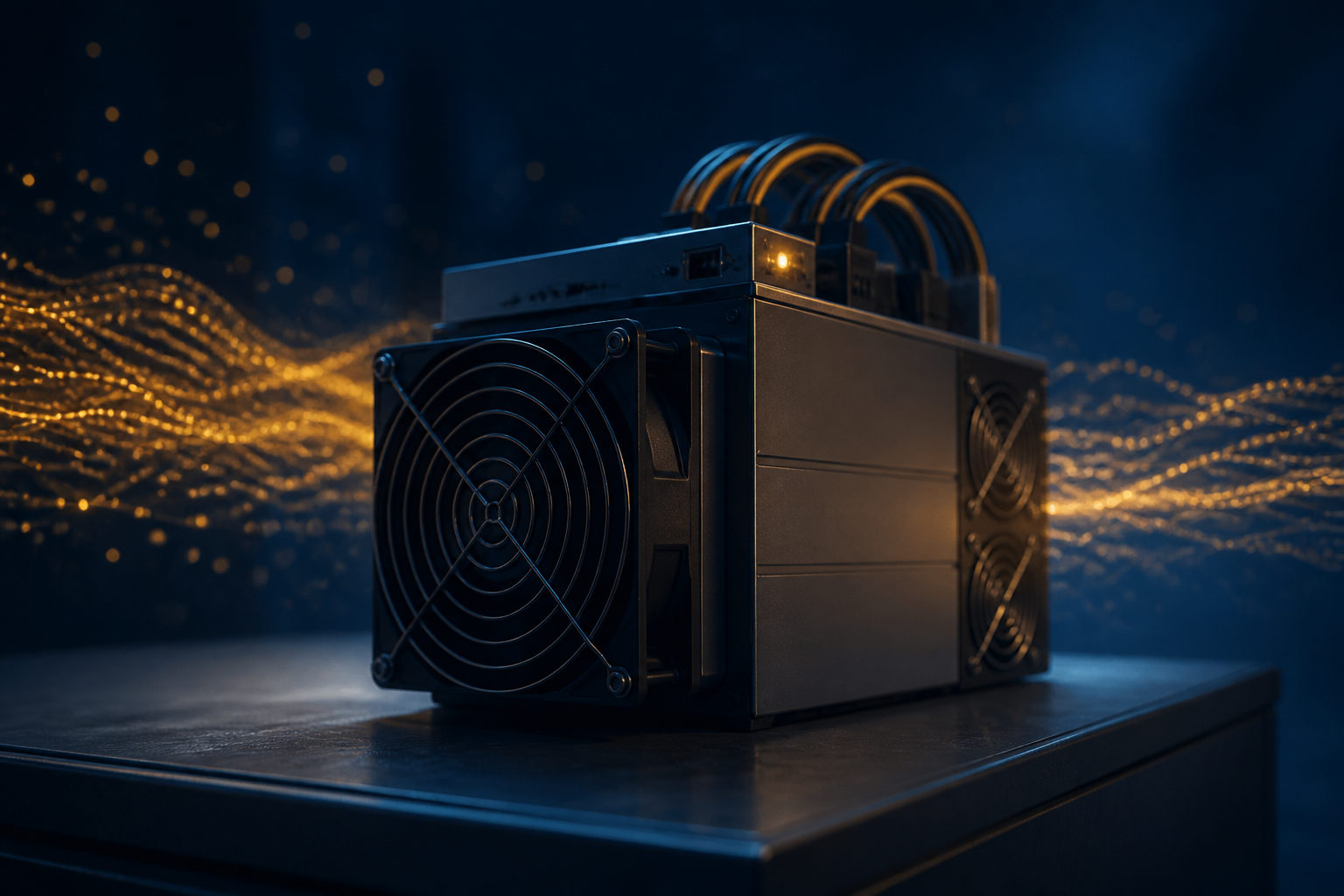
Bitcoin mining is the process of using computing power to compete for the right to add a new block, confirm transactions, and help secure the Bitcoin network.
What bitcoin mining actually means
The word “mining” makes many beginners think of gold, shovels, and hidden assets waiting to be pulled out of the ground. That picture is catchy, but it is wrong. Bitcoin mining is closer to a nonstop bookkeeping contest where participants race to package transactions into a valid new block.
In other words, miners are not digging up coins from a secret location. They are spending real resources to keep a shared ledger running without a central operator. That is why mining matters even to people who never plan to run a machine themselves.
How the bookkeeping race works
You can think of Bitcoin as a public ledger that anyone can inspect. The hard part is deciding which new transactions get added next and making sure nobody can rewrite the record whenever they want. Miners collect pending transactions, build a candidate block, and repeatedly run calculations until one miner finds a result that fits the network’s rules.
This system is called proof of work. The point is not elegant problem solving. The point is to show that a participant spent computing effort, electricity, and time. The network produces a new block about every 10 minutes, and once a valid block is accepted, miners move on and start competing for the next one.
That design does two jobs at once. It picks who gets to write the next page of the ledger, and it makes attacks expensive. If someone wanted to alter past records, they would need an enormous amount of resources to catch up and overtake the honest chain.
Why miners participate
Miners join because the system rewards the participant that successfully adds a block. That reward includes newly issued bitcoin and transaction fees, which is one of the ways bitcoin enters circulation.
The supply is not open-ended. Bitcoin has a maximum supply of 21 million coins, and the block subsidy is reduced in a halving about every 4 years, or every 210,000 blocks. Halvings took place in 2012, 2016, 2020, and 2024, so the amount of new bitcoin issued per block declines over time.
This is also where many misconceptions begin. People often hear about bitcoin mining and jump straight to the idea of easy profit. In practice, mining is a business with hardware needs, electricity costs, cooling demands, noise, maintenance, and operational risk. Competition is intense, and the barrier to effective participation is much higher than the name suggests.
Ways to take part in bitcoin mining
There are several ways people enter this area: solo mining, mining pools, and cloud-based arrangements. Solo mining means running your own setup and competing alone. The appeal is direct control, but block discovery can be highly uneven for smaller participants.
Mining pools are more common. In a pool, many miners combine their computing power to raise the chances of finding blocks, then split the results according to the pool’s rules. This can smooth out participation, but it does not remove risk. Pool fees, payout methods, account security, and transparency still matter.
Cloud mining sounds simple because someone else handles the machines. That convenience comes with a tradeoff. You often do not control the hardware yourself, and you may have limited visibility into how the service actually operates.
Things to check before getting involved
- Hardware: Bitcoin mining usually depends on specialized machines rather than ordinary home computers.
- Power costs: Electricity is one of the most important ongoing variables.
- Heat and noise: Mining equipment can generate both, especially during continuous operation.
- Maintenance: Machines, network connections, and firmware settings all need attention.
- Rules where you live: Local legal and tax treatment can differ, so it is smart to verify the basics first.
Bitcoin mining versus buying bitcoin
Buying bitcoin gives you direct market exposure. Mining is different because you are committing equipment and operating resources in order to compete for block rewards. The risk profile is not the same, even if both paths are tied to the same asset.
If your goal is simply to hold bitcoin, learning about wallets, private key backups, and exchange safety may be more useful than shopping for mining gear. If your main interest is understanding how Bitcoin works under the hood, mining is one of the clearest entry points.
FAQ
What does mining bitcoin really involve
It involves validating and ordering transactions while competing to add a new block. New coin issuance is part of the process, but mining is also a security system for the network.
Can an individual still mine bitcoin
Yes, an individual can still participate. The real question is whether the person has suitable equipment, power access, and the ability to manage operating costs and technical upkeep.
Can a regular computer mine bitcoin
In a technical sense, a computer can run mining software. In practical terms, ordinary consumer hardware is generally not competitive against specialized mining machines.
Is joining a mining pool easier than mining alone
For many people, yes. A pool can make outcomes less erratic, but you still need to understand the fee model, payout rules, and how the operator handles accounts and withdrawals.
Why does bitcoin mining matter for security
Mining helps protect the ledger by making block creation costly. That cost is what makes it difficult for bad actors to rewrite transaction history at will.
If you want to study bitcoin mining further, start by separating the key pieces: blocks, proof of work, miners, pools, wallets, and fees. Once those parts make sense on their own, it becomes much easier to judge whether you are interested in the technology, direct bitcoin ownership, or mining participation itself.
Disclaimer: This article is for informational and educational purposes only and is not investment, financial, or legal advice. Crypto assets are highly volatile and you could lose your entire investment. Do your own research and decide carefully.