
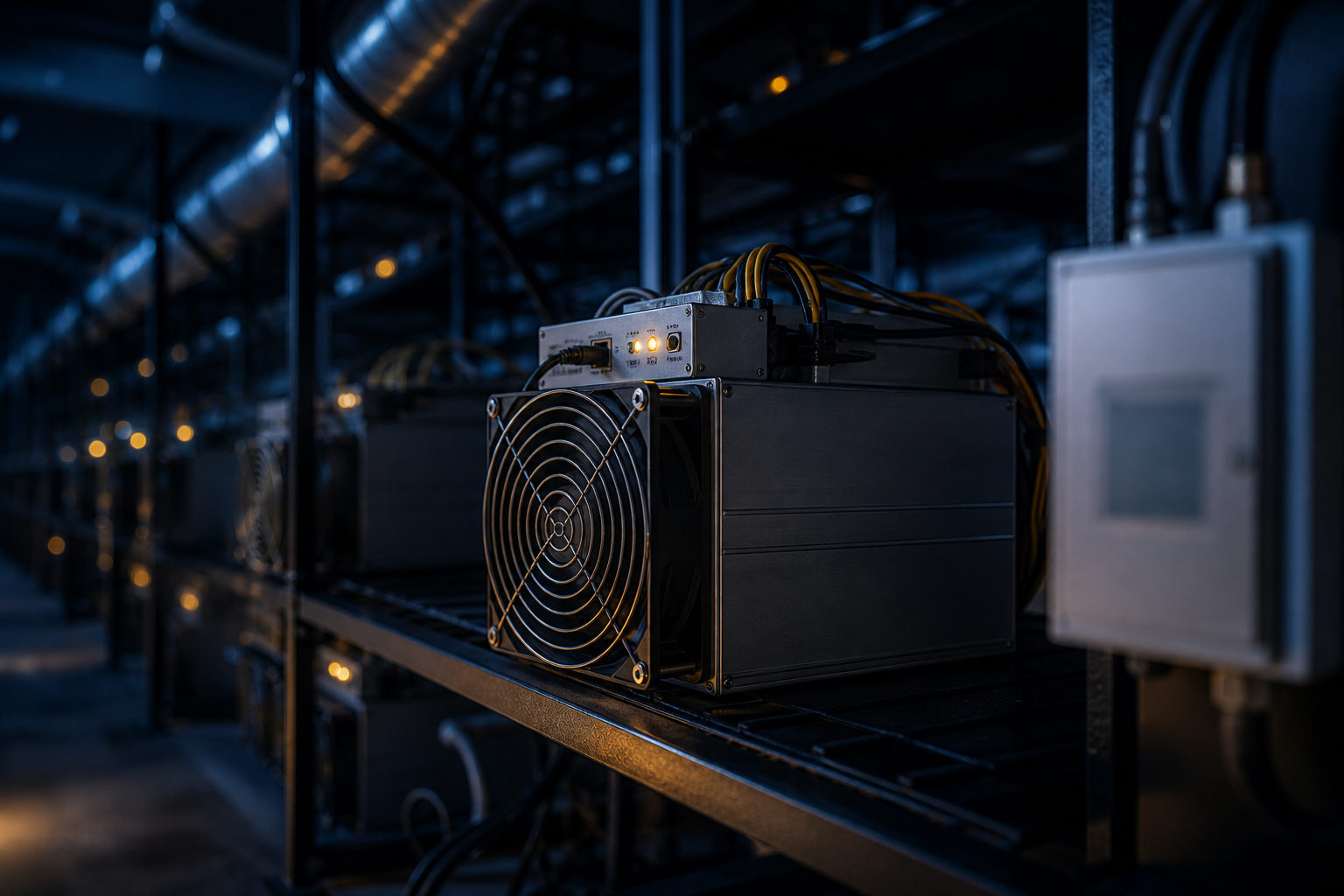
Bitcoin mining can be profitable, but not for everyone. Think of it as a nonstop race to win the right to write the next line in a public ledger, where profit depends on power costs, machine efficiency, uptime, and how tough the competition is.
What bitcoin mining actually does
Bitcoin runs on a shared record of transactions. Miners compete to package new transactions into blocks and add those blocks to the chain under the network's rules.
When a miner succeeds, that miner can receive the block reward and transaction fees. A new block is produced about every 10 minutes, so the contest keeps repeating all day, every day.
This is why mining is not free money. It converts real-world inputs such as electricity, hardware, cooling, and operations into a chance of earning bitcoin.
Why some miners make money and others do not
People often start with price, but price is only one piece of the answer to whether bitcoin mining is profitable. Cost structure usually matters just as much, and sometimes more.
Electricity is the biggest factor for many operators. If power is expensive, even decent hardware can struggle. If power is cheap, the same machine may have a much better chance of staying above water.
Hardware efficiency also matters. Two miners can run similar setups, yet the one using more efficient machines may stay competitive longer. On top of that, mining equipment ages, newer models arrive, and older units can fall behind.
Network difficulty is another moving part. As more computing power joins the network, each machine's share of the opportunity can shrink. The reward schedule also changes over time because bitcoin halves roughly every 4 years, or every 210,000 blocks. The halving years so far are 2012, 2016, 2020, and 2024.
Common ways to take part in mining
Running your own machines
This is the most direct route. You buy ASIC miners, arrange power, cooling, and internet access, then manage noise, heat, maintenance, and downtime yourself.
The advantage is control. The drawback is that small mistakes become expensive fast, especially when home power rates are high or the environment is not built for constant heavy load.
Hosting equipment with a third party
Some miners place their machines in specialized facilities instead of running them at home or on their own site. This can reduce the day-to-day burden, but it adds contract risk.
You need to read hosting fees, repair terms, curtailment rules, payout timing, and shutdown conditions carefully. A simple sales pitch can hide a lot of cost.
Joining a mining pool
Most miners join pools rather than trying to mine solo. A pool combines computing power from many participants and shares rewards based on its payout method.
This can make income less lumpy, but it does not fix weak economics. Pool fees, payout rules, and service stability still affect the final result.
How to judge if mining fits your situation
- Power cost: If electricity is expensive, pressure starts immediately.
- Machine efficiency: Better efficiency can keep a setup viable longer.
- Cooling and ventilation: Heat management is part of the business, not a side issue.
- Operational discipline: Downtime, failed parts, and poor monitoring reduce real output.
- Risk tolerance: Mining is not fixed income, and margins can change fast.
For many individuals, home mining looks easier on paper than it feels in real life. Noise, heat, electrical limits, and maintenance can turn a simple idea into a constant project.
That is why the question is not only whether mining bitcoin is profitable. The better question is whether it is profitable for your setup, in your location, under your operating conditions.
Common mistakes people make
- Focusing only on bitcoin price. A higher price does not guarantee profit if costs rise too.
- Assuming every machine will pay for itself. Equipment loses edge over time, and competition does not stand still.
- Treating cloud-style offers as easy mining access. If the asset base, fee model, or exit terms are unclear, risk can be higher than expected.
FAQ
Can you still make money mining bitcoin today?
Yes, but only in the right conditions. Low power costs, efficient hardware, and reliable operations usually matter more than excitement around the industry.
Could bitcoin mining still make sense in 2026?
It could, but the answer will depend on difficulty, machine quality, and operating costs at that time. The calendar year alone does not decide profitability.
Is mining bitcoin at home a realistic option?
It is possible, yet often harder than beginners expect. Heat, noise, and residential power costs can make a home setup unattractive quite quickly.
Does joining a pool make bitcoin mining profitable?
A pool can smooth out reward timing, which many miners prefer. It does not change your underlying cost structure, so a weak setup stays weak.
What should I check before buying mining equipment?
Start with power cost, cooling capacity, maintenance plans, and expected uptime. After that, compare hardware efficiency and pool terms before spending anything.
If you want a grounded answer to whether bitcoin mining is profitable, build a cost list first: electricity, hardware, hosting, repairs, and downtime. Once those pieces are clear, then compare them with live mining conditions and pool rules.
Disclaimer: This article is for informational and educational purposes only and is not investment, financial, or legal advice. Crypto assets are highly volatile and you could lose your entire investment. Do your own research and decide carefully.