
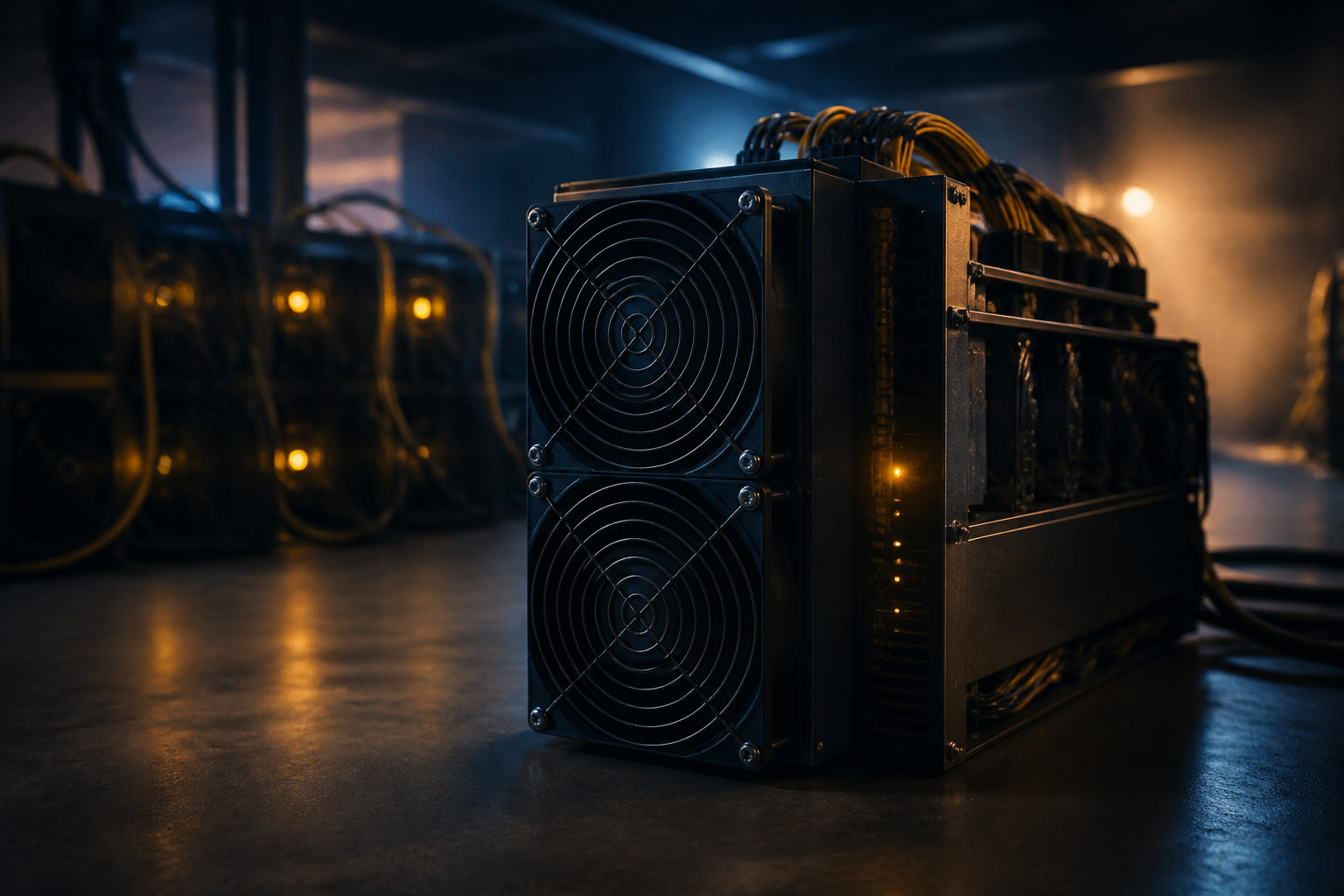
Bitcoin mining in 2026 is still possible, but profitability depends less on hype and more on power costs, ASIC efficiency, pool payouts, and day-to-day operating discipline.
What Bitcoin mining actually means
A simple way to think about Bitcoin mining is to picture a nonstop bookkeeping race. Participants compete to package transactions, follow the network rules, and earn the right to add the next block to the blockchain. The winner does not “print free money.” The work is part of how the Bitcoin network stays secure and ordered without a central operator.
Bitcoin began with the genesis block in January 2009. Its total supply is capped at 21 million coins, and the network is designed to produce a block about every 10 minutes. New issuance falls over time through halving events, which happen about every 4 years, or every 210,000 blocks; the halving years so far are 2012, 2016, 2020, and 2024. For miners, that structure matters because it keeps pressure on efficiency. The business does not get easier just because a machine is powered on.
That is why mining should not be treated as a casual side feature of Bitcoin. The concept is straightforward, but the real-world process depends on hardware, cooling, networking, pool setup, wallet control, maintenance, and risk management. Many new entrants understand the idea and still lose money because they underestimate the operating side.
How people can mine Bitcoin in 2026
In practical terms, most individuals considering Bitcoin mining in 2026 are looking at one of three routes: running their own ASIC miners, buying machines and placing them with a hosting provider, or signing up for some form of cloud mining contract. Those options sound similar on the surface, yet they differ sharply in control, transparency, and risk.
The first reality check is simple: ordinary home computers are not the standard tool for Bitcoin mining. Laptops, consumer desktops, and general-purpose graphics setups are not the main route in a network dominated by specialized hardware. People often confuse “it can technically run” with “it can compete.” Those are not the same thing. A machine that is noisy, hot, inefficient, and hard to maintain may still turn on, but that does not make it a viable mining setup.
Owning and operating your own ASIC miners gives you the most direct control. You decide where rewards are paid, when machines are restarted, how they are monitored, and whether you change settings or retire old hardware. The tradeoff is obvious once you look past the sales pitch: power delivery, cooling, heat exhaust, dust, noise, internet uptime, and repair logistics all become your problem.
Hosting is the usual middle ground. You buy the hardware, then place it in a facility that provides rack space, electricity, network access, and maintenance support. This can make sense if you do not have a suitable location, but it shifts the risk rather than removing it. You now need to judge contract clarity, uptime reporting, repair responsibility, payout procedures, and whether the operator is transparent when machines go offline.
Cloud mining deserves extra caution. Genuine remote services do exist, but the category has long attracted opaque offers, exaggerated claims, and business models that are hard to verify from the outside. If a service puts all of its energy into promising simplicity or passive income while saying little about machine models, downtime policy, pool method, and custody of payouts, that is a warning sign rather than a convenience.
Basic conditions to check first
- Power cost: this is often the biggest recurring factor in mining economics.
- Cooling and noise: ASIC miners are industrial in character, not quiet household electronics.
- Stable internet: repeated disconnects can drag down effective performance.
- Wallet control: reward addresses should ideally remain under your control.
- Repair support: downtime is a real cost, not a minor annoyance.
What determines Bitcoin mining profitability
Anyone searching for a guide to Bitcoin mining profitability usually wants a short answer: is it worth it or not? Without live market data, the most honest answer is that profitability is not a fixed number. It depends on whether the revenue side stays ahead of the cost side, and both move over time.
Start with revenue. A miner’s gross return comes from block rewards and transaction fees, usually through a mining pool rather than solo mining. Pool participation smooths the randomness of finding blocks, but it also means your outcome depends on the pool’s payout method, fee structure, reporting quality, and operational reliability. Beyond that, your share is affected by the broader level of competition on the network. If more efficient machines join the field, older hardware can lose ground even if it still runs.
Price also matters, of course, but price alone does not decide the result. A stronger Bitcoin price can improve the value of mined coins, yet that does not automatically translate into healthy margins if competition intensifies, pool terms are poor, or power and hosting costs keep squeezing the operation. That is one reason people often overestimate mining economics when they look only at the top line.
Then there is the cost side. Electricity is the ongoing headline expense, but it is not the only one. Hosting fees, maintenance charges, replacement parts, shipping, setup delays, machine failures, and depreciation all shape the final outcome. A miner can look attractive on paper if you ignore downtime and hardware wear. Once those factors are included, the picture can change fast.
There is also a management layer that many beginners miss. Profitability is not just a property of the machine. It is also a function of how well the operation is monitored. Can you spot unstable performance in the pool dashboard? Do you know when a machine should be repaired, tuned, relocated, or retired? Can you keep custody and account security separate from third-party service access? Mining is closer to operating a specialized small business than buying an appliance that sends money back to you.
| Factor | Why it matters | Common mistake |
|---|---|---|
| Power cost | It shapes the ongoing cost of each unit of output | Looking only at the machine price |
| Hardware efficiency | It affects competitiveness under the same power budget | Assuming older cheap units are always better value |
| Pool terms | They influence payout stability and transparency | Choosing by brand name alone |
| Hosting quality | It affects uptime, repair speed, and trust | Confusing lower headline fees with lower total cost |
| Price movement | It changes the value of mined bitcoin | Treating a short move as a full business case |
How to start mining Bitcoin in 2026 without skipping the hard parts
If you are serious about mining Bitcoin in 2026, the first step is not buying hardware. The first step is building your own cost and control checklist. Write down the power rate available to you, the terms of any hosting offer, the source of the machines, the repair path, shipping assumptions, wallet custody plan, and the way you will verify pool payouts. That exercise feels less exciting than shopping for machines, but it is where most of the important decisions live.
After that, evaluate hardware with the right priorities. Bitcoin mining usually means ASIC miners, so focus on efficiency, power draw, cooling requirements, serviceability, and resale liquidity. A newer machine is not automatically the right choice for every operator, and an older one is not automatically useless. The question is whether a given unit makes sense under your actual conditions. Cheap hardware can still be expensive if it struggles under your power or hosting setup.
Next comes the operating model: self-hosted or hosted. Self-hosting may suit people who have the right environment, can tolerate noise and heat, and are willing to handle troubleshooting. Hosting may suit people who prefer not to manage a physical site, but that only works if they are ready to inspect the provider carefully. In either case, starting small is usually the safer path. Test machine deployment, pool connection, reward delivery, downtime reporting, and support responsiveness before scaling up.
Pool selection deserves the same level of attention. A mining pool does not create guaranteed profit. It mainly turns a highly uneven solo-mining outcome into a more regular payout stream. Read the pool’s terms, understand how payouts are calculated, check what metrics are visible in the dashboard, and make sure you can review performance rather than relying on marketing language.
Security should be built into the process from the beginning. The reward address should be yours, account credentials should be protected, and any two-factor authentication should stay under your control. A mining setup can fail financially even when the machines are functioning if the payout destination is changed, the service account is compromised, or access rights are handled carelessly.
Where people get Bitcoin mining wrong
The most common mistake is treating mining like a one-time purchase. It is not. Hardware is only the entry ticket; the real challenge is ongoing operation. Another frequent mistake is copying someone else’s ideal setup without accounting for differences in electricity, cooling, contract terms, or maintenance access. A setup that works in one place can become a burden in another.
People also tend to underestimate hidden friction. A machine that runs hot, needs repeated intervention, or spends too much time offline can quietly erode the economics even before you look at market conditions. In the same way, a hosting provider with weak communication can turn small technical issues into long payout delays and unresolved disputes.
There is one more misconception worth clearing up. Mining Bitcoin and buying bitcoin directly are not opposites in a moral sense. They are different methods of gaining exposure. Buying and self-custody may be simpler for many people. Mining may appeal to those who want a flow-based method of acquiring bitcoin and are willing to handle hardware and operations. The right choice depends on your skills, risk tolerance, and willingness to manage complexity.
FAQ
Can an individual still mine Bitcoin in 2026?
Yes, but the bar is higher than many beginners expect. Mining now is closer to running a cost-sensitive operation than experimenting on a spare home computer.
What equipment do you need to mine Bitcoin?
The standard route is specialized ASIC hardware rather than a normal laptop or desktop. When comparing machines, look at efficiency, power draw, cooling needs, and support options before focusing on purchase price.
Is Bitcoin mining still profitable?
It can be, but there is no universal answer. Profitability depends on the interaction between power cost, hardware efficiency, pool terms, downtime, and the market value of the bitcoin you mine.
Can you mine Bitcoin at home?
It may be possible in a technical sense, but home environments often struggle with noise, heat, ventilation, and power limits. The real issue is usually not whether a machine can run, but whether it can run well over time.
Is cloud mining a good option for beginners?
Only with extreme care. If the service is vague about the hardware, operating rules, payout method, or downtime handling, simplicity on the sales page may hide a much bigger risk.
Where should you check the Bitcoin price before deciding whether to mine?
You can compare quotes on major exchange market pages and widely used crypto data platforms. Do not base the decision on price alone; check it alongside your own power, hosting, and hardware assumptions.
If you plan to start Bitcoin mining in 2026, confirm your power or hosting conditions first, keep control of the wallet that receives rewards, and test the whole process at a small scale before adding more machines.
Disclaimer: This article is for informational and educational purposes only and is not investment, financial, or legal advice. Crypto assets are highly volatile and you could lose your entire investment. Do your own research and decide carefully.