
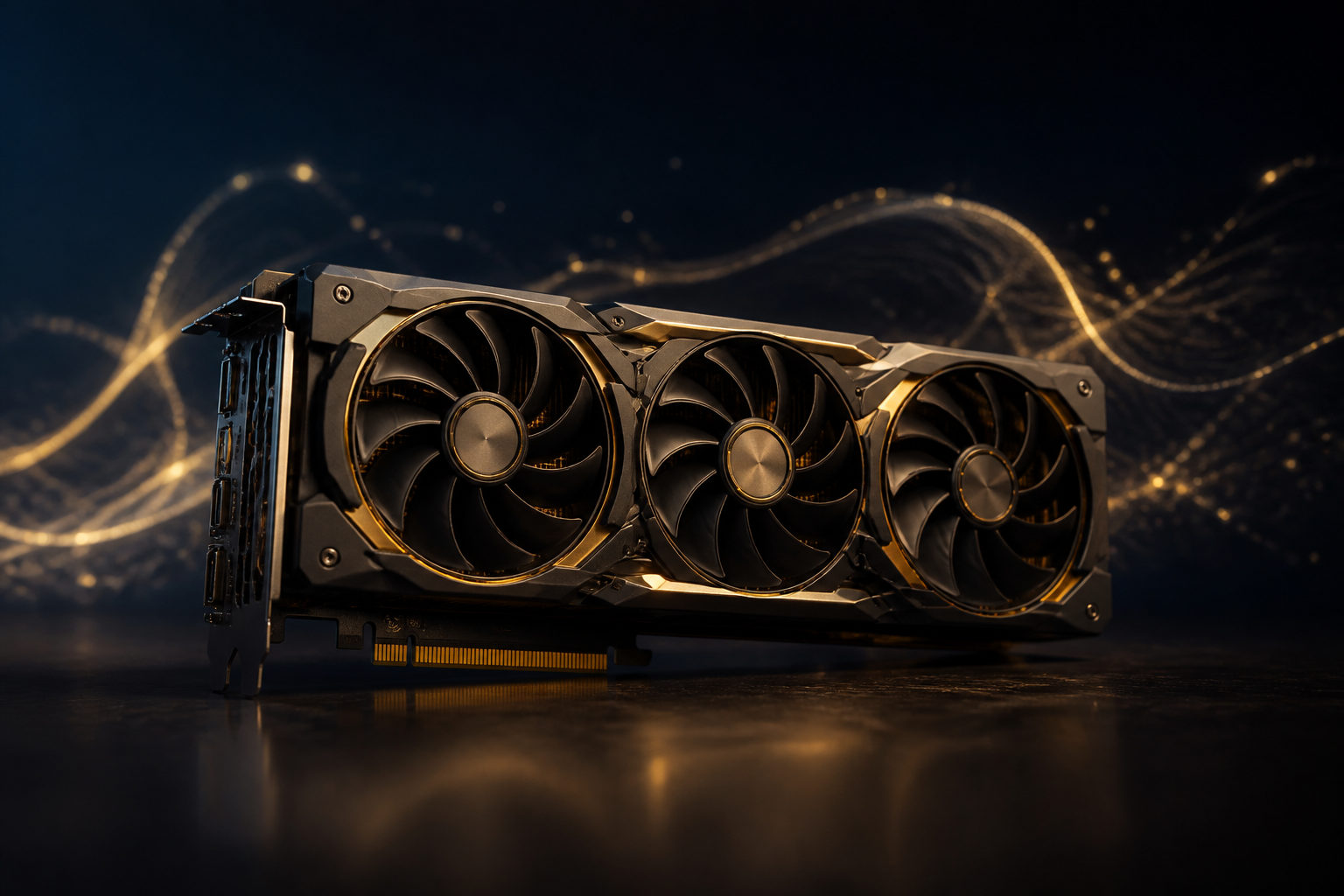
In a bitcoin miner game, GPUs usually stand for the graphics processors that add computing power to your setup. They are the part of the game that turns raw calculation into mining speed, upgrade choices, and operating pressure.
Start with the bookkeeping race idea
The easiest way to understand a bitcoin mining game is to treat it as a simplified bookkeeping contest. On the real Bitcoin network, many participants compete to perform calculations under the same rules, and one of them gets the chance to add a new block of transactions.
A game takes that hard-to-see process and turns it into visible systems. Instead of watching hashes directly, players see machines, power usage, heat, expansion slots, and hardware upgrades. That is why GPUs show up so often. They are familiar to players, and they make abstract computing power easy to measure inside a game.
So when someone asks what GPUs are in a bitcoin miner game, the practical answer is simple: they are usually the in-game component that increases your ability to process calculations faster than weaker hardware. In many designs, they are the center of your whole mining build.
What a GPU represents inside the game
A GPU is a graphics processing unit. Outside games, it was built for graphics work, but it is also good at handling many similar tasks at the same time. Game designers borrow that idea and use it as a clean way to explain why one machine mines faster than another.
Inside a mining game, a GPU often has more than one meaning. It can be your main source of hash power. It can also be a cost driver, because stronger hardware usually increases power draw or cooling needs. In many games, it is also a progression marker: once better GPUs become available, the player moves into a new stage of machine management.
| How the game uses a GPU | What it affects | How to read it as a player |
|---|---|---|
| Compute component | Mining speed and task output | Your main production tool |
| Upgrade tier | Access to stronger builds or later stages | A sign of progression, not just a part name |
| Resource burden | Power use, cooling pressure, stability | More performance often brings extra strain |
| Strategy piece | Build order and expansion choices | Best value depends on the rest of the setup |
This matters because many players make a wrong leap. They see GPUs presented as the star of the machine and assume real-world bitcoin mining works the same way. A game may use GPUs because they are easy to understand and fun to upgrade. Real mining decisions follow a different set of constraints.
How GPUs differ from CPUs and ASICs in mining game logic
New players often bundle CPUs, GPUs, and ASICs into one category: chips that do math. That is fine at a very basic level, but the game usually gives each one a separate role. The differences explain why a game starts simple and becomes more technical over time.
A CPU is a general-purpose processor. It is flexible, which makes it a good teaching tool in early game stages. A GPU is better suited to parallel work, so it becomes the natural next step when the game wants to show a clear jump in mining performance. An ASIC is specialized hardware, and many games save that concept for advanced progression.
| Hardware type | Main trait | Typical role in a mining game | Player takeaway |
|---|---|---|---|
| CPU | General-purpose computing | Starter machine or tutorial phase | Easy to learn, usually limited later |
| GPU | Strong parallel processing | Core mid-game upgrade path | Often the most visible performance step |
| ASIC | Highly specialized design | Late-game advanced hardware | Closer to the idea of purpose-built mining gear |
If the game uses Bitcoin specifically, this distinction matters even more. Real bitcoin mining discussions usually lead toward dedicated hardware, while games often keep GPUs at center stage because they make progression systems more engaging. A GPU-based upgrade tree is easier to turn into crafting, collecting, replacing, and balancing mechanics.
What to evaluate before upgrading a GPU in the game
Players often focus on the headline stat and ignore the rest of the machine. That is where most bad upgrade decisions begin. A GPU should be judged as part of a full operating setup, not as an isolated item with a bigger number on it.
| What to check | Why it matters | Common mistake |
|---|---|---|
| Mining speed gain | Shows whether progress actually improves | Looking only at peak output |
| Power demand | Determines whether the rig can run steadily | Upgrading faster than the power system |
| Cooling pressure | Affects efficiency loss and downtime | Adding hardware without heat planning |
| Expansion room | Shapes future upgrade flexibility | Using every slot too early |
| Game pacing | Changes the value of buying now versus later | Replacing everything as soon as it unlocks |
A good rule is to think of GPUs as operating assets, not trophies. One card may be ideal early because it is cheap to run inside the game economy. Another may look powerful but choke your build by creating heat or power bottlenecks. In other words, the best GPU is the one that fits your current stage.
If the game includes repairs, resale, or hardware wear, the decision gets even more interesting. A GPU can be strong on paper and still be a weak business choice if it traps too many resources in one machine. That is why efficient progression usually comes from balance, not from chasing the rarest part every time.
Where games and real bitcoin mining part ways
The biggest mistake is treating a mining game as a direct manual for real bitcoin mining. Games compress a difficult activity into systems that are easy to grasp: buy hardware, install it, power it, cool it, upgrade it. Real-world mining has far more friction, including dedicated equipment, ongoing costs, maintenance demands, noise, space, and competition.
Another common misunderstanding is confusing technical possibility with practical suitability. Hardware may be capable of performing related calculations without being a sensible choice for real bitcoin mining. That distinction is easy to miss because games reward experimentation, while real mining punishes weak economics and poor hardware fit.
| In-game experience | Real-world condition | Why the gap matters |
|---|---|---|
| Install a better GPU and speed jumps right away | Hardware results depend on the algorithm and full setup | Reality has more constraints |
| Power cost is a simple meter | Ongoing operating cost can decide viability | The budget side is much harsher |
| Broken parts are fixed instantly | Maintenance takes time, parts, and downtime | Recovery is not frictionless |
| Upgrade paths are clear and linear | Real choices depend on supply and operating conditions | There is no universal best path |
That does not make the game useless. It can be a very good teaching tool for the ideas behind mining competition, machine scaling, and operating trade-offs. It just should not be mistaken for a direct hardware playbook.
FAQ
Does GPU just mean graphics card in a bitcoin miner game
Usually yes, at least from the player perspective. Some games present it as a literal graphics card, while others use it as a more abstract compute module, so the safest approach is to check which stats it changes inside that specific system.
Why do some mining games start with CPUs and only later introduce GPUs
That is a common teaching structure. CPUs make it easy to explain the basic idea of machine-based computation, and GPUs let the game add deeper choices around power, heat, expansion, and upgrade timing.
Do more GPUs always mean a stronger build
No. Many games add limits through power caps, cooling penalties, maintenance load, or slot restrictions. A balanced machine often performs better than a rig that simply stacks as many GPUs as possible.
Can real bitcoin mining still be understood through a GPU-based game
It can help with the general logic of competition and hardware management. It should not be used as a one-to-one model for real bitcoin mining decisions, especially when dedicated hardware becomes part of the discussion.
What should a beginner look at first when comparing GPUs in the game
Start with the full effect on the build, not just the speed stat. A GPU that adds decent output without breaking your power or cooling setup is usually a better early choice than the flashiest option on the list.
If you want a practical reading of GPUs in a bitcoin miner game, use this one: they are the part of the game that converts computing power into competitive progress. Before buying the next upgrade, check what it does to speed, power, heat, and future expansion at the same time.
Disclaimer: This article is for informational and educational purposes only and is not investment, financial, or legal advice. Crypto assets are highly volatile and you could lose your entire investment. Do your own research and decide carefully.