
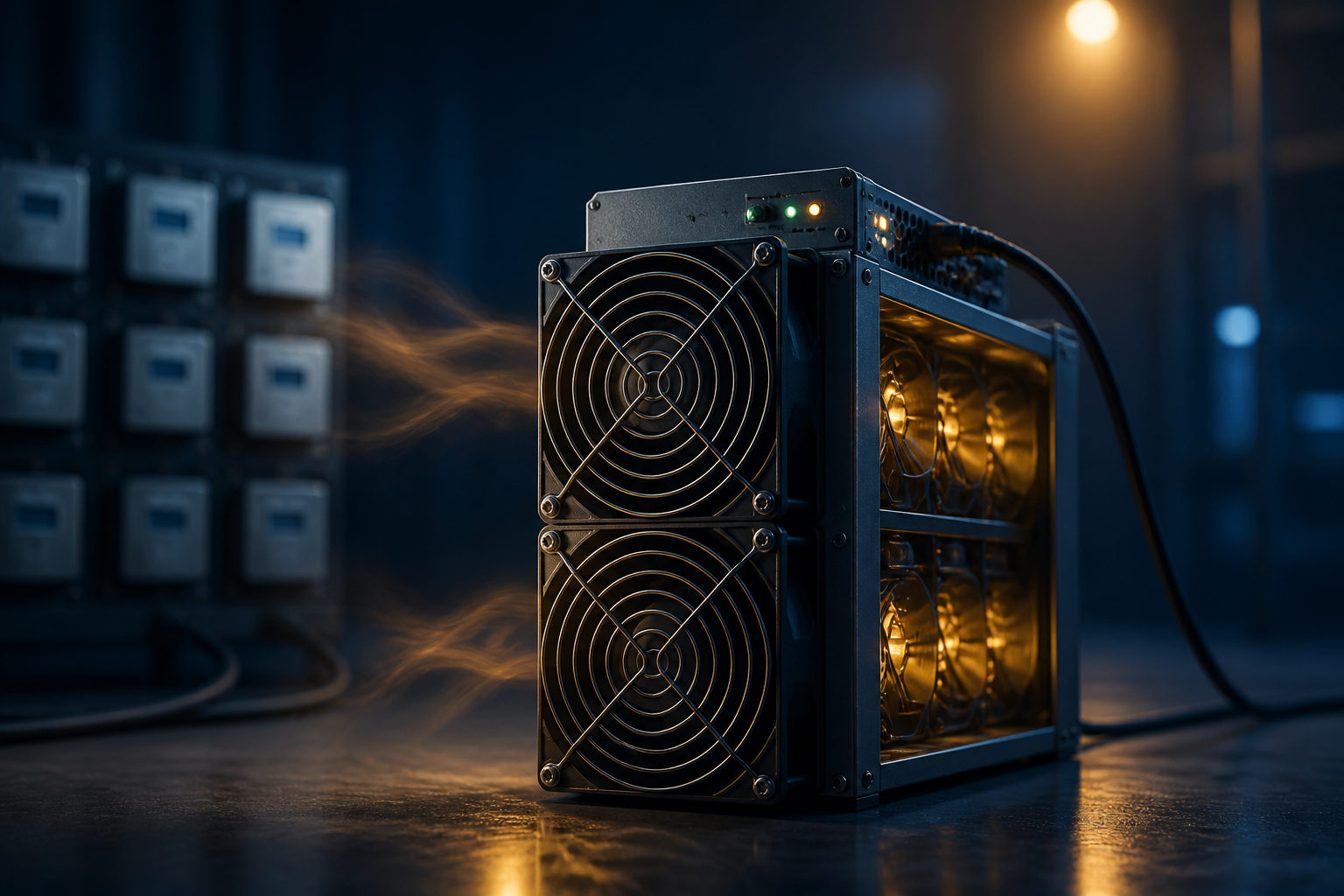
Bitcoin mining can be worth it, but only under the right conditions. The real question is not whether mining still exists; it is whether your power cost, machine efficiency, operating setup, and risk tolerance make the economics workable.
Who is least likely to benefit from mining
If you do not have access to stable power, reliable cooling, and a practical place to run machines, mining is often a poor fit. It is an operating business with hardware, downtime, maintenance, and cash flow pressure, not a passive purchase that runs itself.
Another mistake is treating a miner like an asset that naturally holds value. In practice, a machine's earning power changes as network competition shifts, block rewards tighten after halvings, and newer hardware makes older units less attractive.
The main factors that decide whether mining is worth it
Power cost comes first
Electricity is usually the most important line in the model. Bitcoin produces a block about every 10 minutes, and miners compete nonstop, so a high power bill can leave very little room for profit even when the machine is running as expected.
You also need to count the full power-related setup, not just the miner itself. Cooling, ventilation, wiring upgrades, and the quality of the site all affect the real cost of staying online.
Hardware efficiency matters more than headline output
Two miners can both mine bitcoin and still produce very different financial results. A newer unit may use less electricity for the same work, but it often costs more upfront; an older unit may be cheaper to buy, yet much easier to push out of the market when competition gets tougher.
That is why the better question is not only whether a machine works today. You also need to ask whether it can stay competitive after difficulty rises or conditions worsen.
Home setup and hosted mining are very different choices
Running equipment yourself gives you more control over heat, noise, maintenance, and downtime. It also means you must deal with those issues directly, along with electrical safety and day-to-day monitoring.
Hosted mining removes some of that burden, but it adds counterparty risk. You need to inspect the contract, fee structure, service standards, downtime handling, and the process for getting your equipment back if the arrangement stops working.
Cash flow can break a good-looking plan
Bitcoin has a fixed supply cap of 21 million coins. The issuance schedule drops through halvings every 210,000 blocks, roughly every 4 years, with halvings in 2012, 2016, 2020, and 2024. That structure reduces new supply over time, which can squeeze miners whose costs are already high.
This is why a mining decision should not be based on a single snapshot. If price weakens, repairs take time, or competition increases, you need enough cash to keep operating without being forced into a bad exit.
Risks people often underestimate
- Regulatory and tax risk: rules on mining, power use, hosting, and reporting vary by jurisdiction.
- Hardware risk: machines can fail, used equipment may not match the listing, and repairs can take time.
- Operating risk: heat, dust, humidity, outages, and unstable internet can reduce uptime.
- Counterparty risk: hosted setups depend on the honesty and execution quality of the operator.
- Exit risk: resale value can drop fast, especially when many miners try to sell equipment at once.
There is also opportunity cost. Once capital is tied up in miners, electrical work, cooling, and hosting, that money becomes less flexible. For many people, that lack of flexibility matters as much as the mining return itself.
A practical framework before you decide
- Check fixed conditions: power cost, site quality, cooling, ventilation, noise tolerance, and uptime.
- Check machine conditions: efficiency, warranty, repair options, and access to parts.
- Check operating conditions: who monitors the units, who responds to failures, and how fast issues get fixed.
- Check financial conditions: can you stay in the plan if results are weak for an extended period?
If you cannot answer those points clearly, mining bitcoin is probably not a mature decision yet. If you do have low-cost power, dependable hosting, clear contracts, and room for setbacks, mining may be closer to a manageable business than a speculative bet.
FAQ
Can an individual still make bitcoin mining work?
Yes, but it depends far more on cost structure than on excitement around the market. An individual setup only makes sense if power, hardware, and operations are all under control.
Is mining bitcoin at home realistic?
For many people, home mining is harder than it looks. Noise, cooling, electrical load, and daily maintenance can turn a simple idea into an ongoing headache.
Does halving make bitcoin mining unattractive?
Not automatically, but it does raise the pressure on margins. After a halving, inefficient machines and expensive operations have less room to survive.
Is buying bitcoin simpler than mining it?
Usually, yes. Buying bitcoin is mainly an asset decision, while mining adds hardware management, site risk, maintenance work, and business-style execution.
What should I check first if I am asking whether bitcoin mining is worth it?
Start with power cost and hardware efficiency. After that, review hosting terms or site conditions, because many mining plans fail on execution rather than theory.
Before spending anything, write down your power assumptions, hardware plan, repair path, hosting terms, and exit options. Mining may look attractive on paper, but the result depends on whether you can keep the whole setup running under pressure.
Disclaimer: This article is for informational and educational purposes only and is not investment, financial, or legal advice. Crypto assets are highly volatile and you could lose your entire investment. Do your own research and decide carefully.